Tools
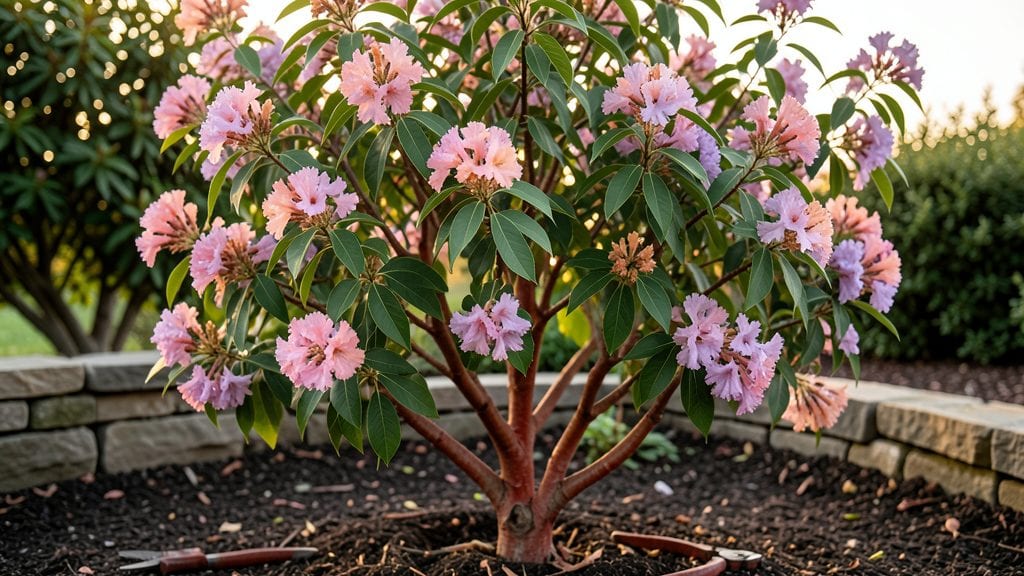
A crepe myrtle garden transforms your yard into a lush, low-maintenance sanctuary that thrives even when drought hits.
I planted mine along my fence line last spring, and now I’ve got year-round privacy with those stunning blooms that last from summer through fall—plus, the peeling bark adds winter texture that most plants can’t match. The best part?
They handle heat and dry spells like champions, so you’re not stuck watering every other day like with fussy shrubs.
Start with three to five plants spaced about 8 to 10 feet apart for a natural, wind-resistant screen. Pair them with drought-tolerant perennials like lavender or Russian sage at the base to fill in gaps and extend the color show.
Mulch heavily around the roots to lock in moisture, and you’ll spend less time fussing over watering. My neighbors keep asking how I keep things so green—it’s not magic, just smart layering with plants that all love the same conditions.
By midsummer, you’ll have a vibrant curtain of blooms in shades of pink, purple, or white, depending on your variety, with the added bonus of a fragrant summer breeze. Even in winter, the exfoliating bark adds a rustic charm that makes the garden look intentional, not neglected.
Prune lightly after blooming to keep the shape tidy, and watch as your yard becomes the envy of the block—without the high water bill.
Works in full sun or partial shade, and adapts to almost any soil as long as it drains well. Whether you’re masking a noisy street, creating a cozy backyard retreat, or just loving the drama of these trees, crepe myrtles deliver beauty with minimal effort.
Let’s get your privacy screen growing!
📚 In This Guide
- What you need
- Instructions
- Tips and common mistakes
- Wrapping up and next steps
What you need
- ● Crepe myrtle plants: Choose 3–5 mature trees (3–6 ft tall) for quick privacy or 10+ smaller saplings (1–2 ft) for gradual growth. Opt for varieties like Lagerstroemia indica or Lagerstroemia fauriei for drought resistance.
- ● High-quality soil: 50–100 lbs of well-draining, slightly acidic soil (pH 5.5–6.5). Mix in 20 lbs of compost or organic matter for nutrients.
- ● Mulch: 3–4 bags (2–3 cubic feet each) of pine bark or wood chips to retain moisture and suppress weeds.
- ● Slow-release fertilizer: 1–2 lbs of a balanced (10-10-10) or low-phosphorus (5-3-3) formula for young trees.
- ● Shovel & spade: 1 digging shovel (for planting) and 1 border spade (for precision).
- ● Pruning shears: 1 pair of bypass pruners (for shaping and maintenance).
- ● Measuring tape: 1 (25 ft) to mark planting spacing (6–10 ft apart for mature trees).
- ● Garden hose or watering can: 1 with a spray nozzle for gentle watering.
- ● Gloves & knee pads: 1 pair each for comfort during planting.
- ● Tree stakes & ties: 4–6 stakes (for young trees in windy areas).
- ● Drip irrigation system: 1 basic kit to automate watering.
- ● Decorative rocks or ground cover: 5–10 lbs to enhance aesthetics and retain moisture.
- ● Plant food (liquid or granular): 1 bottle for seasonal boosts.
Instructions for planting and maintaining a crepe myrtle privacy garden
Here's how to establish a lush, drought-tolerant privacy screen that thrives year after year.
Choose and Prepare Planting Sites
Crepe myrtles need full sun to bloom their best, so select locations receiving at least 6 hours of direct sunlight daily. For a 4-plant privacy screen, space each tree 8-10 feet apart to allow mature growth without overcrowding. I always test soil drainage first by digging a 12-inch deep hole—if water pools after 30 minutes, amend with 2-3 inches of coarse sand or plant on a slight mound.
Mark planting locations with stakes to avoid digging multiple holes. The ideal spacing ensures airflow between plants, which prevents fungal diseases like powdery mildew. If your yard has heavy clay soil, mix in 2 inches of compost to improve root development during the first growing season.
Plant Crepe Myrtles at the Right Depth
Dig holes twice as wide as the root ball but no deeper—crepe myrtles hate having their trunks buried too deeply, which can cause rot. Gently remove each tree from its container and loosen any circling roots with your fingers. Place the plant in the hole so the top of the root ball sits 1 inch above ground level—this prevents soil from settling and smothering the trunk.
Backfill with native soil, tamping lightly every 2 inches to eliminate air pockets. Water deeply until moisture reaches 6 inches down, then add a 2-inch layer of mulch (keeping it 3 inches away from the trunk) to retain moisture. I always water newly planted trees twice weekly for the first month to encourage root establishment.
Prune for Structure and Health
Prune crepe myrtles in late winter or early spring before new growth begins. Remove any dead, diseased, or crossing branches first, then cut back last year’s blooms to encourage fresh flower growth. Avoid "topping" or cutting the main stems—this weakens the tree and reduces flowering. For a tidy look, shape the canopy by trimming no more than 25% of the foliage in one season.
Watch for suckers (shoots growing from the base) and remove them promptly—they drain energy from the main tree. Pruning tools should be sterilized with rubbing alcohol between cuts to prevent spreading disease. After pruning, apply a balanced fertilizer (10-10-10) to support new growth, following package instructions for amounts.
Maintain Water and Mulch for Drought Resistance
Crepe myrtles are drought-tolerant once established, but young trees need deep watering every 7-10 days during dry spells. Water at the base of the plant in the early morning to reduce evaporation and fungal risks. Let the top 2 inches of soil dry out between waterings—this encourages deep root growth rather than shallow, thirsty roots.
Replenish mulch annually in early spring, spreading a 3-inch layer (again, keeping it away from the trunk). Mulch conserves moisture, regulates soil temperature, and suppresses weeds. Avoid piling mulch against the trunk—this can trap moisture and invite pests. In winter, add an extra 1-2 inches of mulch for insulation if your climate drops below 20°F.
Monitor for Pests and Diseases
Crepe myrtles rarely face serious pests, but keep an eye out for aphids, scale, or lace bugs, which can suck sap and weaken the tree. Treat infestations early with neem oil or insecticidal soap, applying in the early evening to avoid harming beneficial insects. For fungal issues like powdery mildew, prune affected branches and improve airflow by thinning dense foliage.
If leaves yellow or drop prematurely, it may signal overwatering or poor drainage. Adjust your watering schedule and check for root rot by gently scraping away soil near the base. Healthy crepe myrtles have vibrant green foliage and abundant summer blooms—if you notice fewer flowers, the tree may need more sunlight or fertilizer. A light application of phosphorus-rich fertilizer in early spring can boost flowering.
Tips & tricks for perfect crepe myrtle privacy gardens
A few strategic moves will help your crepe myrtle privacy screen thrive for years to come. Here's what I've learned from planting and maintaining these drought-resistant beauties.
Sunlight is non-negotiable: When selecting your planting sites, prioritize locations with at least 6 hours of direct sunlight daily. I've seen crepe myrtles planted in partial shade still survive, but they'll produce significantly fewer blooms. If your yard has areas with less than 6 hours of sun, consider supplementing with grow lights during the growing season to encourage flowering. The more sunlight your trees receive, the more vibrant their foliage and blooms will be throughout the summer.
Soil drainage makes all the difference: That 30-minute drainage test in Step 1 is crucial. If water pools in your test hole, you'll need to amend the soil with 2-3 inches of coarse sand or plant on a slight mound. Poor drainage leads to root rot, which can kill your trees before they even establish. I've had to replace several crepe myrtles that were planted in heavy clay without proper amendments—don't make my mistake by skipping this step.
Pruning timing matters: The late winter or early spring timing for pruning in Step 3 is perfect because it allows the tree to heal before the growing season begins. If you prune too late in spring, you risk encouraging new growth that could be damaged by late frosts. I always prune just as the first buds begin to swell, which gives me a clear visual cue that it's time to start shaping the tree. Remember to never remove more than 25% of the foliage in one season to maintain the tree's health.
Winter protection is essential: That extra 1-2 inches of mulch in winter when temperatures drop below 20°F is your tree's best friend. The mulch acts as insulation, protecting the roots from freezing temperatures. I've seen crepe myrtles survive winters with just the standard mulch in milder climates, but in colder regions, that extra layer can mean the difference between a thriving tree and one that struggles to recover in spring. Apply the mulch after the ground has frozen to prevent it from insulating pests that might otherwise be killed by the cold.
Pro Tips for Crepe Myrtle Garden
- A few strategic moves will help your crepe myrtle privacy screen thrive for years to come. Here's what I've learned f...
- Sunlight is non-negotiable: When selecting your planting sites, prioritize locations with at least 6 hours of direct ...
- Soil drainage makes all the difference: That 30-minute drainage test in Step 1 is crucial. If water pools in your tes...
Frequently asked questions
Got questions about creating a stunning crepe myrtle garden? You’re not alone! Here are some of the most common queries—and their answers—to help you grow a thriving, low-maintenance privacy screen.
How fast do crepe myrtles grow for privacy?
Crepe myrtles are fast growers! With proper care, they can grow 3 to 5 feet per year, reaching maturity (10–20 feet tall) in just a few years. Dwarf varieties (like ‘Arapaho’) grow slower (1–2 feet/year) but still deliver quick privacy. Plant them in spring or early fall for the best start.
Are crepe myrtles cold-hardy? What zones do they thrive in?
Most crepe myrtles thrive in USDA Zones 6–9, handling winter temps down to -10°F. For colder climates (Zone 5), opt for ‘Catawba’ or ‘Natchez’ varieties, which are more cold-resistant. Pro tip: Mulch heavily in fall to protect roots!
Do crepe myrtles need a lot of water?
Nope—they’re drought-tolerant!
Once established (after 1–2 years), they only need 1 inch of water per week. Deep watering every 10–14 days in dry spells keeps them happy. Overwatering can cause root rot, so let the soil dry between waterings.
What pests or diseases should I watch for?
Crepe myrtles are generally pest-resistant, but keep an eye out for:
- Lace bugs (tiny yellow pests causing stippled leaves)—spray with water or use insecticidal soap.
- Powdery mildew (white fungal coating)—improve airflow and avoid overhead watering.
- Canker disease (sunken spots on bark)—prune infected branches immediately.
Can I plant crepe myrtles near my house or fence?
They’re great for privacy screens, foundation plantings, or near patios. Just plant them 3–5 feet from structures to avoid root competition. For tight spaces, choose ‘Dwarf Natchez’ (6–8 ft tall) or ‘Arapaho’ (6–10 ft tall). Avoid planting under power lines—they grow tall!
What are some crepe myrtle alternatives for privacy?
If crepe myrtles don’t fit your space or climate, try these drought-resistant alternatives:
- Italian cypress (tall, narrow, Zone 7–10)
- Russian olive (fast-growing, Zone 3–9)
- Wax myrtle (evergreen, Zone 7–10)
- Privet hedge (dense, Zone 5–9)
Wrapping up and next steps
Creating a crepe myrtle garden is a fantastic way to enjoy year-round privacy and drought-resistant beauty while adding vibrant color and texture to your outdoor space. 🌿 With the right placement, pruning, and care, these versatile trees thrive in various climates, offering both practicality and charm.
Whether you're a gardening novice or a seasoned pro, this guide gives you the tools to transform your yard into a lush, low-maintenance oasis.
Ready to get started? Grab your tools, pick your favorite crepe myrtle varieties, and dive in! Your dream garden is just a few steps away—happy planting! 🌸