Planting
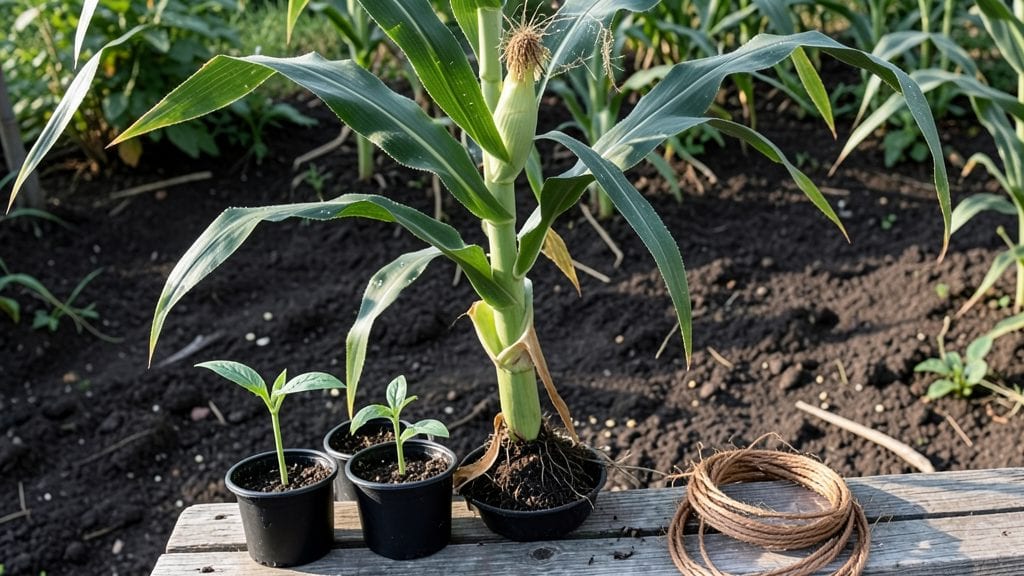
Proper garden corn spacing is the secret to ears so fat they’ll make your neighbors jealous. 🌽 I’ve learned the hard way that cramming plants too close means smaller ears, more disease, and a whole lot of frustration—so I’m sharing the exact spacing that turns a patch of dirt into a cornucopia of sweet, plump kernels.
The golden numbers are 36 inches between rows and 12 inches between plants (or 16 inches for super-tall varieties). This setup gives roots room to spread, lets sunlight reach every stalk, and keeps air circulating so pests and fungus stay away.
You’ll need well-drained soil mixed with compost before planting, but the real magic happens when you space them right—no more fighting for space or watching ears stay small.
When done correctly, you’ll end up with ears 8+ inches long by harvest time, each one packed with juicy kernels. The stalks stay strong, the silk dries evenly, and you’ll avoid the heartbreak of shrunken cobs.
Plus, wider spacing makes weeding and harvesting a breeze—no more wrestling with crowded plants or missing ears hidden in the foliage.
Works for backyard gardens, raised beds, or even small urban plots—just adjust the spacing slightly if you’re growing dwarf varieties. Here’s how to get it right the first time without a single wasted stalk.
📚 In This Guide
- What you need
- Instructions
- Tips and common mistakes
- Wrapping up and next steps
What you need
- ● Garden corn seeds: Choose varieties suited to your climate (e.g., Golden Bantam for short-season areas or Silver Queen for sweetness). Plan for 1–2 seeds per hill (or direct-sow 1 seed every 8–12 inches in rows). A 1-pound bag typically yields ~1,500 seeds—enough for a small plot!
- ● Soil: Well-draining, fertile loam with a pH of 6.0–7.0. Amend with compost (2–3 inches mixed into the top 6–8 inches of soil).
- ● Fertilizer: Balanced starter fertilizer (e.g., 5-10-10) at planting (1 tbsp per hill).
- ● Side-dress with nitrogen (e.g., blood meal or 34-0-0) when plants reach 6–12 inches tall (½ cup per 10 feet of row).
- ● Watering supplies: Drip irrigation or a soaker hose (corn needs 1–1.5 inches of water per week).
- ○ Stakes or trellis (optional): For tall varieties (e.g., Country Gentleman), use 6-foot stakes spaced every 3 feet.
- ● Row markers: Wooden stakes or brightly colored flags to mark rows (corn can get tall—3–7 feet!).
- ● Mulch: Straw or grass clippings to retain moisture and suppress weeds.
- ● Corn gluten meal: Pre-emergent weed control (apply before planting).
- ● Pest deterrents: Row covers (for early planting) or neem oil (for aphids).
- ● Harvest tools: Sharp knife or pruners for cutting stalks.
Step-by-Step instructions for perfect garden corn spacing
Here's how to arrange your corn rows for strong stalks and heavy ears—no overcrowding, no wasted space.
🌱 Step 1: Plan Your Corn Rows for Optimal Sunlight
Corn thrives in full sun, so space rows 30-36 inches apart to give each plant room to reach for the sky. I like to draw my rows with a garden hose—just step off 3 feet between lines and mark with stakes. This spacing prevents shade competition, which weakens stalks and reduces ear size.
If your garden space is tight, you can squeeze rows to 24 inches apart, but expect slightly smaller ears. The key is even spacing—uneven rows lead to tall, leggy plants that flop over when the ears get heavy. Use a measuring tape to verify each row stays perfectly straight.
🌿 Step 2: Space Plants Within Rows for Strong Growth
Within each row, plant seeds or seedlings 8-12 inches apart. For a 4-row setup, I space mine 10 inches apart—this gives roots plenty of room to spread without competing for nutrients. If you're planting multiple varieties, stagger them in rows to prevent cross-pollination (though most sweet corn is self-pollinating).
Dig holes 1 inch deep and drop in 2-3 seeds per hole—corn has a low germination rate, so extra seeds ensure strong plants. Thin to the strongest stalk per hole once seedlings reach 6 inches tall. Watch for the first true leaves to appear before thinning; that’s your signal to act.
⏰ Step 3: Monitor Growth and Adjust for Wind Resistance
Corn grows fast, so check spacing again at 3-4 weeks when stalks reach 18-24 inches tall. If plants are touching, gently spread them apart—crowding now leads to weak stalks that snap under ear weight. I like to weave a lightweight twine support between rows at this stage to prevent flopping.
If your garden gets breezy, space plants 12 inches apart instead of 10 to give stalks extra stability. You’ll know it’s working when plants stand straight and leaves don’t rub together. Avoid over-tightening twine; corn needs to sway slightly to strengthen its core.
☀️ Step 4: Maintain Spacing Through Pollination
At 6-8 weeks, when tassels (the pollen-producing tops) emerge, spacing matters even more. If rows are too tight, pollen can’t travel freely between plants, leading to poor ear development. Step back and check: you should see clear air space between the tallest stalks in adjacent rows.
Water deeply at the base 2-3 times per week to encourage strong root systems that support heavy ears. Mulch with 2-3 inches of straw to retain moisture and prevent weeds from stealing nutrients. You’ll know you’re on track when silks (the fuzzy strands on ears) appear 1-2 days after tasseling—this confirms successful pollination.
🌽 Step 5: Harvest at Peak Ripeness
Watch for darker kernel color and milky liquid when pierced—that’s your cue to harvest. Space between ears should feel firm, not hollow. If rows were spaced correctly, you’ll pull out plump, uniform ears with minimal breakage. Cut stalks with a sharp knife, leaving 2 inches of stem attached to preserve freshness.
Proper spacing ensures ears stay off the ground, reducing rot risk. Store harvested corn in the fridge for up to 2 weeks or freeze for long-term use. Save seeds from your best ears for next year’s garden—just let them dry completely on the stalk before shelling.
Tips & tricks for perfect garden corn spacing
Here's what I learned after years of trial and error—these spacing secrets make all the difference between scraggly stalks and towering, ear-loaded plants.
The Sunlight Factor: In Step 1, when you're spacing rows 30-36 inches apart, think of it as creating a sun corridor. I've seen gardens where rows were only 2 feet apart, and the middle plants turned into sad, spindly shadows. Use a garden hose to mark your rows—it's the fastest way to get perfectly straight lines. For small gardens, the 24-inch option works, but you'll sacrifice ear size and yield.
Thinning Technique: Step 2's thinning advice is where most beginners go wrong. Don't wait until plants are crowded—thin to the strongest stalk when they reach 6 inches tall. I use a pair of clean scissors to snip at the base rather than pulling, which prevents disturbing nearby roots. You'll know you've done it right when you can see clear space between each plant and the first true leaves have appeared.
Wind Resistance Strategy: That lightweight twine support in Step 3 isn't just decoration—it's insurance against flopping. I've seen entire rows collapse under heavy ears because the stalks weren't properly supported. If your garden gets windy, increase spacing to 12 inches between plants. The slight sway actually strengthens the stalks, but too much movement can cause breakage. Test the tension by gently pushing a stalk—it should bend slightly but not snap.
Pollination Check: At the 6-8 week mark in Step 4, take a step back and really look at your rows. You should see clear air space between the tallest stalks. If pollen can't travel freely, you'll end up with poor ear development. I've had years where I missed this check and ended up with half-formed ears. Watering deeply 2-3 times a week keeps roots strong enough to support those heavy ears—don't skip this, especially during tasseling.
Pro Tips for Garden Corn Spacing
- Here's what I learned after years of trial and error—these spacing secrets make all the difference between scraggly stalks and towering, ear-loaded plants.
- The Sunlight Factor: In Step 1, when you're spacing rows 30-36 inches apart, think of it as creating a sun corridor.
- Thinning Technique: Step 2's thinning advice is where most beginners go wrong.
Frequently asked questions
Got questions about spacing your garden corn for the best harvest? You’re not alone!
Here are answers to the most common concerns—from timing to troubleshooting—so you can grow corn like a pro.
How close can I plant corn seeds in a row?
For most sweet corn varieties, space seeds 1 inch apart within the row. Thin seedlings to 4–6 inches apart once they’re 4–6 inches tall. This prevents overcrowding and ensures each plant gets enough nutrients and sunlight.
When is the best time to thin corn seedlings?
Thin corn seedlings when they’re 4–6 inches tall and have 2–3 true leaves (not just the seed leaves). Do this 2–3 weeks after germination for optimal growth. Use sharp scissors or a trowel to avoid disturbing roots.
Can I plant corn in blocks instead of rows?
Planting corn in square blocks (e.g., 36-inch squares) instead of long rows improves pollination and reduces edge effects. Space plants 12–18 inches apart in the block. This method also deters pests and makes harvesting easier.
What if my corn plants look crowded even after thinning?
If your corn still looks overcrowded, it might be time to transplant the strongest seedlings to a new location. Space them 12–18 inches apart in rows 30–36 inches apart. Mulch heavily to retain moisture and reduce competition.
How does spacing affect corn yield?
Proper spacing (12–18 inches between plants, 30–36 inches between rows) maximizes yield by giving each plant enough room to develop strong stalks and abundant ears. Overcrowding leads to smaller ears, poor pollination, and disease risk. Think of it like giving each plant its own personal space!
Wrapping up and next steps
Perfecting your garden corn spacing is the secret to a thriving harvest—whether you’re a seasoned gardener or just starting out! 🌽 By following proven row spacing (like 12–15 inches apart in rows 30–36 inches wide), you’ll ensure strong stalks, fewer pests, and plump ears ready to pick.
Now that you’ve got the know-how, it’s time to roll up your sleeves and plant with confidence!
Ready for the next step? Mark your rows, prep your soil, and sow those seeds! Or, if you’re feeling ambitious, explore companion planting to boost your corn’s growth even more. Happy gardening!