Planting
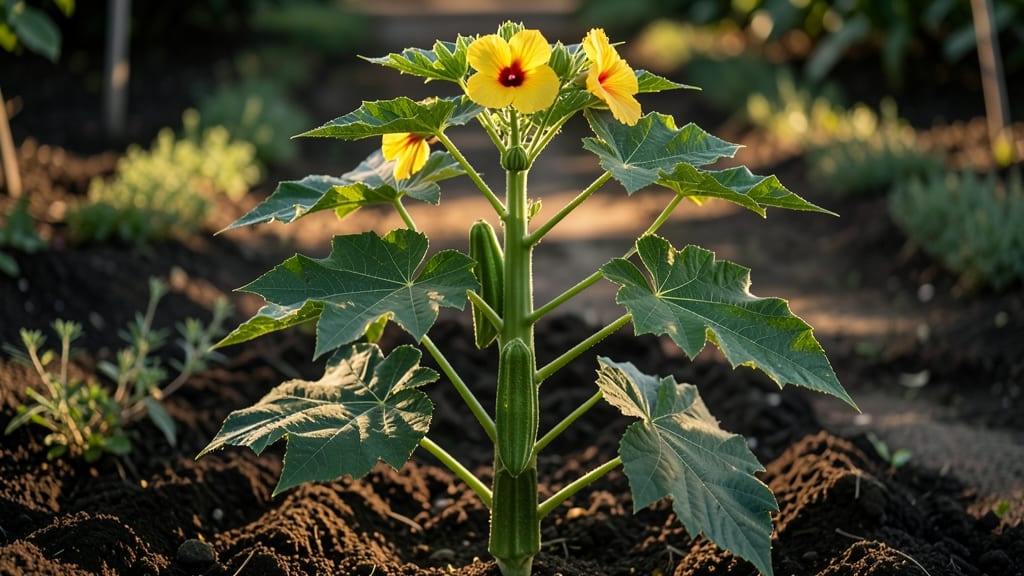
Transforming a garden okra plant from a delicate seedling into a towering harvest in just 60 days is one of the fastest rewards in the garden—magic unfurled after weeks of patient tending. 🌱 waiting. The key starts with warm soil and patience, because okra doesn’t rush, but it delivers.
You’ll need a sunny spot with at least 6-8 hours of direct light daily, well-draining soil rich in compost, and seeds planted ½ inch deep.
Okra thrives in heat, so wait until after your last frost when nighttime temps stay above 60°F. Space plants 18-24 inches apart to give them room to grow tall and sturdy.
Once established, okra grows surprisingly fast—expect those first pods in about 50 days under ideal conditions. The plants stay productive for weeks if you keep them well-watered (1-2 inches per week) and harvest regularly. That first bite of fresh okra, still warm from the sun, makes every effort worth it.
Even in my first attempt, I learned that okra forgives mistakes—it handles drought better than most vegetables and rebounds from pests.
For beginners, the biggest hurdle is waiting for germination (which can take 7-14 days), but once those first leaves appear, you’re on your way to a summer of homegrown pods.
📚 In This Guide
- What you need
- Instructions
- Tips and common mistakes
- Wrapping up and next steps
What you need
- ● Okra seeds: 10–20 seeds (non-GMO, heirloom varieties like 'Clemson Spineless' or 'Emerald' work well).
- ● Containers or garden bed: Containers: 5–10 gallon pots (1–2 per plant) with drainage holes.
- ● Garden bed: Well-draining soil in full sun (6+ hours/day).
- ● Potting mix: 2–3 bags of high-quality, organic garden soil or a mix of 60% topsoil + 40% compost.
- ● Fertilizer: Balanced 10-10-10 or organic options like fish emulsion (mix 1 tbsp per gallon of water).
- ● Watering can or hose: With a gentle spray nozzle for seedlings.
- ● Mulch: Straw or shredded leaves (1–2 inches) to retain moisture.
- ● Trellis or stakes: 3–4 ft tall (okra grows 4–8 ft tall; supports heavy pods).
- ● Row covers: Lightweight fabric to protect seedlings from pests or frost.
- ● pH test kit: To check soil acidity (ideal: 6.0–6.8).
- ● Pruning shears: For trimming leggy stems or dead leaves.
- ● Compost tea: Boosts soil health and seedling vigor.
Step-by-step instructions for growing okra from seed
Here's how to transform those tiny okra seeds into a thriving, pod-producing plant in just 60 days.
🌱 Step 1: Start Seeds Indoors 3-4 Weeks Before Last Frost
Fill 2-inch deep seed-starting cells with moistened seed-starting mix until just below the rim. Press down gently to remove air pockets, then make a ½-inch deep hole with your finger. Drop 2-3 seeds into each hole—okra seeds germinate easily, so you'll likely get multiple sprouts.
Cover lightly with additional mix and mist gently until the surface looks evenly damp. Place the tray in a warm spot—80-85°F is ideal for germination. I like to use a seedling heat mat under my seed trays because okra seeds need warmth to break dormancy. Keep the mix consistently moist but never soggy until sprouts appear.
☀️ Step 2: Provide Light and Harden Off Seedlings
Once seedlings emerge—usually within 5-10 days—move them to a sunny window or under grow lights for 14-16 hours daily. Okra seedlings grow fast, so you'll see first true leaves within a week. Without enough light, they'll stretch leggy and weak, which is a common rookie mistake.
Two weeks before transplanting, start hardening off by placing seedlings outside in partial shade for 1-2 hours daily. Gradually increase their outdoor time over 7-10 days, ending with full sun exposure. This toughens their stems so they can handle the heat and wind of the garden.
🪴 Step 3: Transplant After All Frost Risk Has Passed
Choose a sunny spot with 6-8 hours of direct sunlight daily—okra thrives in heat and needs plenty of space. Dig holes slightly deeper than the seedling's root ball and space plants 18-24 inches apart in rows 3 feet apart. Okra roots grow deep, so don't crowd them or they'll compete for nutrients.
Water deeply at transplanting to settle the soil around roots, then mulch with 2-3 inches of organic mulch to retain moisture and suppress weeds. I always add a handful of balanced fertilizer (10-10-10) to the planting hole—okra is a heavy feeder and responds well to a little extra nutrition early on.
💧 Step 4: Water Deeply and Maintain Consistent Care
Water okra plants 1-2 inches per week, letting the soil dry slightly between waterings. Deep, infrequent watering encourages strong root growth, while shallow, frequent watering leads to weak stems and poor pod production. You'll know your watering is right when the soil feels dry 1-2 inches down but still moist deeper.
Side-dress with more fertilizer when plants reach 12-18 inches tall to support their rapid growth. Okra is drought-tolerant once established, but pods develop best with steady moisture. Watch for 3-inch pods forming—this is your cue to harvest regularly to encourage more production.
✂️ Step 5: Harvest and Prune for Continuous Production
Pick pods when they're 3-4 inches long for the best flavor and texture. Use pruning shears to cut just above the pod—this prevents damage to the stem. I harvest every 2-3 days during peak production because okra pods grow fast, and neglected plants put energy into seed production instead of more pods.
Remove any yellowed or diseased leaves immediately to keep air circulating and prevent fungal issues. If your plants start flowering but not producing pods, they may need more phosphorus—try a side-dressing of bone meal or compost. With consistent care, a single okra plant can produce 10-20 pounds of pods over its growing season.
Tips & tricks for perfect garden okra plants
Growing okra from seed might seem intimidating, but these practical tips will help you avoid common pitfalls and get the most out of your 60-day harvest.
Seed Starting Secret: Don't be tempted to plant okra seeds directly in the garden—starting them indoors gives you a head start on that 60-day timeline. The 80-85°F germination temperature is crucial, so if your home isn't warm enough, invest in a seedling heat mat. I've seen seeds that took 14 days to sprout in cool conditions versus just 5 days with proper warmth.
Lighting Strategy: Okra seedlings grow fast, but they need 14-16 hours of light daily to avoid that dreaded "leggy" look. If your windows aren't sunny enough, supplement with grow lights positioned just 2-3 inches above the seedlings. I place mine on a timer to ensure consistent light exposure—this prevents weak stems that can't support the weight of pods later.
Transplanting Wisdom: When it's time to move your seedlings outdoors, handle them gently to avoid damaging those deep roots. The 18-24 inch spacing might seem generous, but okra plants spread out as they mature. I like to mark planting locations with stakes before digging holes—this helps maintain proper spacing even when working quickly. The 2-3 inches of mulch after transplanting is a game-changer for moisture retention in hot climates.
Harvest Timing: Those 3-4 inch pods are the sweet spot for flavor and texture, but they grow fast! Set a reminder to check your plants every 2-3 days during peak production. I keep a small basket near my garden to collect pods immediately—waiting even a day can mean the difference between tender pods and woody stems. Regular harvesting actually encourages more production by signaling the plant to keep growing.
Pro Tips for Garden Okra Plant
- Growing okra from seed might seem intimidating, but these practical tips will help you avoid common pitfalls and get the most out of your 60-day harvest.
- Seed Starting Secret: Don't be tempted to plant okra seeds directly in the garden—starting them indoors gives you a head start on that 60-day timeline.
- Lighting Strategy: Okra seedlings grow fast, but they need 14-16 hours of light daily to avoid that dreaded "leggy" look.
Frequently asked questions
Got questions about growing garden okra?
You’re not alone! Here are answers to the most common queries from gardeners just like you—whether you’re a beginner or a seasoned green thumb.
How long does it take for okra plants to produce pods?
Okra is a fast grower! With the right conditions, you’ll see pods in 60–70 days from planting seeds. Early varieties (like ‘Clemson Spineless’) can even produce in as little as 50 days. Just be patient—wait until flowers appear before expecting a harvest.
When is the best time to plant okra seeds?
Okra thrives in warm soil, so wait until after the last frost when nighttime temps stay above 60°F (15°C). In most regions, this means late spring to early summer. For extra protection, start seeds indoors 2–3 weeks before transplanting outdoors.
What pests or diseases should I watch for with okra plants?
Okra is generally pest-resistant, but keep an eye out for aphids, spider mites, and flea beetles. For diseases, powdery mildew and bacterial leaf spot can be issues in humid climates. Prevent problems by spacing plants well (18–24 inches apart), watering at the base, and removing affected leaves promptly.
Can okra grow in hot climates? What about cooler areas?
Okra loves heat—it grows best in USDA Zones 5–11 with full sun (6+ hours daily). In hot climates (Zones 8–11), it thrives year-round. In cooler areas (Zones 4–5), treat it as an annual and plant after frost. If temps dip below 50°F (10°C), growth slows or stops.
What can I do if my okra flowers but no pods form?
No pods? Check these fixes:
- Pollination issues: Okra flowers are self-pollinating, but gentle shaking of plants can help. Bees also assist!
- Heat stress: If temps exceed 95°F (35°C), flowers may drop. Provide afternoon shade if needed.
- Nutrient deficiency: Add phosphorus-rich fertilizer (like bone meal) to encourage flowering.
Pro Tip:
Harvest okra frequently (every 2–3 days) to encourage more production. Overgrown pods become tough and woody—aim for 2–3 inches long for the best texture!
Wrapping up and next steps
Growing your own garden okra plant is a rewarding journey that delivers fresh, nutritious pods in just 60 days! With the right soil, sunlight, and care, you’ll enjoy a bountiful harvest that’s perfect for soups, stews, or stir-fries.
Whether you’re a beginner or seasoned gardener, okra’s resilience and speed make it a fantastic choice for any backyard or container garden.
Ready to dive in? Start by gathering your supplies, then plant those tiny seeds with confidence—your kitchen (and taste buds!) will thank you. Happy growing! 🌱✨