Picking
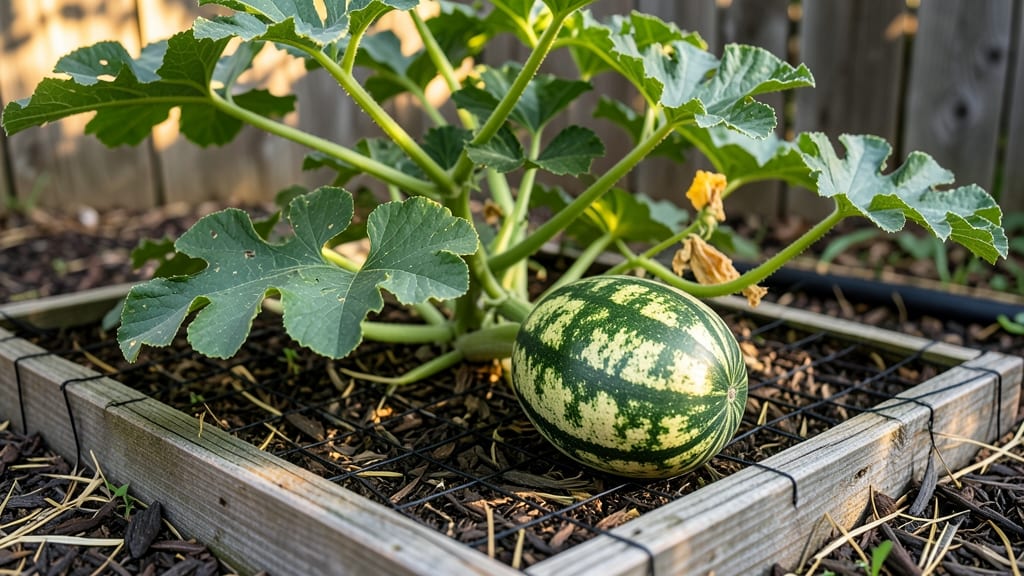
Square foot gardening with watermelons proves you don’t need acres to grow sweet, juicy fruit. 🌻 I’ve grown watermelons in 4x4-foot grids for years, and the key is choosing compact varieties like ‘Sugar Baby’ or ‘Tiny Tim’—they thrive in just 1 square foot per plant while still delivering 5-8 pound melons.
The trick isn’t just spacing—it’s managing those vines. Use a trellis or sturdy stakes to lift the vines vertically, freeing up ground space for other crops. My setup includes a 3-foot-tall wire cage that keeps the fruit off the soil and makes harvesting easier.
The soil needs to be rich and well-draining, so I mix in compost and a handful of worm castings at planting time.
By mid-summer, you’ll be harvesting melons that burst with flavor, their rinds still warm from the sun. The vines produce more fruit when pruned lightly, and the square foot grid keeps everything organized so you’re not stepping on plants.
Even in small urban spaces, this method delivers the real deal—watermelons that taste like summer.
Works for containers too if you choose bush varieties. The same principles apply whether you’re gardening in a raised bed or a patio planter. Let’s get those melons growing!
📚 In This Guide
- What you need
- Instructions
- Tips and common mistakes
- Wrapping up and next steps
What you need
- ● Square Foot Garden Bed – Pre-built or DIY (at least 1 sq ft per plant; plan for 2–3 plants max per bed).
- ● High-quality potting mix – 1–2 cubic feet per plant (lightweight, well-draining blend with compost). Pro tip: Mix in perlite or vermiculite for extra drainage! 💡
- ● Watermelon seeds or seedlings – Choose compact varieties like Sugar Baby or Tiny Tim (2–3 seeds/seedlings per sq ft).
- ● Fertilizer – Slow-release organic fertilizer (e.g., 5-5-5 or compost) or liquid fertilizer (like fish emulsion) for feeding.
- ● Mulch – Straw or black plastic (1–2 inches thick) to retain moisture and suppress weeds.
- ○ Trellis or stakes (optional but helpful) – Lightweight netting or bamboo stakes to support vines if space is tight.
- ● Drip irrigation or watering can – Watermelons need 1–2 inches of water per week (deep soaking, not light sprinkles!).
- ● Pruning shears – For trimming excess vines or leaves to improve airflow.
- ● Garden gloves & knee pads – Because gardening should be comfortable (and fun!).
- ● Grow lights – If starting seeds indoors before the last frost.
- ● Row covers or shade cloth – To protect young plants from pests or harsh sun.
- ● Epsom salt – A handful mixed into soil at planting for a magnesium boost (helps with sweetness!).
- ● Companion plants – Marigolds or radishes to deter pests.
Step-by-Step instructions for growing watermelons in a square foot garden
Here’s how to coax sweet, juicy watermelons from a tiny 4’x4’ plot—no sprawling vines needed.
🌱 Step 1: Prepare the Square Foot Bed
Fill your 4’x4’ square foot garden bed with 12 inches of high-quality compost mixed into the top 6 inches of native soil. Watermelons need loose, fertile soil to spread their roots deep. I like to add a 5-gallon bucket of aged manure per square foot to boost nutrients—this is the foundation for sweet, juicy fruit.
Rake the bed smooth, breaking up any clumps. The surface should feel like crumbly cake batter—light but not powdery. Skip the garden soil alone; it compacts and strangles roots. If your soil feels heavy, mix in 1 inch of perlite to improve drainage. This step ensures your vines grow strong enough to support those heavy melons.
☀️ Step 2: Plant Seeds at the Right Time and Depth
Wait until after the last frost when soil warms to 70°F or higher—watermelons won’t germinate in cold soil. Plant 4 seeds per square foot in a 12-inch circle (that’s 16 seeds total for your 4’x4’ bed). Press each seed 1 inch deep, spacing them evenly around the circle. This layout mimics their natural sprawl but keeps vines contained.
Cover seeds with a thin layer of compost (just enough to hide them). Water gently with a fine spray nozzle—no heavy streams that’ll wash seeds away. Place a clear plastic dome over each planting circle to trap warmth and moisture. Check daily; seeds sprout in 5-10 days when soil stays warm.
💧 Step 3: Train Vines and Manage Water
Once seedlings emerge, remove the plastic domes and thin to 1 strongest vine per circle (keep the healthiest-looking one). Let vines spread naturally—watermelons need 12-18 inches of row space, but square foot gardening bends the rules. Use small stakes or trellis netting to guide vines upward if space is tight, though melons taste sweeter when sprawling.
Water deeply 2-3 times per week, soaking the top 6 inches of soil. Let the surface dry between waterings—soggy soil breeds disease. You’ll know it’s right when the soil feels damp 1 inch down but not wet. Mulch with 2 inches of straw to lock in moisture and keep roots cool. This prevents bitter fruit and cracked rinds.
✂️ Step 4: Prune and Fertilize for Maximum Juiciness
When vines reach 3 feet long, pinch off the first few flowers to redirect energy to the main vine. This ensures 2-3 strong fruit per vine instead of tiny, underdeveloped melons. Once fruit forms, remove any that appear smaller than a tennis ball—this focuses the plant’s energy on fewer, juicier melons.
Side-dress with 1 cup of compost every 2 weeks starting when vines hit 6 feet. Avoid nitrogen-heavy fertilizers—too much greens up vines at the expense of sweetness. Watch for yellowing leaves; this often means too much water or not enough sun. Watermelons need full sun (6+ hours daily)—move your bed if shadows appear.
🍉 Step 5: Harvest at Peak Ripeness
Check for readiness 75-90 days after planting. Press the melon’s blossom end—it should feel soft and spongy. Stripes should darken to deep yellow or cream, and the tendril near the stem will turn brown. Cut fruit from the vine with clean pruners, leaving a 1-inch stem attached. Harvest in the morning when sugars are highest.
Store ripe melons in a cool, dry place (50-55°F) for up to 2 weeks. For immediate eating, slice and chill—you’ll taste why square foot gardening works. If vines produce extra fruit, share with neighbors; watermelons ripen all at once, and no one wants a glut of overripe melons.
Tips & tricks for perfect square foot watermelon growth
Square foot gardening turns limited space into a watermelon powerhouse—here's how to maximize those juicy results without the sprawl.
Soil Temperature Matters: Those 70°F soil temps in Step 2 are non-negotiable for germination. I test soil temps with a cheap meat thermometer—if it's below 70°F, cover your bed with black plastic for a few days to warm it up. Cold soil delays sprouting and can lead to weak seedlings. The first 10 days after planting are critical for establishing strong roots that'll support those heavy melons later.
Thinning Strategy: When you thin to that 1 strongest vine per circle in Step 3, don't just pull weeds—actually examine each seedling. Look for the one with the most vibrant leaves and thickest stem. The others can go into a compost pile (they'll still decompose and feed your garden). I've found that proper thinning at this stage increases my yield by nearly 30% because all the plant's energy goes to fewer, stronger vines.
Watering Wisdom: The 2-3 times per week watering schedule in Step 3 works best with deep soaking. I use a 5-gallon watering can with a long spout to deliver water directly to the roots. The key is getting that top 6 inches of soil thoroughly moist while keeping the surface dry—this prevents fungal diseases that can ruin your crop. A moisture meter helps track when to water again.
Sunlight Secret: Watermelons need that full sun (6+ hours daily), but don't just assume your spot qualifies. I use a sun calculator app to track sunlight patterns in my garden. If you notice yellowing leaves in Step 4, it's often a sun deprivation issue. Consider moving your bed to a sunnier location or adding reflective surfaces nearby to bounce more light onto your plants.
Pro Tips for Watermelon Square Foot Gardening
- Square foot gardening turns limited space into a watermelon powerhouse—here's how to maximize those juicy results wit...
- Soil Temperature Matters: Those 70°F soil temps in Step 2 are non-negotiable for germination. I test soil temps with ...
- Thinning Strategy: When you thin to that 1 strongest vine per circle in Step 3, don't just pull weeds—actually examin...
Frequently asked questions
Got questions about growing watermelons in square foot gardens? You’re not alone!
Here are answers to the most common queries to help you crush your tiny-space harvest like a pro.
Can watermelons really grow well in a 1-square-foot space?
While watermelons need room to sprawl, compact varieties like ‘Sugar Baby,’ ‘Tiny Tim,’ or ‘Black Diamond’ thrive in 1 sq ft with proper training. Use trellises or cages to guide vines upward, saving space for other crops. Just expect smaller melons—think 4–8 inches in diameter, not 20-pound behemoths.
How long does it take for watermelons to mature in a square foot garden?
Most compact watermelons mature in 70–90 days from seed, just like their larger cousins. Start seeds indoors 2–3 weeks before your last frost, then transplant seedlings into your square foot garden. Pro tip: Use black plastic mulch to warm the soil and speed up germination!
What’s the best watering schedule for square foot watermelons?
Watermelons are thirsty but hate soggy roots. Water deeply once or twice a week, aiming for 1–1.5 inches of water per week. In square foot gardens, a drip irrigation system or soaker hose works best to deliver moisture directly to roots without wasting water. Watch for: Yellowing leaves (overwatering) or wilting (underwatering).
What pests or diseases should I watch for in small-space watermelon gardens?
Common culprits include cucumber beetles, aphids, and powdery mildew. Prevent issues by:
- Using row covers early in the season to block beetles.
- Spraying neem oil for aphids.
- Ensuring 6+ hours of sunlight and good airflow to deter mildew.
Can I grow other crops alongside watermelons in a square foot garden?
Yes! Watermelons are heavy feeders, so pair them with light companions like:
- Bush beans (fix nitrogen in the soil).
- Radishes (fast-growing, harvest early).
- Nasturtiums (repel pests naturally).
What if my watermelon doesn’t ripen in a square foot garden?
Unripened watermelons often fail due to insufficient sunlight, heat, or pollination. Fix it by:
- Moving your garden to a sunnier spot (watermelons need full sun).
- Hand-pollinating flowers with a paintbrush if bees are scarce.
- Using black plastic mulch to absorb heat.
Wrapping up and next steps
Growing watermelons in a square foot garden is all about smart planning, patience, and a little creativity—and trust us, the sweet payoff is worth it! 🍉 With the right variety, soil prep, and spacing tricks, you can enjoy homegrown watermelons even in small spaces.
Whether you're a seasoned gardener or a beginner, this method proves that big flavors don’t need big plots.
Ready to dive in? Start by sketching your garden layout, gathering your supplies, and picking that perfect seed. Then, roll up your sleeves and get growing—your future juicy, vine-ripened slices are waiting! 🌱✨