Picking
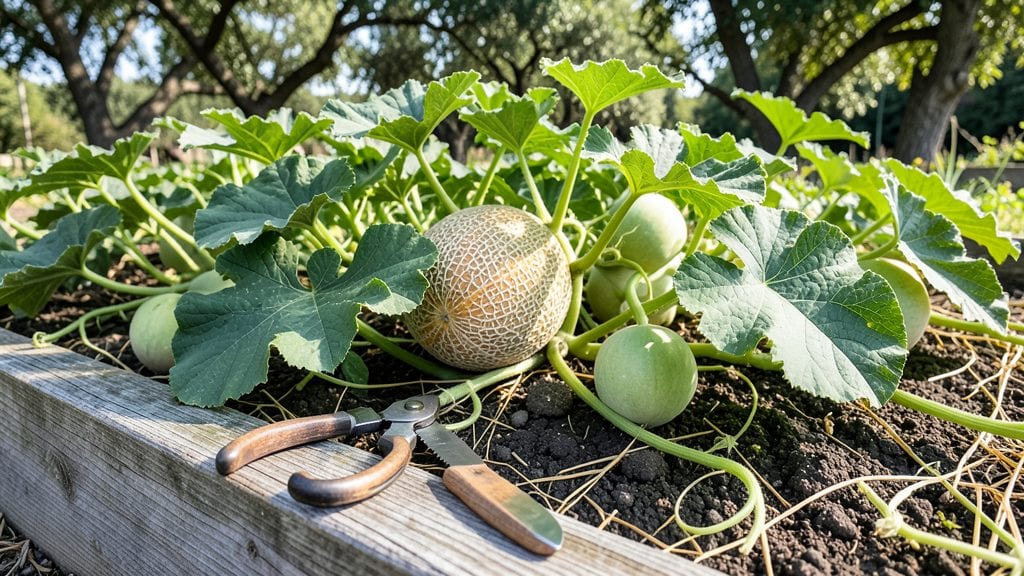
Picking cantaloupe from your garden at the right time turns a simple task into a sweet victory 🍈 — and missing that window means bland, seedy fruit instead of the juicy, fragrant prize you’ve grown.
Cantaloupes can go from bland to breathtakingly sweet in just days, so knowing the exact moment to harvest makes all the difference. One wrong move, and you’ll end up with mealy flesh or a vine full of overripe melons that collapse before you even reach them.
Here’s how to spot the perfect cantaloupe: look for a cream-colored rind with a netted pattern, a sweet aroma that fills the air when you brush past, and a stem that slips free with gentle pressure.
In this guide, I’ll walk you through the three key signs of ripeness, plus how to avoid common mistakes—so you can enjoy cantaloupes at their peak flavor, every time.


3 Visual and physical signs your cantaloupe is ripe for picking
Cantaloupes are one of those fruits where perfect timing makes all the difference between a juicy, sweet reward and a bland, seedy disappointment. I’ve learned the hard way that waiting too long can turn your cantaloupe into a mushy mess, while picking too early means bitter, underdeveloped fruit.
The good news? Nature gives you clear signals—you just need to know what to look for.
When I first started growing cantaloupes, I relied on guesswork and ended up with more overripe fruit than ripe ones. Now, I check three key indicators every morning before harvest: color changes, aroma intensity, and stem separation.
These three signs work together like a ripeness checklist, ensuring I never miss the sweet spot. Let’s break them down so you can harvest like a pro.
- 1 Rind Color Shift: Look for a cream or tan hue with a netted pattern—this replaces the white or greenish underripe skin. The darker the cream, the sweeter the fruit. Pro tip: Avoid picking if the rind still has greenish patches or looks too pale.
- 2 Sweet Aroma: A ripe cantaloupe releases a powerful, sweet fragrance when you gently rock the fruit near its stem. If it smells mild or musky, it’s not ready. I’ve found that morning harvests amplify this scent, making it easier to detect. Avoid fruits with fermented or sour odors—they’re overripe.
- 3 Stem Separation: The stem near the fruit should dry and brown, and the fruit should slip easily from the vine with a slight twist. If the stem resists separation or feels green and firm, the cantaloupe needs more time. I’ve seen gardeners pull fruits too soon because the stem didn’t release—don’t make that mistake!
One of the biggest mistakes I’ve seen (and made) is picking cantaloupes based on size alone. A cantaloupe can look big and round but still be underripe inside. Size is a secondary clue, not the primary one.
For example, I’ve had 8-inch cantaloupes that were stone-hard and others that were ready to eat at just 6 inches. Always cross-reference size with the three signs above.
Another pro trick? Give your cantaloupe a gentle squeeze. A ripe one will feel heavy for its size and yield slightly to pressure—like a soft basketball. If it feels light and hard, it’s not ready.
I test this by holding the cantaloupe in one hand and comparing its weight to a similar-sized fruit I know is ripe. This tactile check has saved me from harvesting underripe cantaloupes more times than I can count.
Environmental factors can also trick your senses. For example, hot, dry weather speeds up ripening, so your cantaloupes might be ready earlier than expected. Conversely, cool nights or excessive rain can delay ripening.
I always adjust my harvest schedule based on local weather forecasts and soil conditions. If you’re in a shorter growing season, like USDA Zone 5, you’ll need to act faster.
Here’s a quick sanity check before you harvest: Combine all three signs. If the rind is creamy, the aroma is sweet, and the stem separates easily, it’s time to pick. If even one sign is missing, wait another 1-2 days.
I’ve found that patience pays off—the difference between a good cantaloupe and a great one is often just a day or two.
Finally, don’t forget to harvest in the morning. The cool temperatures help preserve the fruit’s freshness and flavor longer. Once picked, store cantaloupes at room temperature (not in the fridge) until fully ripe.
Overripe cantaloupes can be saved by cutting them open and using the flesh in smoothies or baked goods—just don’t let them sit too long on the vine!
With these three signs mastered, you’ll never miss the window again. Next time, I’ll share my underrated tricks for testing ripeness—like the thump test and hidden texture clues that even experienced gardeners overlook. Happy harvesting!
How to test cantaloupe ripeness: the underrated tricks gardeners swear by
Most gardeners check cantaloupe ripeness by looking at the rind color or sniffing for sweetness—but the real secrets lie in tactile tests and hidden clues. I’ve learned that combining multiple methods gives you foolproof results every time. The trickiest part? Knowing which signs to trust and how they interact.
For example, a cantaloupe might smell sweet but still feel too firm—that’s your cue to wait a few days. Or the stem might slip easily, but the fruit isn’t heavy enough for its size.
These hidden inconsistencies can ruin your harvest if ignored. Let’s dive into the underrated tricks that separate the guesswork from the perfect pick.
| Method | What to Look/Feel For | Pro Tip |
|---|---|---|
| Thump Test | Tap the fruit—ripe cantaloupes sound hollow when tapped near the stem. | Use your knuckles, not fingers, for a clearer sound. |
| Stem Separation | Gently twist the stem—it should slip free with minimal effort. | If it resists, the fruit needs more time on the vine. |
| Weight Check | Lift the cantaloupe—ripe ones feel heavy for their size due to concentrated sugars. | Compare to unripe fruit; the difference is noticeable. |
| Texture Test | Press your thumbnail into the skin—it should yield slightly but not dent. | Overripe fruit will feel mushy, while underripe fruit stays rock-hard. |
| Aroma Test | Sniff near the stem—ripe cantaloupes emit a powerful sweet scent. | If it smells faint or off, wait another day or two. |
The thump test is my go-to for quick checks, especially when I’m harvesting multiple cantaloupes at once. I tap each one near the stem—if it sounds hollow, that’s a green light.
But here’s the catch: a hollow sound alone isn’t enough. You still need to confirm with the stem separation test or weight check.
For example, last summer, I picked a cantaloupe that sounded hollow but didn’t separate easily from the vine. Turns out, it was still 3 days away from peak ripeness. That’s why I now combine at least two methods before declaring a cantaloupe ready.
The weight check is particularly useful—ripe cantaloupes feel surprisingly heavy for their size because the sugars have fully developed.
Don’t overlook the texture test either. A ripe cantaloupe’s skin should give just a little when pressed with your thumbnail. If it feels too firm, the fruit needs more time; if it’s too soft, it’s overripe.
This test is especially critical in hot, humid climates, where cantaloupes can ripen too quickly and become mushy.
Finally, trust your nose—the aroma test is often the most reliable indicator. A ripe cantaloupe releases a sweet, floral scent when you hold it near your face. If it smells faint or even slightly fermented, it’s not ready yet.
Pro tip: Check the scent in the morning when temperatures are cooler, as heat can mask the aroma.
By mastering these underrated tricks, you’ll never miss the perfect harvest window again. The key is patience—waiting an extra day or two for a cantaloupe to fully ripen makes all the difference in flavor and texture. Happy harvesting! 🍈