
Planting
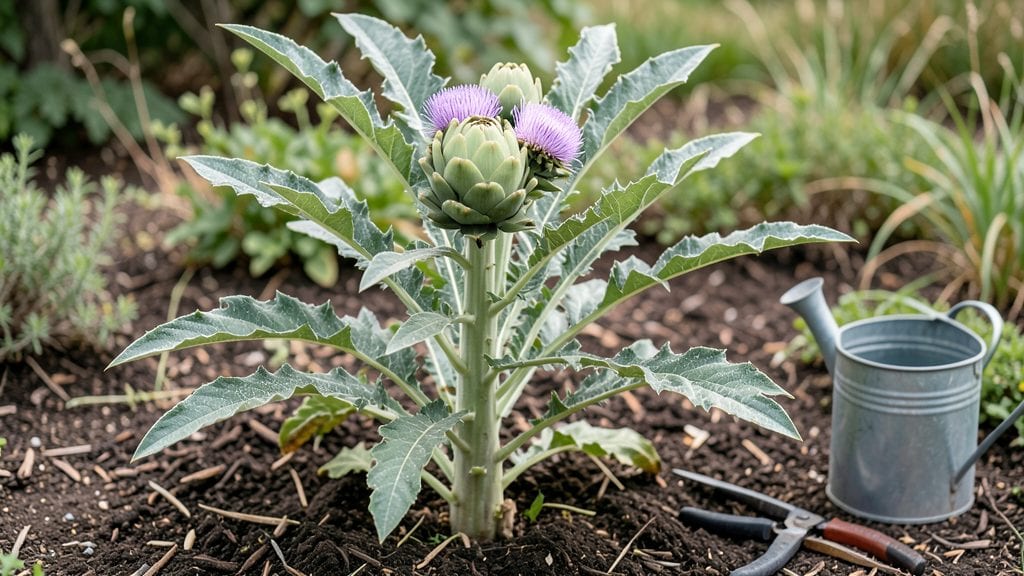
Planting an artichoke garden transforms your yard into a Mediterranean oasis with bold, edible thistles that thrive with surprisingly little fuss. 🌿 I’ve grown them for years, and the secret lies in mimicking their native climate—warm days, cool nights, and soil that drains like a desert riverbed but holds moisture like a sponge.
The first harvest feels like winning the gardening lottery: those fuzzy green globes bursting with tender hearts.
The real game-changer? Artichokes are perennials in zones 7-10, meaning they multiply each year with proper care. You’ll need a sunny spot (at least 6 hours of direct light), well-draining soil amended with compost, and patience—plants take 6-12 months to produce their first edible buds.
The payoff? Zero fuss after establishment; just water deeply once a week and watch them grow like overgrown green bushes.
Here’s where it gets interesting: artichokes hate soggy roots, so raised beds or mounded soil work best in heavy clay zones. Once established, they’re drought-tolerant and rarely bothered by pests—just watch for earwigs hiding under the bracts.
The first harvest arrives in late spring or early summer, and each plant can yield 6-12 artichokes annually if you keep them pruned and fed.
Perfect for gardeners who want low-maintenance, high-reward crops with a Mediterranean flair. The key is starting right—soil prep makes all the difference. Let’s get those roots growing!
📚 In This Guide
- What you need
- Instructions
- Tips and common mistakes
- Wrapping up and next steps
What you need
- ● Artichoke plants: 1-3 Globe or Green Globe artichoke plants (perennial varieties; avoid annual types like Crimson)
- ● Option 1: 1-gallon potted seedlings (pricier but faster)
- ● Option 2: Seeds (requires 2-3 months of stratification; available online)
- ● Well-draining soil: Mix of loamy soil + compost (pH 6.0–7.5). Avoid clay-heavy soil!
- ● Sunlight: Full sun (6+ hours/day) in USDA Zones 7–10 (perennials; annuals in cooler zones).
- ● Water: Drip irrigation or soaker hose (1–2 inches/week; no overhead watering to prevent fungal diseases).
- ● Garden tools: Trowel or transplant spade
- ● Garden fork (for amending soil)
- ● Pruners (sterilized)
- ○ Optional (but helpful): Mulch (straw or wood chips, 2–3 inches deep)
- ● Cage or trellis (for support if plants grow tall)
- ● Plant markers (to track varieties)
- ● pH test kit (to monitor soil acidity)
- ● ✅ Timing: Plant seedlings in early spring (after last frost) or fall (6–8 weeks before first frost). Seeds need a cold stratification period (mimic winter by refrigerating seeds for 8–12 weeks before planting).
- ● ✅ Space: 2–3 feet apart in rows (or 4 feet for larger varieties).
- ● ✅ Patience: Perennial artichokes take 2–3 years to mature and produce buds!
Step-by-Step instructions for planting and growing artichokes
Here’s how to grow a productive artichoke patch with just a few key steps—no fuss, just flavor.
🌱 Step 1: Choose the Right Location and Prepare the Soil
Artichokes thrive in full sun—at least 6-8 hours daily—and rich, well-draining soil. Pick a spot with afternoon shade in hot climates to prevent bolting. I always test soil pH first (aim for 6.5-7.5) and amend with compost if needed.
Loosen the soil to a depth of 12 inches with a garden fork, breaking up any compacted layers. Mix in 2-3 inches of compost or aged manure to provide nutrients without overwhelming the plants. Avoid fresh manure—it can burn tender roots. The goal is loose, crumbly soil that holds moisture but drains freely.
🪴 Step 2: Plant Artichoke Crowns at the Correct Depth
Artichokes grow from crowns (not seeds), so plant them in early spring after the last frost when soil warms to 60°F. Space crowns 3-4 feet apart in rows 4 feet apart—they need room to spread. Dig a hole deep enough so the top of the crown sits 1-2 inches below soil level. This ensures stability and prevents rot.
Gently spread the roots outward in the hole before covering with soil. Firm the soil lightly around the crown to eliminate air pockets, then water deeply to settle everything. Mulch with 2-3 inches of straw or wood chips to retain moisture and suppress weeds. Avoid piling mulch against the crown—keep it 2 inches away to prevent rot.
☀️ Step 3: Water Consistently and Fertilize Lightly
Artichokes need 1-1.5 inches of water weekly, but consistency is key. Let the top 2 inches of soil dry out slightly between waterings—this prevents root rot. Water at the base, avoiding the leaves to reduce disease risk. Drip irrigation works best; overhead watering can spread fungal spores.
Fertilize once in early spring with a balanced 10-10-10 formula (follow package rates). Too much nitrogen leads to leafy growth at the expense of buds. I skip fall fertilization—artichokes go dormant in winter, and feeding then encourages weak new growth that won’t survive cold snaps.
✂️ Step 4: Monitor for Buds and Harvest at Peak Ripeness
Artichokes produce buds in their second year. Watch for tight, compact buds that feel firm to the touch—these are ready to harvest. Cut stems 2-3 inches below the bud with clean shears to avoid damaging the plant. Harvest in the morning when buds are fully closed but still vibrant green.
Leave 2-3 buds per plant to mature—they’ll grow into larger artichokes. If you see buds opening prematurely (turning purple or flowering), your plant is stressed. Check for overcrowding or underwatering and adjust care immediately. With proper spacing and water, you’ll get 4-6 harvests per plant each season.
⏰ Step 5: Overwinter and Prune for Next Year’s Growth
In fall, cut back dead foliage to 2 inches above ground level once temperatures drop below 40°F. Mulch heavily (4-6 inches) with straw or leaves to insulate roots. Artichokes are perennial in zones 7-10—they’ll regrow each spring if protected from hard freezes.
In early spring, remove old mulch and add fresh compost. Prune out any dead or diseased stems before new growth appears. You’ll see fresh shoots emerge in 3-4 weeks—this is your signal to resume regular care. With patience, your artichoke patch will produce for 5-7 years with minimal effort.
Tips & tricks for perfect artichoke garden plant
Here's what I learned after growing artichokes for years—these tricks will help you avoid common pitfalls and maximize your harvest.
The Sunlight Secret: In Step 1, don't just aim for 6-8 hours of sun—watch for afternoon shade in hot climates. I've seen artichoke plants bolt (go to seed) when exposed to intense afternoon sun without relief. If your location gets brutal afternoon heat, consider planting near taller plants or a fence that provides natural shade during peak hours. The goal is consistent warmth without stress.
Soil Preparation Payoff: When loosening soil to 12 inches in Step 1, take your time breaking up compacted layers. I use a garden fork to create vertical channels that improve drainage. The secret is to mix in that 2-3 inches of compost thoroughly—don't just pile it on top. This creates a nutrient-rich zone exactly where the roots will grow. For even better results, work in a handful of perlite or coarse sand if your soil is naturally heavy.
Planting Depth Matters: In Step 2, that 1-2 inch planting depth for the crown is critical. Too shallow and you risk rot from exposure, too deep and the crown can suffocate. I always make sure the top of the crown sits just below soil level by using a level to check depth. After planting, give the crown a good drink of water to settle the soil around it—this eliminates air pockets that can cause instability. The 2-inch mulch clearance is just as important as the depth itself.
Watering Wisdom: For Step 3's 1-1.5 inches of weekly water, consistency truly is key. I set up a simple drip irrigation system that delivers water right at the base of each plant. The trick is to let that top 2 inches of soil dry slightly between waterings—this prevents root rot while keeping the plants hydrated. I've found that morning watering gives leaves time to dry completely, reducing fungal risks. And never water the leaves themselves—always direct water to the soil at the plant's base.
Pro Tips for Artichoke Garden Plant
- Here's what I learned after growing artichokes for years—these tricks will help you avoid common pitfalls and maximize your harvest.
- The Sunlight Secret: In Step 1, don't just aim for 6-8 hours of sun—watch for afternoon shade in hot climates.
- Soil Preparation Payoff: When loosening soil to 12 inches in Step 1, take your time breaking up compacted layers.
Frequently asked questions
Got questions about growing your own artichoke garden plant?
You’re not alone! Here are answers to the most common queries—from timing to troubleshooting—to help you cultivate a thriving patch of these delicious perennials.
When is the best time to plant artichokes?
Artichokes thrive in mild climates and are best planted in early spring (after the last frost) or late summer (8–10 weeks before the first frost). In warmer zones (USDA 7–10), you can plant year-round. Give them 6–8 weeks of warm soil (60°F+) to establish roots before cooler weather arrives.
How long does it take for artichoke plants to produce?
Patience is key! Artichokes are perennials, but they may take 1–2 years to mature and produce buds. Once established, expect harvests in late spring to summer. Green Globe varieties often yield faster (120–150 days) than Romanesco types (180+ days).
What pests or diseases should I watch for?
Common issues include:
- Artichoke plume moths: Tiny caterpillars burrow into buds—handpick or use row covers.
- Root rot: Avoid soggy soil; improve drainage with compost.
- Aphids: Spray with soapy water or introduce ladybugs.
- Fungal spots: Space plants 3–4 feet apart for airflow; remove affected leaves.
Can I grow artichokes in containers?
Yes! Choose large pots (at least 18–24 inches deep) with drainage holes and a well-draining mix (60% potting soil, 30% compost, 10% perlite). Dwarf varieties like ‘Green Fingers’ work best. Place containers in full sun and water consistently—containers dry out faster than garden beds.
How do I know when artichokes are ready to harvest?
Harvest when buds are tightly closed (like a fist) but still plump and vibrant. For Romanesco types, wait until the bracts (leaves) start separating slightly. Use a sharp knife to cut the stem—leave a few buds per plant to encourage regrowth. Don’t wait too long! Overripe artichokes become tough.
What can I plant near artichokes for companion benefits?
Artichokes love:
- Basil, thyme, or marigolds: Repel pests naturally.
- Garlic or onions: Deter root rot.
- Avoid planting near strawberries—they compete for nutrients.
Wrapping up and next steps
Growing an artichoke garden plant is a rewarding journey that blends minimal effort with bountiful harvests—perfect for both beginners and seasoned gardeners! 🌱 With the right soil, sunlight, and a little patience, you’ll enjoy fresh, homegrown artichokes year after year.
Whether you’re drawn to their unique flavor or the satisfaction of nurturing a thriving perennial, your garden will thank you.
Ready to take the next step? Start by planting your first artichoke crowns this season and watch your garden flourish. Happy growing! 🌟