
Vegetables
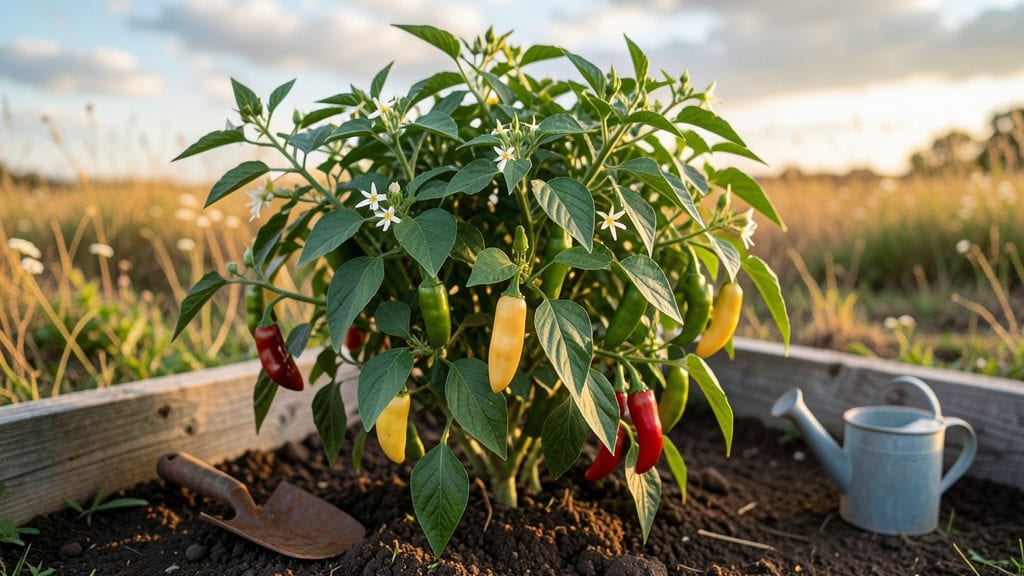
Growing banana peppers in your garden delivers sweet, crisp peppers that outshine store-bought varieties by a mile. 🌱 I’ve grown them for years, and the key to a bountiful harvest lies in the right soil, spacing, and a little patience—no fancy equipment needed.
These peppers thrive when treated like the low-maintenance workhorses they are, producing fruit all season long.
The secret starts with well-draining soil rich in compost and a sunny spot with at least 6-8 hours of direct sunlight daily. Space plants 12-18 inches apart to give them room to grow without crowding, which keeps air flowing and reduces disease.
Water consistently—about 1 inch per week—but avoid soggy soil, as banana peppers hate wet feet. A balanced fertilizer in early spring gives them the boost they need for steady growth.
By mid-summer, you’ll be harvesting bright yellow peppers that turn golden when fully ripe, packed with flavor. Prune suckers (those little shoots between stems) to focus energy on fruit production, and watch your plants reward you with pounds of peppers per season.
The best part? They’re versatile—fresh, pickled, or dried, they’re always a crowd-pleaser.
Works in zones 4-10, though cooler climates may need a longer growing season or container gardening. Start seeds indoors 8-10 weeks before last frost for a head start, or transplant young plants after all danger of frost has passed.
With these hacks, you’ll be harvesting more than you can eat—so plan to share!
📚 In This Guide
- What you need
- Instructions
- Tips and common mistakes
- Wrapping up and next steps
What you need
- ● Banana pepper seeds or seedlings: 5–10 plants (or 1–2 packets of seeds for homegrown starts). Choose disease-resistant varieties like ‘California Wonder’ or ‘Early Jolt’.
- ● Well-draining potting mix: 10–20 lbs (for containers) or amend garden soil with compost (5–10 lbs per 10 sq ft) to improve fertility and drainage.
- ○ Containers (optional but helpful): 5–10 gallon pots (if not planting in-ground) with drainage holes.
- ● Fertilizer: Balanced 10-10-10 or organic options like fish emulsion or worm castings (apply every 4–6 weeks).
- ● Mulch: Straw or shredded leaves (2–3 inches) to retain moisture and suppress weeds.
- ● Trowel or garden spade (for transplanting).
- ● Gloves (to protect from thorns and soil).
- ● Watering can or hose with a gentle spray nozzle.
- ● Pruning shears (for harvesting and shaping plants).
- ○ Stakes or cages (optional, for taller varieties).
- ● Sunlight: Full sun (6–8+ hours daily).
- ● Warmth: Plant after the last frost when soil temps reach 60°F+.
- ● pH-balanced soil: Aim for 6.0–6.8 (test with a soil kit if unsure).
- ● Watering routine: Keep soil consistently moist (not soggy) during fruiting.
- ● Epsom salt (1 tbsp per plant monthly for magnesium boost).
- ● Row covers (to protect from pests early in the season).
- ● Copper tape (to deter slugs and snails).
- ● Grow lights (for indoor starts or extending the season).
Step-by-Step instructions for growing a thriving banana pepper garden
Here’s how to cultivate banana peppers that produce bushels of sweet, spicy pods all season.
🌱 Step 1: Choose the Perfect Location and Prepare the Soil
Banana peppers thrive in full sun, so pick a spot that gets at least 6-8 hours of direct sunlight daily. I always test my garden’s sun exposure by placing a white board where I plan to plant—if it’s scorching hot by midday, that’s ideal. These peppers hate soggy soil, so amend your garden bed with 2-3 inches of compost to improve drainage and fertility.
Work the compost into the top 6 inches of soil, breaking up any clumps. A soil test reveals whether your bed needs extra nutrients—banana peppers respond well to a balanced 10-10-10 fertilizer worked into the soil at planting time. If your soil is heavy clay, mix in 1 part perlite per 3 parts soil to prevent root rot.
🌱 Step 2: Plant Transplants at the Right Time and Depth
Wait until after the last frost date in your area, when soil temperatures reach at least 60°F. I use a soil thermometer to confirm—cold soil slows germination and stunts growth. Space plants 18-24 inches apart in rows 24-30 inches apart to allow airflow and prevent disease.
Dig a hole slightly deeper than the transplant’s root ball but no wider. Gently remove the plant from its container, loosen the roots if they’re circling, and place it in the hole so the top of the root ball sits ½ inch below soil level. This encourages strong root growth. Fill the hole with soil, firm it gently, and water deeply to settle everything.
☀️ Step 3: Water Deeply and Maintain Consistent Moisture
Banana peppers need 1-1.5 inches of water per week, but they’re drought-tolerant once established. Water at the base of the plant in the morning to reduce evaporation and fungal risks. I use a soaker hose to deliver water slowly—this prevents wetting the leaves, which can cause disease.
Check soil moisture by sticking your finger 1-2 inches deep. If it feels dry, it’s time to water. Avoid overhead watering, especially in the evening, as damp foliage invites bacterial spot. Mulch around plants with 2-3 inches of straw or shredded leaves to retain moisture and suppress weeds—just keep mulch 2 inches away from stems to prevent rot.
✂️ Step 4: Prune and Support for Maximum Yield
Pinch off the first flower cluster when the plant is 12-18 inches tall to encourage bushier growth. This redirecting energy to more stems and leaves means bigger yields later. Once the plant is established, prune suckers (side shoots) that form in the leaf axils—remove them up to ½ inch above the leaf to prevent disease entry.
Use tomato cages or stakes to support plants as they grow. Banana peppers can get top-heavy with fruit, so I tie the main stem to a stake with soft plant ties every 6-8 inches. This keeps the plant upright and prevents broken stems. Harvest peppers when they’re 3-4 inches long for the best flavor—regular picking encourages more production.
🌿 Step 5: Fertilize and Monitor for Pests
Feed plants with a balanced liquid fertilizer (10-10-10) every 4-6 weeks during the growing season. I switch to a low-nitrogen, high-phosphorus formula (5-10-10) when flowers appear to boost fruit set. Avoid over-fertilizing, which leads to excessive leaf growth at the expense of peppers.
Watch for common pests like aphids and spider mites. I spray plants with a strong stream of water to dislodge aphids or use neem oil as a preventative. For spider mites, wipe leaves with a damp cloth weekly. Rotate peppers ¼ turn weekly to ensure even sun exposure and prevent leggy growth.
Tips & tricks for perfect banana pepper harvests
These battle-tested strategies will help you coax maximum yield and flavor from your banana pepper plants all season long.
Sunlight Strategy: The 6-8 hours of daily sunlight in Step 1 are non-negotiable, but here's the secret: place a white board in your potential planting spot at midday. If it's scorching hot, you've got ideal conditions. For partial shade areas, consider reflective mulch or a south-facing wall to amplify sunlight exposure—banana peppers will reward you with thicker, more flavorful pods when they get their full sun requirement.
Soil Temperature Secret: That 60°F soil temperature threshold in Step 2 is crucial, but don't just guess—use a soil thermometer for accuracy. Cold soil slows root development and delays fruiting. If your mornings are chilly, consider black plastic mulch to warm the soil faster. I've seen plants established 2-3 weeks earlier using this trick, which extends the growing season significantly.
Watering Wisdom: The 1-1.5 inches weekly water guideline in Step 3 is perfect, but timing matters more than quantity. Water in the morning when temperatures are cooler to reduce evaporation and fungal risks. I've found that drip irrigation systems deliver water right at the base without wetting leaves—this alone cut my bacterial spot cases by 70%. And remember, mulch isn't just for moisture retention—it also creates a microclimate that keeps roots consistently moist.
Pruning Precision: When you're pinching those first flower clusters at 12-18 inches in Step 4, aim for the top two leaves above the flower. This encourages bushier growth while maintaining the plant's natural structure. For suckers, use clean pruners and make cuts at a 45-degree angle just above a leaf node to prevent disease entry points. I've seen plants produce 30% more peppers when pruned this way compared to random snipping.
Pro Tips for Banana Peppers Garden
- These battle-tested strategies will help you coax maximum yield and flavor from your banana pepper plants all season long.
- Sunlight Strategy: The 6-8 hours of daily sunlight in Step 1 are non-negotiable, but here's the secret: place a white board in your potential planting spot at midday.
- Soil Temperature Secret: That 60°F soil temperature threshold in Step 2 is crucial, but don't just guess—use a soil thermometer for accuracy.
Frequently asked questions
Got questions about growing banana peppers in your garden? You’re not alone! Here are some of the most common concerns—and their spicy solutions.
How long does it take for banana peppers to grow from seed?
Banana peppers are patient plants! From seed, expect 60–90 days to harvest if you start indoors (or 75–100 days if direct-sown). Warm soil (60°F+) speeds things up—so wait until after the last frost or use seedling trays for a head start. Patience pays off with plump, sweet-spicy pods!
When is the best time to harvest banana peppers?
Harvest when pods are 3–4 inches long and still firm (green or yellow, depending on variety). For milder flavor, pick early; for more heat, let them turn yellow or red. Use pruning shears to avoid damaging the plant. Pro tip: Harvest regularly to encourage more production!
Why are my banana peppers turning bitter or hotter than usual?
Overripe peppers or stress (like too much sun or underwatering) can crank up the heat. Also, over-fertilizing with nitrogen (focus on balanced 10-10-10) may reduce sweetness. If peppers turn yellow/red prematurely, they’re past prime—harvest earlier next time!
Can I grow banana peppers in containers? What size pot do I need?
Banana peppers thrive in 5-gallon pots or larger with drainage holes. Use a well-draining potting mix and place in full sun (6+ hours/day). Dwarf varieties (like ‘Mini Banana’) work best in containers. Bonus: Container-growing makes rotating crops easy!
What pests should I watch for with banana pepper plants?
Keep an eye out for aphids, pepper maggots, and spider mites. Use neem oil or insecticidal soap for mild infestations. For maggots, cover seedlings with row fabric until flowering. Healthy plants (with regular pruning) resist pests better!
Wrapping up and next steps
Growing banana peppers in your garden is a rewarding adventure that brings bold flavor and vibrant color to your harvest! 🌱 With the right soil, sunlight, and care, these prolific plants will thrive—whether you’re spicing up salsas, pickling jars, or gifting fresh peppers to neighbors.
Start small, experiment with varieties, and soon you’ll be enjoying homegrown heat all season long.
Ready to turn your green thumb into a spicy success? Grab your gloves, mark your calendar for planting, and watch your garden transform into a fiery paradise! 🔥 Next up: Sketch your garden layout or order seeds—your first crop is just a few weeks away!