
Tools
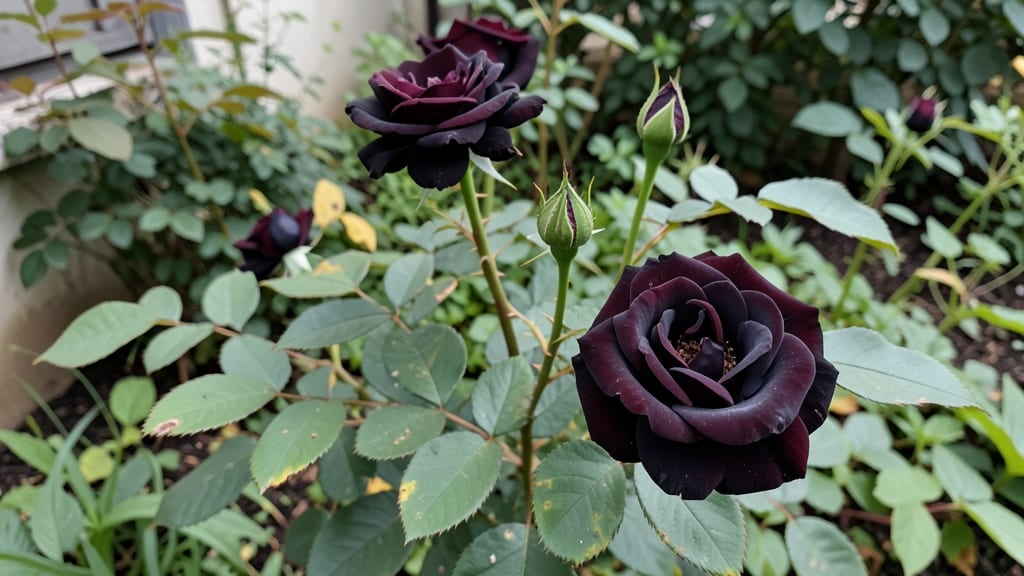
A black roses garden turns your yard into a moody masterpiece where drama thrives year-round. ✨ These velvety blooms aren’t just showstoppers—they’re the secret weapon for transforming ordinary spaces into gothic elegance.
I’ve designed gardens where deep burgundy roses stand out against silver foliage, their thornless varieties making them surprisingly practical for high-traffic areas.
Start with well-draining soil rich in organic matter—black roses demand it to stay vibrant. Pair them with companion plants like hellebores for winter structure or lavender for contrast, and use strategic lighting to highlight their midnight hue after dark.
The key? Plant them in clusters along borders or as a focal point near pathways where their rich color draws the eye.
You’ll end up with a garden that feels like a living painting—deep, mysterious, and effortlessly sophisticated. The roses bloom from late spring through fall, and their glossy foliage keeps the drama going even when flowers fade.
With proper pruning and support, they’ll thrive for years, becoming the centerpiece that neighbors admire.
Works in both formal and wild garden styles, from structured parterres to naturalistic drifts. The thornless varieties even make them pet-friendly, so your garden can be both stunning and safe. Let’s bring this dark romance to your space!
📚 In This Guide
- What you need
- Instructions
- Tips and common mistakes
- Wrapping up and next steps
What you need
- ● Black rose plants: 3–5 (thornless varieties like 'Black Baccara' or 'Black Magic' for safety and drama).
- ● Well-draining soil: 5–10 bags (mix garden soil with compost and perlite for aeration).
- ● Organic fertilizer: 1–2 bags (balanced 10-10-10 or rose-specific formula).
- ● Mulch: 1–2 bags (dark bark or cocoa mulch to enhance color contrast).
- ● Support stakes or trellises: 3–5 (6-foot tall, for climbing varieties).
- ● Drip irrigation or hose: 1 (for consistent moisture).
- ● Pruning shears: 1 pair (sharp, sterilized).
- ● Companion plants: 2–3 (silver foliage like lamb’s ear or white flowers like lilies for contrast).
- ● Garden lights: Solar-powered path lights (3–5) to highlight your roses at night.
- ● Thornless gloves: 1 pair (for safe handling).
- ● Epsom salt: 1 small bag (boosts magnesium for vibrant blooms).
- ● Decorative stones: 1–2 bags (black or dark gray gravel for a moody base).
Step-by-step instructions for designing a striking black roses garden
Here's how to create a bold, low-maintenance black rose display that thrives year-round.
🪴 Step 1: Select and Prepare the Planting Site
Choose a location with 6+ hours of sunlight daily—black roses need plenty of light to maintain their deep, velvety hue. I always test the spot by observing how much sun it gets over a week before planting. The soil should drain well but retain moisture; amending heavy clay with 2-3 inches of compost improves drainage dramatically.
Black roses perform best in slightly acidic soil with a pH between 6.0 and 6.5. If your soil is alkaline, work in sulfur or peat moss to adjust the pH before planting. Dig the planting hole twice as wide as the root ball but only as deep—planting too deep suffocates roots and causes stress.
🌱 Step 2: Plant Black Rose Varieties Strategically
For a dramatic effect, I plant 4-5 thornless black roses as focal points, spaced 3-4 feet apart to allow airflow and prevent disease. Thornless varieties like 'Black Baccara' or 'Double Black' create a striking visual while being safer for gardeners. Plant in early spring or fall when temperatures are mild.
Gently remove the rose from its container and loosen any circling roots. Place the plant in the hole so the graft union (the bump near the base) sits 2 inches above soil level. Backfill with native soil mixed with compost, firming gently to eliminate air pockets. Water deeply to settle the soil and encourage root contact.
☀️ Step 3: Establish a Support System and Mulch
Install 4-6 foot tall rose trellises or stakes immediately after planting—waiting until later stresses the plant. I use sturdy metal or wooden supports that won't rot quickly. Secure the main stem with soft ties, leaving room for growth. Black roses grow upright but benefit from gentle training to maintain shape.
Apply 3 inches of mulch around the base, keeping it 2 inches away from the stem. Use shredded bark or wood chips to suppress weeds and retain moisture. Replenish mulch annually in early spring. This layer also protects roots from temperature swings, which is crucial for winter hardiness.
💧 Step 4: Implement a Consistent Watering and Fertilizing Routine
Water deeply 2-3 times per week during the first growing season, aiming for 1-1.5 gallons per plant. Let the top 2 inches of soil dry between waterings to prevent root rot. Black roses are drought-tolerant once established but produce better blooms with consistent moisture. I water in the morning to reduce fungal risks.
Fertilize monthly during the growing season with a balanced rose fertilizer (10-10-10). In early spring, add a slow-release rose-specific fertilizer to the soil around the base. Avoid high-nitrogen fertilizers—they promote leafy growth at the expense of flowers. Stop fertilizing in late summer to prepare plants for dormancy.
✂️ Step 5: Prune and Maintain for Year-Round Blooms
Prune in early spring before new growth begins. Remove dead, diseased, or crossing branches, cutting just above an outward-facing bud. Shape the plant by shortening last year's stems by one-third to encourage bushier growth. Black roses bloom repeatedly, so deadhead spent flowers by cutting back to the first healthy leaf below the bloom.
Watch for pests like aphids or spider mites—black roses attract them due to their dark foliage. Treat infestations immediately with neem oil or insecticidal soap. In fall, cut back stems to 12-18 inches and apply a 2-3 inch layer of mulch to insulate roots. With proper care, your black roses will reward you with dramatic blooms from spring through frost.
Tips & tricks for perfect black roses garden
A few subtle strategies can transform your black roses from merely striking to absolutely show-stopping. Here's what I've learned after years of perfecting these dramatic plants.
Sunlight Strategy: While the instructions call for 6+ hours of sunlight, I've found that black roses actually thrive with full sun exposure (8+ hours) during their peak blooming season (spring to early fall). The deeper the light, the richer the black hue becomes. If your location only gets 6 hours, supplement with a grow light for 2-3 hours in the evening during summer months to maintain that velvety darkness.
Soil Science: The pH range of 6.0-6.5 is critical, but don't stop there. I always test my soil's organic matter content—aim for 5% or higher. If your soil is sandy, mix in extra compost (4-6 inches) when amending. For clay soils, incorporate perlite or vermiculite to improve aeration while maintaining moisture retention. The roots need both oxygen and hydration to support those dramatic blooms.
Support System Hack: When installing your 4-6 foot trellises, I recommend adding cross-bracing at the top. Black roses grow tall and top-heavy with blooms, and without proper support, they can lean or even snap in wind. Use metal cable or wooden braces to create an X shape at the top of each trellis—this creates a stable frame that won't rot like wooden supports might over time.
Winter Protection: The fall pruning to 12-18 inches is excellent, but here's my extra tip: after pruning, wrap the canes with burlap or frost cloth and secure with twine. This creates an insulating layer that protects against winter temperature swings. In particularly harsh climates, I've even added a layer of straw mulch (6-8 inches) over the burlap for added insulation. This helps maintain root temperature consistency, which is crucial for spring regrowth.
Pro Tips for Black Roses Garden
- A few subtle strategies can transform your black roses from merely striking to absolutely show-stopping.
- Sunlight Strategy: While the instructions call for 6+ hours of sunlight, I've found that black roses actually thrive with full sun exposure (8+ hours) during their peak blooming season (spring to early fall).
- Soil Science: The pH range of 6.0-6.5 is critical, but don't stop there.
Frequently asked questions
Got questions about cultivating a stunning black roses garden? Here are some of the most common ones—and their answers—to help you create your own darkly dramatic oasis.
Do black roses really stay black, or do they fade to red?
Black roses (like the famous Louis Philippe or Queen of Night) aren’t truly black—they’re a deep burgundy or maroon with a velvety, near-black hue. In bright sunlight, they may appear richer, while shade can make them look slightly lighter. Embrace the drama—they’re still stunning!
How long does it take for black roses to bloom after planting?
Black roses typically take 6–12 months to establish roots and bloom, depending on climate and care. Patience is key! Prune lightly in early spring to encourage stronger growth. With proper soil, water, and sunlight (full sun to partial shade), you’ll see those dramatic blooms sooner.
Can black roses grow in hot climates, or do they need cooler weather?
Black roses thrive in USDA Zones 6–10, but they can handle heat if given consistent moisture and afternoon shade in extreme climates. Mulch around the base to retain coolness, and avoid planting in sweltering, dry areas. A little shade during peak summer hours keeps them lush and blooming.
Are there thornless black rose varieties, or should I expect prickers?
Yes! Varieties like Black Baccara and Black Chocolat are thornless or nearly thornless, making them perfect for gardens and cut arrangements. If you prefer classic black roses with thorns, wear gloves—those velvety petals are worth the occasional prick!
What’s the best way to keep black roses blooming all year?
For year-round blooms, deadhead spent flowers regularly, fertilize lightly every 4–6 weeks (spring to fall), and protect them from harsh winters with mulch or a frost cloth. In warmer climates, they may bloom continuously with minimal care—just keep the soil moist and the sunlight balanced!
Still curious? Drop your questions below—we’re happy to help your black roses garden shine!
Wrapping up and next steps
A black roses garden isn’t just a dream—it’s a bold, year-round statement of elegance and mystery. With the right thornless varieties, soil prep, and care, you’ve got everything you need to cultivate a striking focal point that thrives in any season. 🌹✨
Ready to dive in? Start small—plant a single black rose as a test, then expand your garden with confidence. Whether you’re a seasoned gardener or a curious beginner, the drama of deep velvet blooms is waiting for you!