
Fertilization
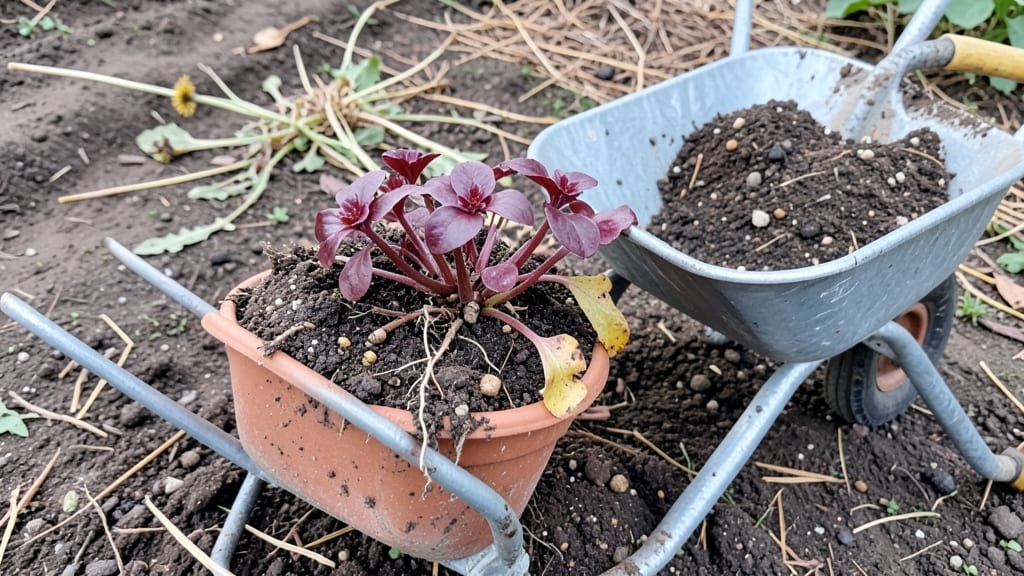
Garden soil’s heavy clay content creates a suffocating environment for roots, blocking oxygen flow and trapping excess moisture that leads to rot. 🌱 Even when mixed with organic matter, it lacks the airy structure of commercial potting mixes, which are formulated to balance moisture retention with drainage.
I’ve seen plants thrive in amended blends, but the risks—like fungal diseases or stunted growth—often outweigh the benefits unless you’re willing to test and adjust your mix carefully.
💡 In This Article
- Why Garden Soil Fails as Potting Mix
- Safe Ways to Repurpose Garden Soil for Containers
Why garden soil fails as potting mix
Garden soil's structure is fundamentally different from what container plants need. The clay particles in garden soil bind tightly, creating a dense matrix that restricts root growth and oxygen flow.
When compacted—especially in pots—this heavy texture reduces pore space by up to 60%, compared to ideal potting mixes that maintain 40-60% air space for healthy roots. This suffocation effect triggers anaerobic conditions, where roots drown in their own moisture rather than absorb nutrients efficiently.
The organic matter in garden soil also behaves unpredictably in containers. Fresh compost or decomposed leaves break down rapidly, releasing nutrients too quickly and creating a "hot spot" effect that burns tender roots.
Meanwhile, the microbial activity thrives in this moist environment, accelerating fungal growth like Phytophthora or Pythium—pathogens that thrive in waterlogged, anaerobic soil. 🌱 Commercial potting mixes use sterile components like peat moss or coconut coir that decompose slowly, providing consistent nutrition without these extreme fluctuations.
Drainage is where garden soil truly betrays container plants. Clay's tiny particles hold water in microscopic gaps, creating capillary action that keeps moisture trapped even after the pot appears dry. This leads to root rot within 5-7 days of overwatering—a timeline that's far shorter than in well-draining potting mixes.
The visual difference is stark: a pot of garden soil stays damp for weeks, while a proper potting mix dries out evenly from top to bottom, preventing the anaerobic zones where harmful bacteria flourish.
Nutrient imbalance is another silent killer. Garden soil often contains uneven concentrations of nitrogen, phosphorus, and potassium, with sudden spikes that confuse plant growth cycles. For example, a tomato plant might sprout lush leaves from excess nitrogen, only to produce weak fruit because phosphorus levels are insufficient.
Potting mixes are formulated with balanced fertilizers that release nutrients gradually, matching a plant's growth stages precisely.
Consider the texture comparison: garden soil feels heavy and gritty when dry, while premium potting mixes have a light, almost fluffy consistency that crumbles easily between fingers. This structural difference isn't just about feel—it's about function.
The air pockets in potting mixes (created by components like perlite or vermiculite) allow roots to breathe while still retaining enough moisture. Without these amendments, garden soil becomes a suffocating blanket that strangles plant development.
Even when amended, garden soil's native weed seeds and pest eggs remain dormant until activated by warmth and moisture in containers. Unlike sterilized potting mixes, these contaminants can emerge suddenly, competing with your desired plants for nutrients and space.
The irony? You're often trying to grow plants in a miniature ecosystem that's already teeming with unwanted life forms.
Here's what actually happens at the microscopic level: clay particles form tight clusters, blocking water and oxygen pathways to root hairs. In contrast, potting mixes use fibrous materials like sphagnum moss that create a sponge-like network where roots can explore freely.
This structural difference explains why container plants often show signs of stress—yellowing leaves, stunted growth—even when watered consistently.