Planting
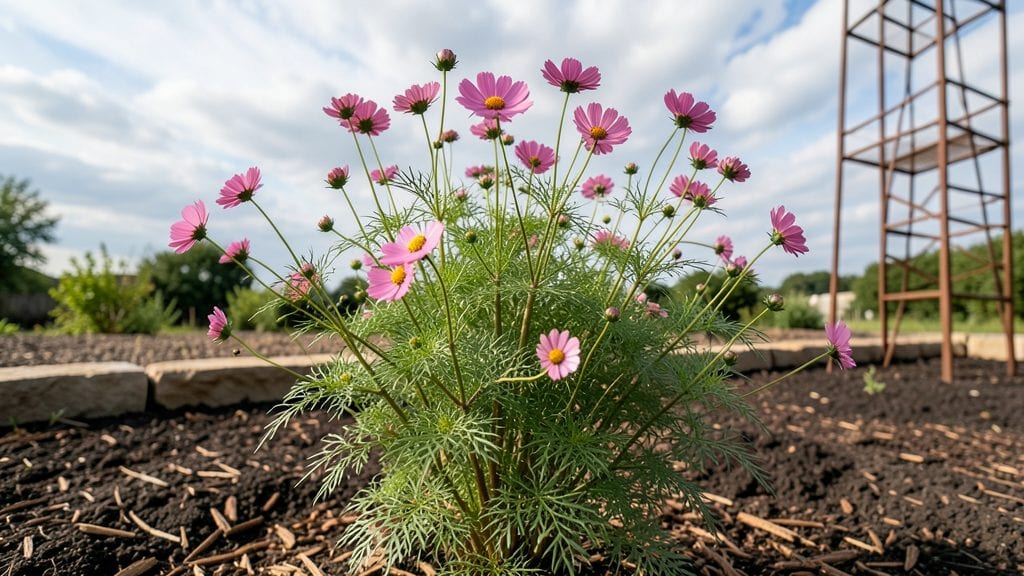
Transform your summer garden into a buzzing pollinator paradise by planting a garden cosmos plant, which brings drought-tolerant blooms that attract bees and butterflies. I planted my first batch last June, and within weeks, the air hummed with bees and butterflies—no pesticides, no fuss.
The secret lies in their easygoing nature: these plants thrive on neglect, so long as you get the basics right.
You’ll need full sun—at least 6 hours daily—and well-draining soil, even if it’s not rich. A light sprinkle of compost at planting time gives them a head start, but they’ll forgive you if you skip it.
Space seedlings 12-18 inches apart to let them spread, and watch as those feathery foliage frames burst into pink, white, or magenta blooms by mid-summer.
Watering is where they shine: once established, they barely need it. Let the soil dry between waterings, and you’ll avoid the leggy stems that come from overwatering. Snip back spent blooms to encourage more flowers, and by fall, you’ll have a second flush of color before frost hits.
The best part? They self-seed like crazy, so next year’s garden practically plants itself.
Perfect for borders, cutting gardens, or wildflower meadows, these plants adapt to almost any spot. Just avoid heavy clay, and you’re golden. Ready to turn your garden into a pollinator magnet? Let’s get those seeds in the ground.
📚 In This Guide
- What you need
- Instructions
- Tips and common mistakes
- Wrapping up and next steps
What you need
- ● Garden cosmos seeds: 20–50 seeds (or 1–2 seed packets for a small garden; 3+ for larger areas). Choose dwarf (12–18"), sensation (24–36"), or sensation mix varieties for variety.
- ● Well-draining potting mix: 1–2 cubic feet (for containers) or enrich your native soil with compost (1–2 inches mixed into the top 6–12" of soil).
- ● Garden tools: Trowel or hand shovel
- ● Pruners (for deadheading)
- ○ Garden gloves (optional but recommended!)
- ○ Containers (optional): 5–10" deep pots (1–2 plants per 6" pot) with drainage holes.
- ● Sunlight: Full sun (6+ hours daily). Partial shade (4–6 hours) works for shorter varieties.
- ● Water: Drought-tolerant once established, but keep soil moist (not soggy) for the first 2–3 weeks after planting.
- ● Spacing: VarietySpacing (inches) Dwarf6–12" Sensation12–18" Tall (wild-type)18–24"
- ● Soil pH: Slightly acidic to neutral (6.0–7.0). Test your soil if unsure!
- ● Slow-release fertilizer (5-10-5 or balanced formula) for nutrient boost.
- ● Mulch (straw or shredded leaves) to retain moisture and suppress weeds.
- ● Stakes or cages (for tall varieties in windy areas).
- ● Pollinator-friendly companions: Marigolds, zinnias, or basil to attract bees and butterflies!
Step-by-Step instructions for planting and caring for garden cosmos
Here's how to grow these cheerful, drought-tolerant blooms that bring pollinators to your garden all season.
Choose the Right Location and Prepare the Soil
Garden cosmos thrive in full sun, so pick a spot that gets at least 6 hours of direct sunlight daily. They tolerate a wide range of soil types, but well-draining soil prevents root rot. If your soil is heavy clay, mix in 2-3 inches of compost from your materials list to improve drainage and fertility.
Loosen the top 6 inches of soil with a garden fork or tiller to create a soft bed for planting. Cosmos seeds are lightweight, so avoid compacting the soil—this helps them establish quickly. I like to rake the surface smooth afterward, creating a fine texture that makes direct sowing easier.
Direct Sow Seeds at the Right Time
Sow seeds outdoors 2-3 weeks after your last frost date when soil temperatures reach 60°F or warmer. Cosmos seeds germinate best in warm soil, and cold temperatures slow or prevent sprouting. Scatter seeds ¼ inch deep—they don’t need light to germinate, but planting too deep will delay emergence.
Space seeds 12-18 inches apart in rows 18-24 inches apart for full, bushy plants. I find that thinning later is easier if I sow seeds a bit closer together initially. Water the area gently after planting to settle the soil around the seeds without disturbing them.
Water and Maintain Until First Blooms
Keep the soil evenly moist but not soggy until germination, which typically takes 7-14 days. Once seedlings appear, reduce watering to 1 inch per week—cosmos are drought-tolerant and overwatering can cause leggy growth. You’ll notice the first true leaves emerge in about 2 weeks, signaling it’s time to taper back on moisture.
Fertilizer isn’t necessary, but if your soil is poor, a light application of balanced 10-10-10 fertilizer at planting time encourages stronger growth. Avoid high-nitrogen fertilizers, which promote leafy growth at the expense of flowers. Mulch around plants with 1-2 inches of organic mulch to retain moisture and suppress weeds.
Deadhead and Support for Continuous Blooms
To encourage nonstop blooms, deadhead spent flowers by pinching off faded blooms at the base. This redirects the plant’s energy to producing new flowers instead of seed heads. I check plants weekly and remove any brown or damaged leaves to keep the foliage healthy and attractive to pollinators.
Tall cosmos varieties may need staking or support, especially in windy areas. Install 3-4 foot stakes or use a tomato cage for taller varieties like ‘Bright Lights’ or ‘Sensation Mix’. Secure the plant loosely to the support as it grows—cosmos are self-supporting but benefit from extra stability in exposed locations.
Prepare for Winter and Next Season
Cosmos are annuals, so they’ll die back with the first frost. However, they self-seed prolifically, so you’ll likely see volunteers popping up the following spring. In colder climates, pull up spent plants and compost them to prevent reseeding where you don’t want them.
If you’d like to collect seeds for next year, allow a few flowers to mature fully. The seed heads will dry and split open—harvest them before they scatter naturally. Store seeds in a cool, dry place until planting time. I’ve found that saved seeds often germinate just as reliably as store-bought ones.
Tips & tricks for perfect garden cosmos planting
Growing garden cosmos is simpler than you might think—once you know these key strategies for thriving plants and abundant blooms.
Soil Preparation Secret: In Step 1, when loosening the top 6 inches of soil, don't just scratch the surface. Use a garden fork to create vertical channels that improve drainage and root penetration. This is especially important if your soil is compacted—cosmos hate soggy roots. I've found that adding a handful of perlite to heavy clay soil creates tiny air pockets that prevent waterlogging while still holding moisture for those early root establishment days.
Timing is Everything: The 60°F soil temperature threshold in Step 2 is non-negotiable for germination. I've learned this the hard way—planting too early in cool soil results in seeds that either rot or take weeks to sprout. To check soil temperature, use a simple soil thermometer or press your hand into the ground—if it feels warm to your touch, it's ready. For cooler climates, consider using a black plastic mulch for 2-3 days before planting to warm the soil faster.
Watering Wisdom: In Step 3, the 1 inch per week guideline is perfect for established plants, but young seedlings need more frequent attention. After germination, I water lightly every other day rather than all at once. This keeps the soil consistently moist without creating surface crusting that can smother tender seedlings. A gentle misting from a watering can works better than overhead sprinklers which can dislodge seeds.
Deadheading Technique: When deadheading in Step 4, don't just snip off the faded flowers—remove the entire stem down to the first set of healthy leaves. This prevents disease from settling in the stem base and encourages stronger new growth. I've noticed that plants I deadhead aggressively produce flowers that are 20% larger than those I leave to go to seed, and the blooming season extends by about 3-4 weeks.
Pro Tips for Garden Cosmos Plant
- Growing garden cosmos is simpler than you might think—once you know these key strategies for thriving plants and abundant blooms.
- Soil Preparation Secret: In Step 1, when loosening the top 6 inches of soil, don't just scratch the surface.
- Timing is Everything: The 60°F soil temperature threshold in Step 2 is non-negotiable for germination.
Frequently asked questions
When is the best time to plant garden cosmos?
Plant cosmos seeds after the last frost when soil temperatures reach at least 55°F (13°C). They thrive in warm weather and can even be direct-sown in spring or late summer for fall blooms. For cooler climates, start seeds indoors 4–6 weeks before transplanting.
How often should I water garden cosmos?
Cosmos are drought-tolerant once established, but water them deeply 1–2 times per week during dry spells. Overwatering can cause root rot, so let the top inch of soil dry out between waterings. Mulch helps retain moisture and keeps roots cool.
Why aren’t my cosmos attracting bees or butterflies?
If pollinators are scarce, ensure your cosmos are in full sun (6+ hours/day) and blooming actively. Deadhead spent flowers to encourage more blooms. Avoid pesticides—cosmos thrive in chemical-free zones. Planting near other nectar-rich flowers (like marigolds or sunflowers) can also help!
Can I grow garden cosmos in containers?
Cosmos adapt well to containers 12+ inches deep. Use well-draining soil and a pot with drainage holes. Space 3–4 plants per container for a full, bushy look. Dwarf varieties (like ‘Bright Lights’) are ideal for small spaces or balconies.
What should I do if my cosmos leaves turn yellow?
Yellowing leaves often signal overwatering or poor drainage. Check soil moisture—cosmos prefer dry-ish conditions. Ensure pots/containers have drainage, and avoid soggy soil. If yellowing spreads, test for pests (like aphids) or nutrient deficiencies (try a balanced fertilizer).
How do I keep cosmos blooming all season?
Regularly deadhead spent blooms to redirect energy to new flowers. Pinch back leggy stems early in the season to encourage bushier growth. For extended blooms, fertilize lightly with a low-nitrogen formula (like 5-10-10) every 4–6 weeks.
Wrapping up and next steps
Garden cosmos plants are a dream addition to any yard—offering vibrant blooms, drought resilience, and a magnet for pollinators like bees and butterflies. 🌼 With minimal care, they reward you with stunning seasonal color while supporting local ecosystems.
Whether you're a seasoned gardener or just starting, their easygoing nature makes them a perfect choice for both beauty and sustainability.
Ready to transform your garden? Start small—plant a few cosmos seeds or cuttings this season and watch your outdoor space thrive! For even more inspiration, explore companion plants like sunflowers or marigolds to create a pollinator paradise.