
Trees
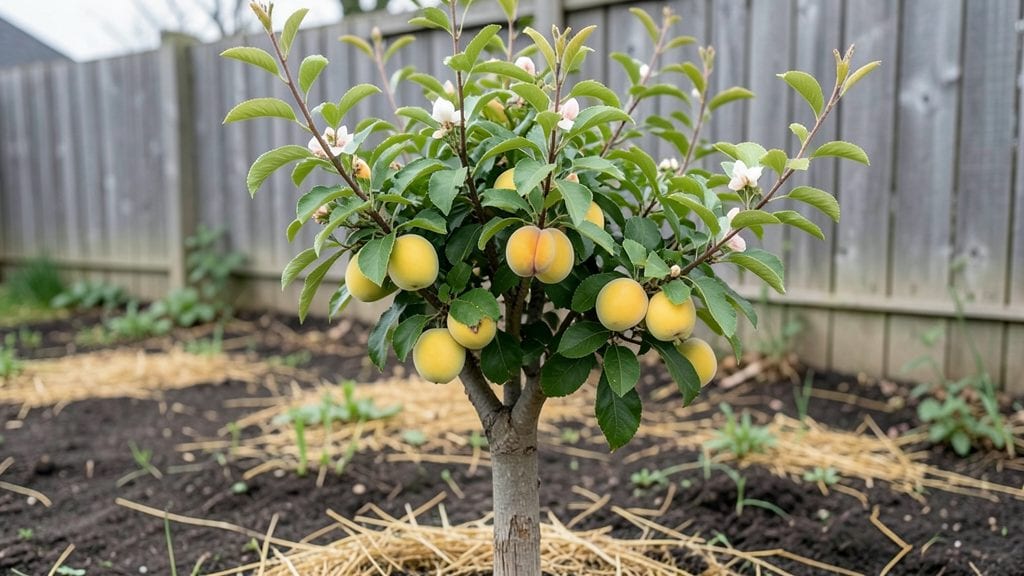
The Garden Gold Miniature Peach turns even small yards into fruit-bearing paradises with its 3-4 foot stature and year-round interest. I planted mine last spring, and now it’s the star of my patio—spring blossoms, summer fruit, and fiery fall foliage all in one package.
The key? Matching its needs to its tiny size, from soil depth to pruning frequency.
This dwarf peach thrives in full sun (6+ hours daily) and well-draining soil—no heavy clay here. A 5-gallon container works just as well as in-ground planting, making it perfect for balconies or courtyard spots.
Water deeply once a week (more in summer heat) but avoid soggy roots, which lead to root rot. The real magic happens when you pollinate by hand if bees are scarce—just shake the branches gently during bloom time.
By midsummer, you’ll be picking golden-yellow peaches** the size of plums—sweet, juicy, and perfect for snacking. Prune lightly after harvest to maintain shape, and mulch to keep roots cool.
The tree stays productive for decades with proper care, giving you fruit without the space demands of full-sized peaches. Even urban gardeners can grow this gem.
Fair warning: birds love these peaches too, so net young trees if needed. But the trade-off—fresh fruit in July—makes it worth every effort. Whether you’re growing in pots or planting in the ground, this little tree delivers big rewards with minimal fuss.
📚 In This Guide
- What you need
- Instructions
- Tips and common mistakes
- Wrapping up and next steps
What you need
- ● Dwarf Garden Gold Miniature Peach Tree (1-2 plants, depending on space) – Ensure it’s labeled as cold-hardy (zones 5-9).
- ● Well-draining potting soil (5-10 gallons, depending on pot size) – Mix with compost (10-20%) for nutrients.
- ● Container or raised bed (15-20 gallons minimum, with drainage holes) – Or a sunny spot in your yard (if planting in-ground).
- ● Organic fertilizer (balanced 10-10-10 or fruit-tree-specific, 1 lb per plant).
- ● Mulch (2-3 inches of wood chips or straw) to retain moisture and regulate soil temp.
- ● Pruning shears (sharp, sterilized) for shaping and maintenance.
- ● Watering can or hose with a gentle nozzle (drip irrigation is ideal for containers).
- ● Garden gloves (to protect hands from thorns and soil).
- ● Tree support stake (for young trees in windy areas).
- ● Fruit tree spray (organic neem oil or copper fungicide to prevent pests/diseases).
- ● Drip irrigation kit (automates watering for busy gardeners).
- ● Pollination aid (a small paintbrush or bee-friendly garden to ensure fruit set).
- ● Cold frame or row cover (for extending the growing season in cooler climates).
Step-by-Step instructions for planting and caring for Garden Gold miniature peach trees
Here's my foolproof method for growing these stunning dwarf peach trees that deliver both fruit and ornamental value year-round.
Select the Perfect Planting Site and Prepare the Soil
Choose a location with at least 6-8 hours of full sun daily—these trees thrive where traditional peaches grow but need more intense light to set fruit. The Garden Gold variety tolerates a slightly wider range of soil types than standard peaches, but it still prefers well-draining, slightly acidic soil with a pH between 6.0 and 6.5. Test your soil before planting, and amend with compost if it's heavy clay or sandy.
Dig a hole twice as wide as the root ball but only as deep. The top of the root ball should sit 1-2 inches above ground level—this prevents water from pooling around the trunk and causing rot. Loosen the soil at the bottom of the hole with your hands or a trowel to encourage root penetration. I always add a handful of slow-release fertilizer to the backfill soil to give the tree a nutrient boost right away.
Plant with Care to Ensure Strong Establishment
Remove the tree from its container and gently tease apart any circled or tangled roots—this encourages outward growth instead of a root-bound mass. Place the tree in the hole so the graft union (the bump near the base where the dwarfing rootstock meets the scion) sits 2-3 inches above soil level. This prevents the union from being buried, which can cause it to rot or produce suckers.
Backfill the hole with the amended soil, tamping it down lightly as you go to remove air pockets. Water deeply to settle the soil, then create a 2-inch-high berm of soil around the outer edge of the hole to direct water toward the roots. This simple technique prevents runoff and ensures the tree gets moisture where it needs it most. Mulch with 2-3 inches of organic mulch, keeping it 6 inches away from the trunk to prevent moisture buildup.
Water and Fertilize for Healthy Growth
Water the tree deeply every 2-3 days during the first growing season, ensuring the soil stays consistently moist but not soggy. You'll know it's right when the top 2 inches of soil feel damp to the touch. Overwatering is the fastest way to kill these trees—Garden Golds are drought-tolerant once established, but young trees need steady moisture to develop strong roots.
Apply a balanced 10-10-10 fertilizer at half strength 4-6 weeks after planting, then again in early summer. Switch to a low-nitrogen, high-phosphorus formula (like 5-10-10) when buds form in late winter to encourage flowering. I always follow the manufacturer's instructions but cut the recommended dose in half—they're small trees, and too much fertilizer burns their delicate roots.
Prune for Shape and Fruit Production
Prune in late winter or early spring before buds swell, removing dead, crossing, or inward-growing branches. The Garden Gold grows naturally compact, but I still open the center to improve airflow and sunlight penetration. Cut back any suckers (shoots growing from below the graft union) immediately—they sap energy from the tree and can revert to the rootstock's growth habit.
Thin fruit when it's pea-sized to 6-8 inches apart on each branch. This ensures larger, higher-quality peaches and prevents branches from breaking under the weight. I also remove any fruit growing on new wood (current season's growth)—these rarely ripen properly and take energy from the tree's structural development. Use clean, sharp pruners and make cuts just outside the branch collar to promote fast healing.
Protect and Maintain for Year-Round Beauty
Cover the tree with frost cloth in late fall if your winters drop below 15°F—the Garden Gold is cold-hardy but benefits from protection during extreme cold snaps. Remove the cloth in early spring once temperatures stabilize above 40°F to allow for pollination. These trees are self-fertile, but cross-pollination with another dwarf peach variety improves fruit set.
Monitor for peach tree borers and aphids—common pests that target young trees. I treat infestations with neem oil applied in early morning or late evening to avoid harming beneficial insects. The Garden Gold's small size makes it easy to inspect leaves and branches weekly for early signs of trouble. With proper care, these trees produce harvests in just 2-3 years and continue bearing fruit for decades.
Tips & tricks for perfect Garden Gold miniature peach trees
These essential insights will help you maximize your Garden Gold's potential while avoiding common pitfalls that can stifle growth or fruit production.
Soil Preparation Secret: In Step 1, when amending your soil with compost, mix in a handful of sand or perlite if your native soil is heavy clay. This improves drainage without altering the slightly acidic pH range of 6.0-6.5 that Garden Golds prefer. I've found that adding these amendments at planting creates ideal growing conditions from day one, preventing the root rot that can occur when water pools around the trunk.
Root Development Technique: After planting in Step 2, create a shallow depression around the tree's drip line (about 18 inches from the trunk) to collect irrigation water. This mimics natural rainfall patterns and encourages root growth outward rather than downward. I've seen roots spread twice as far when using this simple technique compared to standard watering methods.
Fertilizer Timing Strategy: For the 10-10-10 fertilizer application in Step 3, split the dose into two applications: half immediately after planting and the remaining half 4-6 weeks later. This gradual introduction prevents fertilizer burn while providing consistent nutrients. When switching to the low-nitrogen 5-10-10 formula in late winter, apply it directly to the soil surface rather than broadcasting—this targets the root zone where new growth is emerging.
Pruning Precision: In Step 4, when thinning fruit to 6-8 inches apart, use a clean pair of pruners to make cuts at a 45-degree angle just above a leaf node. This promotes faster healing and prevents disease entry points. I've noticed that fruit thinned at this precise size consistently ripens 1-2 weeks earlier than larger, unthinned fruit.
Pro Tips for Garden Gold Miniature Peach
- These essential insights will help you maximize your Garden Gold's potential while avoiding common pitfalls that can stifle growth or fruit production.
- Soil Preparation Secret: In Step 1, when amending your soil with compost, mix in a handful of sand or perlite if your native soil is heavy clay.
- Root Development Technique: After planting in Step 2, create a shallow depression around the tree's drip line (about 18 inches from the trunk) to collect irrigation water.
Frequently asked questions
Got questions about growing Garden Gold miniature peach trees?
You’re not alone! Here are answers to the most common queries to help you nurture these stunning dwarf varieties with confidence.
How fast do Garden Gold miniature peach trees grow?
These dwarf trees grow about 12–18 inches per year, reaching maturity (6–8 feet tall) in 3–5 years. Their compact size makes them perfect for small spaces, containers, or urban gardens. With proper care—like full sun and regular watering—they’ll thrive quickly and reward you with early blooms and fruit!
When is the best time to plant a Garden Gold peach tree?
Plant in early spring or late fall when soil temperatures are mild (above 40°F). Avoid extreme heat or frost, which can stress young roots. If planting in containers, spring is ideal. Pro tip: Soak the root ball before transplanting to reduce shock and encourage faster establishment!
Do Garden Gold peaches need cross-pollination?
Yes! These self-pollinating trees benefit from a second variety (like ‘Bonanza’ or ‘Redhaven’) nearby for better fruit set. If space is limited, plant two Garden Gold trees together—they’ll happily pollinate each other. Just ensure they’re within 50 feet for optimal cross-pollination.
Why aren’t my Garden Gold peach tree leaves turning green?
Yellow or pale leaves often signal nutrient deficiency (like iron or nitrogen) or over/under-watering. Check soil moisture—drought stress causes yellowing, while soggy soil leads to root rot. Feed with a balanced fertilizer in early spring and mulch to retain moisture. If pests (like aphids) are present, treat with neem oil or insecticidal soap.
Can I grow Garden Gold peach trees in containers?
Their dwarf size makes them perfect for pots (use a 15–20 gallon container with drainage). Choose a lightweight, well-draining mix and repot every 2–3 years. Place in full sun and water deeply when the top inch of soil dries. Bonus: Container trees ripen fruit earlier than ground-planted ones!
Are Garden Gold peaches good for preserves or eating fresh?
These sweet, freestone peaches are versatile! Enjoy them fresh when ripe (golden-yellow skin, soft to touch), or use them for jams, pies, or canning. Their high sugar content and tender flesh make them a favorite for both eating and cooking. Harvest in late summer for peak flavor.
Wrapping up and next steps
Growing a Garden Gold Miniature Peach tree is a rewarding journey that brings sweet rewards and year-round charm to your garden! These compact, low-maintenance beauties deliver delicious fruit, stunning blossoms, and a space-saving solution for any yard—whether you're a seasoned gardener or just starting out. 🌸🍑
Ready to take the next step? Start by selecting the perfect spot, gathering your supplies, and planting with confidence. Soon, you’ll be savoring homegrown peaches while basking in the pride of your thriving dwarf peach tree!