Diseases
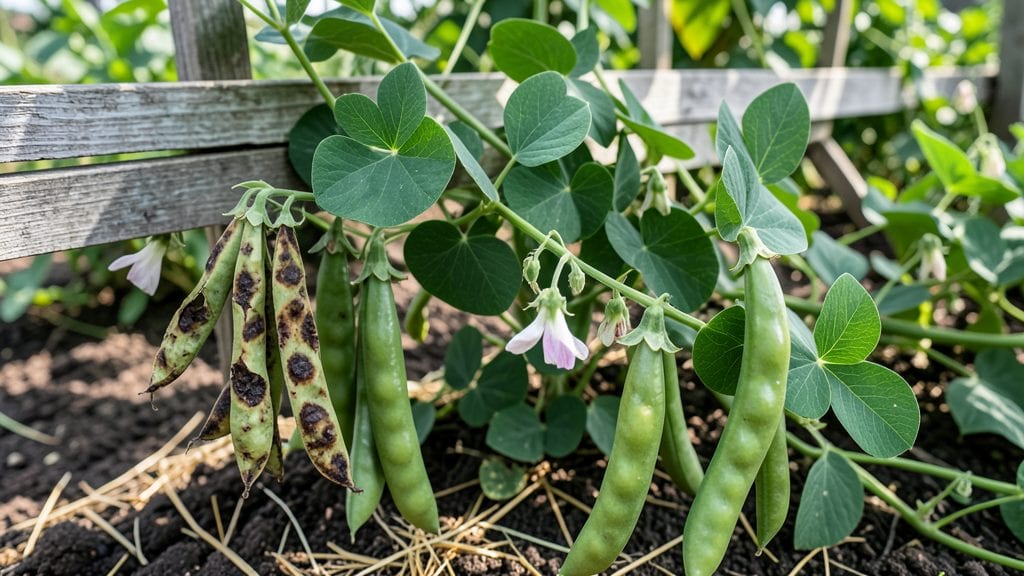
Garden pea diseases can turn your lush vines into a sad, spotted mess—unless you catch them early. 🌱 I’ve seen powdery mildew turn vibrant green pods into ghostly white webs, and fusarium wilt collapse plants overnight.
The key to saving your harvest isn’t fear—it’s knowing what to look for before it’s too late.
Most pea diseases start with subtle clues: yellowing leaves, strange spots, or wilting that doesn’t make sense. Powdery mildew leaves a chalky dust on stems, while downy mildew creates fuzzy gray patches on the undersides of leaves.
These aren’t just cosmetic—they weaken plants and slash yields. But here’s the good news: organic sprays, proper spacing, and disease-resistant varieties can stop them in their tracks.
You’ll learn to diagnose issues fast—like distinguishing between fungal spots and pest damage—and how to treat them without harsh chemicals. A few simple adjustments (like rotating crops or improving airflow) can make your peas thrive instead of fighting for their lives.
Let’s turn those early warnings into a healthy, productive harvest.
Whether you’re dealing with a single plant or a full patch, this guide gives you the tools to act before diseases spread. No more guessing—just clear steps to protect what you’ve worked so hard to grow. Ready to save your peas?
Root Causes Behind Pea Problems
Garden pea diseases don’t strike out of thin air—they’re usually the result of a perfect storm of environmental factors, poor growing conditions, or even human habits.
Understanding why these issues pop up is the first step to stopping them in their tracks. Let’s break down the science behind the most common culprits.
Fungi like Mycosphaerella pinodes (pea leaf spot) and Fusarium oxysporum (wilt disease) thrive in damp, crowded conditions. Here’s why they target your peas:
- 💧 Overhead Watering or Poor Drainage Fungal spores splash onto leaves or soil, germinating when moisture lingers. Why it matters: Peas have soft, hairy stems—ideal fungal highways. Watering from above (instead of at the base) spreads spores like wildfire. Actionable fix: Use drip irrigation or soaker hoses to keep foliage dry.
- 🌡️ Cool, Wet Weather Fungi love temperatures between 60–75°F (15–24°C) with high humidity. Why it matters: Peas grown in spring or fall (their natural seasons) are especially vulnerable. Actionable fix: Space plants for airflow and avoid planting in low-lying areas where cold air pools.
- 🌾 Contaminated Soil or Old Crop Debris Fungal spores can survive in soil for years. Why it matters: If you grew peas (or other legumes) in the same spot last year, spores may still be lurking. Actionable fix: Rotate crops with non-legumes (like brassicas) and sterilize soil with solarization or composting.
Some pests aren’t just thieves—they’re disease delivery systems. Here’s how they enable trouble:
- 🐜 Aphids and Thrips These sap-suckers weaken peas by injecting toxins and carrying viral diseases like pea enation mosaic virus. Why it matters: Aphids excrete honeydew, which attracts sooty mold—a secondary fungal infection. Actionable fix: Blast plants with water to dislodge pests or introduce ladybugs (natural predators).
- 🦟 Wireworms and Cutworms Larvae chew roots, creating entry points for soil-borne pathogens like Rhizoctonia solani. Why it matters: Damaged roots can’t absorb nutrients, stressing plants and making them disease magnets. Actionable fix: Use row covers early in the season or plant trap crops like buckwheat.
Peas are sensitive to soil pH and nutrient deficiencies, which weaken their defenses:
- ⚖️ Soil pH Too High or Low Peas prefer pH 6.0–7.0. Why it matters:
- Alkaline soil (pH >7.5): Locks out iron and zinc, causing yellowing leaves (chlorosis) and making plants prone to fungal infections.
- Acidic soil (pH <5.5): Releases aluminum toxicity, stunting roots and inviting Phytophthora (a water mold). Actionable fix: Test soil and amend with sulfur (to lower pH) or lime (to raise it).
- 🌱 Nitrogen Overload Too much nitrogen (from synthetic fertilizers) = lush foliage but weak stems and pods. Why it matters: Peas fix their own nitrogen via root nodules—extra N disrupts this balance, inviting diseases like powdery mildew. Actionable fix: Use compost or legume-specific fertilizers (low in N, high in P/K).
Some pea varieties are bred for sweetness or cold tolerance—but not disease resistance. Why it matters: Heirloom or open-pollinated peas often lack the genetic armor of hybrid varieties against specific pathogens. Actionable fix: Choose disease-resistant cultivars (e.g., ‘Oregon Sugar Pod’ for powdery mildew resistance) or rotate varieties yearly.
Pro Tip: 🔍 Spot-check your peas weekly—early signs (like yellow spots or stunted growth) are red flags. The faster you identify the cause, the faster you can intervene!
Quick Fixes for Pea Plant Problems
Now that you know what’s ailing your garden peas, it’s time to roll up your sleeves and get them back on track! The good news? Most pea diseases and pests respond well to early, targeted action.
Below, we’ve mapped out practical solutions for each common issue, plus prevention tips to keep your peas thriving long-term.
Fungal infections like powdery mildew, downy mildew, and root rot thrive in damp conditions, but you can outsmart them with these steps:
🔥 Remove and Replace Infected Plants
- Pull out any plants showing signs of fungal disease (yellowing leaves, white powder, or black spots).
- Dispose of them in the trash—not the compost—to prevent reinfection.
- Replace with healthy seedlings if needed, but space them properly for airflow.
💦 Improve Airflow and Drainage
- Prune nearby foliage to allow sunlight and air to circulate around pea plants.
- Space plants 2–3 inches apart (or thin seedlings) to reduce humidity buildup.
- Avoid overhead watering—use a drip irrigation system or water at the base in the early morning.
🌿 Fungal Sprays: Natural and Chemical Options
| Solution | How to Use | Best For |
|---|---|---|
| Neem oil spray | Mix 1 tbsp neem oil + 1 tsp mild soap in 1 quart water. Spray weekly until symptoms fade. | Powdery mildew, early infections |
| Baking soda spray | 1 tsp baking soda + 1 quart water + a few drops of soap. Spray every 7–10 days. | Powdery mildew |
| Copper fungicide | Follow label instructions; apply at first sign of downy mildew. | Downy mildew, root rot |
| Compost tea | Brew aerobically (or buy pre-made) and spray every 2 weeks as a preventative. | General fungal resistance |
🌡️ Adjust Growing Conditions
- Plant in well-draining soil—amend clay soil with compost or sand.
- Rotate crops—don’t plant peas (or other legumes) in the same spot next year.
- Choose resistant varieties like ‘Oregon Sugar Pod’ (powdery mildew-resistant) for future seasons.
Aphids, pea weevils, and slugs can decimate a pea patch in days. Here’s how to evict them:
👨🍳 Handpick and Trap
- Aphids: Spray with a strong stream of water to knock them off, or wipe leaves with a soapy sponge.
- Pea weevils: Check pods daily and drop weevils into soapy water (they’ll drown instantly).
- Slugs/snails: Set out beer traps (bury a cup filled with beer) or use copper tape around the base of plants.
🔪 Natural Pest Deterrents
- Diatomaceous earth: Sprinkle lightly around plants (reapply after rain) to deter crawling pests.
- Garlic/pepper spray: Blend 2 cloves garlic + 1 tsp cayenne + 1 quart water.
Strain and spray every 3–4 days. - Ladybugs & lacewings: Release beneficial insects (buy online) to prey on aphids naturally.
🛡️ Prevent Future Infestations
- Use row covers (floating fabric) to block weevils and aphids while allowing pollination.
- Interplant with herbs like basil or thyme—their scents repel pests.
- Clean up debris after harvest to remove egg-laying sites.
Yellow leaves or stunted growth? Your peas might be hungry. Fix it with these targeted fixes:
📊 Soil Test First
- Grab a DIY soil test kit (or send a sample to your local extension office) to check pH and nutrient levels.
- Ideal pH for peas: 6.0–7.0 (slightly acidic to neutral). Adjust with:
- Lime (to raise pH) or sulfur (to lower pH).
💪 Quick Nutrient Boosters
| Symptom | Likely Cause | Solution |
|---|---|---|
| Yellow lower leaves | Nitrogen deficiency | Side-dress with compost or blood meal (follow package rates). |
| Purple stems/leaves | Phosphorus deficiency | Mix in bone meal or use a balanced fertilizer (10-10-10). |
| Weak, spindly plants | Potassium deficiency | Apply wood ash or a potassium-rich fertilizer (like greensand). |
| Small, pale pods | Magnesium deficiency | Sprinkle Epsom salt (1 tbsp/gal water) as a foliar spray. |
🌱 Long-Term Soil Health
- Add organic matter: Mix in 2–3 inches of compost before planting.
- Mulch heavily: Use straw or grass clippings to retain moisture and nutrients.
- Plant nitrogen-fixing cover crops (like clover) in off-seasons to enrich soil.
The best cure? Stop problems before they start.
Here’s how: - 💡 Start with disease-free seeds—buy from reputable suppliers or save seeds from healthy plants. - ✨ Rotate crops—avoid planting peas in the same spot for 3+ years. - 🌡️ Water wisely—keep soil moist but not soggy; water in the early morning so foliage dries quickly. - 🔥 Sanitize tools—wipe pruners and shovels with rubbing alcohol between uses. - 🌱 Choose the right spot—peas love cool, partial shade in hot climates; avoid low-lying areas where water pools.
- At first sign of trouble: Act fast—fungal diseases spread quickly!
- After rain: Check plants for mildew or slug activity and treat immediately.
- Before planting: Prep soil and rotate crops to prevent future issues.
With these targeted fixes, your pea plants should bounce back stronger than ever. And remember: healthy soil = happy peas! 🌱💚
Frequently asked questions
What are the most common signs of fungal diseases in garden peas?
Look for white powdery coatings (powdery mildew), yellow spots with black centers (pea leaf spot), or fuzzy gray patches on leaf undersides (downy mildew). Wilting that starts in older plants may signal fusarium wilt, while mushy stems often mean root rot. Check leaves and stems regularly—early detection is key!
Can I still harvest peas if they have diseases?
Only if the damage is minor and the pods are still firm. Avoid eating peas from plants with severe fungal infections (like black spots or powdery mildew) or bacterial diseases (oozing lesions). When in doubt, discard affected pods and focus on treating the plants to save future harvests.
How do I know if my peas have a bacterial or viral infection?
Bacterial issues (like bacterial blight) show as water-soaked spots that turn brown/yellow with yellow halos. Viral infections (e.g., pea enation mosaic) cause distorted leaves, stunted growth, and mosaic patterns. Unlike fungi, these don’t respond to fungicides—remove infected plants immediately and sterilize tools.
Will crop rotation really help prevent pea diseases?
Rotating peas with non-legumes (like tomatoes or brassicas) breaks the disease cycle by starving fungal spores of their pea hosts. Aim for a 3-year rotation—this reduces soil-borne pathogens by up to 70%. Pair with composting old pea debris to further cut reinfection risks.
Are there disease-resistant pea varieties worth trying?
Yes! Look for varieties labeled "resistant" to specific diseases, like 'Oregon Sugar Pod' (powdery mildew) or 'Green Arrow' (fusarium wilt). Hybrid seeds often combine multiple resistances—check seed catalogs for your region’s biggest threats. Even heirlooms can be bred for resilience with proper care.