
Tools
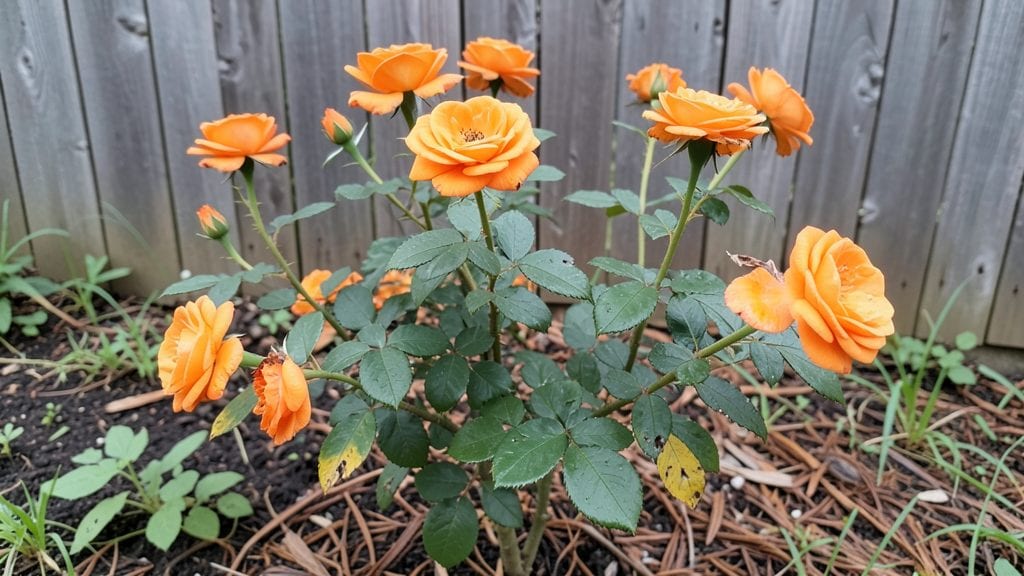
Orange garden roses like 'Orange Triumph' or 'Orange Galaxy' bring bold color and intoxicating fragrance to any sunny spot. 🌸 I’ve grown them for years, and their vibrant blooms always make neighbors pause mid-stride to admire them.
The secret isn’t just sunlight—it’s the right balance of soil, water, and pruning to keep them flowering all season.
These roses thrive in well-draining soil with at least 6 hours of direct sun daily, and they reward you with 3-4 feet of fragrant climbs if you prune them right. Start with healthy bare-root plants in early spring, and you’ll see buds forming by early summer.
The key? Watering deeply once a week (more in heatwaves) and feeding them with organic compost every few months.
By midsummer, you’ll have a cascade of bright orange blooms that smell like a summer evening. The plants stay compact, making them perfect for trellises, arbors, or even small garden beds. Just watch for black spot or aphids—spraying neem oil early prevents most issues.
Works in zones 5-9, and they’re surprisingly low-maintenance once established. Here’s how to keep them thriving year after year—without the fuss.
📚 In This Guide
- What you need
- Instructions
- Tips and common mistakes
- Wrapping up and next steps
What you need
- ● Orange Garden Rose: 1-3 bare-root roses (dormant season) OR 1-2 potted roses (spring/summer)
- ● Varieties like 'Orange Triumph' or 'Orange Sensation' (check local nurseries for availability)
- ● Soil: 6-8 bags (40 lbs each) of well-draining garden soil (mix with compost for richness)
- ○ Optional: 1 bag of rose-specific fertilizer (balanced NPK, 10-10-10)
- ● Planting Supplies: 1 gallon of mulch (pine bark or shredded leaves)
- ● 2-3 rose food tablets (slow-release nutrients)
- ● Digging Tools: 1 garden trowel (for small adjustments)
- ● 1 shovel (for digging holes, 12–18" deep)
- ● 1 pruning shears (sterilized, for trimming dead canes)
- ● Support Structures: 1 climbing rose trellis, arbor, or fence (6–8 ft tall, sturdy)
- ○ Optional: rose ties (soft fabric or plastic) to secure canes
- ● Watering & Care: 1 hose with adjustable nozzle (or watering can for potted roses)
- ● 1 spray bottle (for misting leaves during hot days)
- ● A sunny spot with 6+ hours of direct sunlight daily (partial shade in hot climates)
- ● Protection from strong winds (use a windbreak if needed)
- ● Time commitment: 10–15 minutes daily for watering (first 2 weeks) and weekly pruning
Step-by-Step guide to planting and caring for orange garden roses
Here’s the straightforward method I use to grow vibrant, fragrant orange roses that bloom all season long.
🌱 Step 1: Choose the Right Location and Prepare the Soil
Orange garden roses need full sun—at least 6 hours daily—for the brightest blooms and sweetest fragrance. Pick a spot with shelter from strong afternoon winds, which can damage delicate stems. I always test the soil first—orange roses thrive in well-draining, slightly acidic soil with a pH between 6.0 and 6.5. If your soil is heavy clay, mix in 2-3 inches of compost to improve drainage.
Dig a hole twice as wide as the root ball but only as deep as the container’s root base. Loosen the sides of the hole with a garden fork to encourage root spread. This ensures the roots won’t get crowded or suffocate once planted. If you’re planting in spring, do it 2-3 weeks before the last frost to give roots time to establish before summer heat arrives.
🪴 Step 2: Plant Bare-Root Roses Correctly
Soak the bare-root rose in lukewarm water for 1-2 hours before planting to revive the roots. This step is critical—dry roots struggle to establish. While the roots soak, remove any dead or mushy roots with clean pruning shears. Healthy roots should be firm and white or light tan.
Place the rose in the hole so the graft union (the bulge near the base of the stem) sits 1-2 inches below soil level. This protects the graft from freezing in winter and encourages strong growth. Fill the hole halfway with soil, then water deeply to settle it. Finish filling the hole, pressing soil gently around the base to eliminate air pockets. Water again until the soil is evenly moist but not soggy.
☀️ Step 3: Water and Fertilize for Strong Growth
Water your rose deeply 2-3 times per week during the first growing season, ensuring the soil stays consistently moist but never waterlogged. Overwatering causes root rot, which kills roses quickly. You’ll know it’s time to water when the top 2 inches of soil feel dry to the touch. Mulch around the base with 2-3 inches of organic mulch (like shredded bark) to retain moisture and regulate soil temperature.
Wait 4-6 weeks before applying fertilizer to let the roots recover from transplant shock. Then, feed with a balanced rose fertilizer (10-10-10) every 4-6 weeks during the growing season. Stop fertilizing in late summer to allow the plant to harden off for winter. I always follow the label’s instructions—over-fertilizing burns roots and leads to weak growth.
✂️ Step 4: Prune for Health and More Blooms
Prune your orange garden rose in early spring (just as new growth begins) and again after the first flush of blooms in summer. Remove any dead, diseased, or crossing branches first—this improves airflow and reduces pests. Cut back one-third of the oldest canes to encourage new growth and more flowers. Always make cuts at a 45-degree angle, just above an outward-facing bud.
Watch for suckers (shoots growing below the graft union)—remove these immediately to preserve the rose’s variety. After pruning, apply a rose-specific fungicide as a preventive measure against black spot, a common fungal disease. This step is non-negotiable if you want your roses to stay vibrant and healthy all season.
🌿 Step 5: Support and Protect for Long-Term Success
Install a strong trellis, arbor, or rose arch as soon as you plant to give climbing roses something to grow on. Orange roses can reach 6-8 feet tall, so choose a support that’s at least 8 feet high. Tie the main stems loosely to the support with soft plant ties to avoid damaging the bark as the stems thicken.
Protect your roses from pests like aphids and Japanese beetles with neem oil spray applied every 2 weeks during the growing season. I also cover roses with frost cloth in late fall to shield them from early frosts. In winter, mound 4-6 inches of mulch around the base to insulate the roots. With consistent care, your orange garden roses will reward you with bold blooms and intoxicating fragrance for years to come.
Tips & tricks for perfect orange garden rose care
Here’s what I’ve learned from years of growing these fragrant beauties—little details that make all the difference between a struggling plant and a showstopper.
Soil Prep Secret: In Step 1, when testing your soil pH, aim for that 6.0-6.5 range—orange roses get finicky if it drifts too acidic or alkaline. I always add a handful of sulfur powder to heavy clay soils to lower pH naturally. For the 2-3 inches of compost, I use a 50/50 mix of well-rotted manure and coconut coir to improve drainage without compacting the soil. The key is creating that loose, airy environment roots love.
Root Revival Technique: That 1-2 hour soak in Step 2 is non-negotiable—dry roots won’t establish properly. I like to add a tablespoon of seaweed extract to the soaking water for extra root growth hormones. After trimming dead roots, I dip the healthy roots in mycorrhizal inoculant before planting. This helps the roots form beneficial relationships with soil fungi right from the start.
Watering Wisdom: The 2-3 times per week watering in Step 3 needs smart timing—water in the early morning so leaves dry quickly, preventing fungal diseases. I use a soaker hose placed at the base to deliver water slowly without disturbing the soil. The 2-inch dry soil test is perfect, but I also watch for wilting leaves—orange roses wilt faster than other varieties when thirsty.
Pruning Pro Tip: When pruning in Step 4, I always sterilize my pruners with rubbing alcohol between cuts to prevent spreading disease. For the one-third oldest canes rule, I look for canes that are thinner than a pencil—these are the ones to remove. The 45-degree angle cut above an outward-facing bud is crucial—it helps water run off and encourages new growth in the right direction.
Pro Tips for Orange Garden Rose
- Here’s what I’ve learned from years of growing these fragrant beauties—little details that make all the difference between a struggling plant and a showstopper.
- Soil Prep Secret: In Step 1, when testing your soil pH, aim for that 6.0-6.5 range—orange roses get finicky if it drifts too acidic or alkaline.
- Root Revival Technique: That 1-2 hour soak in Step 2 is non-negotiable—dry roots won’t establish properly.
Frequently asked questions
When is the best time to plant orange garden roses?
The ideal time to plant orange garden roses is in early spring (after the last frost) or early fall, when temperatures are mild. This gives roots time to establish before extreme heat or cold. Avoid planting in summer—high temps stress young roses. Pro tip: If planting in fall, do it at least 6-8 weeks before the first frost for best results.
Why aren’t my orange garden roses blooming?
If your roses are healthy but not flowering, it could be due to over-pruning, poor sunlight, or lack of nutrients. Ensure they get 6+ hours of direct sun daily and prune in late winter/early spring to encourage new growth. Feed with a rose-specific fertilizer in spring and mid-summer. Watch out for: Deadheading spent blooms can also prompt more flowers!
Can orange garden roses grow in containers?
Many climbing orange garden roses thrive in large containers (15+ gallons) with well-draining soil. Choose a trellis or sturdy support for climbing varieties. Use a balanced potting mix with added compost and ensure the container has drainage holes. Water consistently—containers dry out faster than garden beds. Bonus: Container roses are perfect for patios or small spaces!
How do I protect orange garden roses from pests?
Common pests like aphids, Japanese beetles, and spider mites can target roses. Start with preventative care: Prune for airflow, remove debris, and water at the base (not leaves) to deter fungi. For pests, use neem oil or insecticidal soap as a natural remedy. Ladybugs and lacewings are great natural predators—encourage them with companion plants like marigolds!
What’s the difference between climbing and bush orange roses?
Climbing orange garden roses (e.g., 'Orange Triumph') grow 6-12+ feet tall and need support like trellises or arbors. They produce fewer blooms but longer stems. Bush roses (e.g., 'Orange Sensation') stay 3-5 feet tall, bloom more densely, and require less support. Choose climbing for vertical spaces or bush for borders. Fun fact: Some varieties (like 'Orange Parfum de Hamburg') can be trained as either!
Wrapping up and next steps
The orange garden rose isn’t just a burst of color—it’s a fragrant, sun-loving star that brings joy and elegance to any space. With the right care, these climbers reward you with vibrant blooms and intoxicating scents, making your garden a true sanctuary.
Whether you’re a seasoned gardener or just starting, planting one today could be the beginning of a beautiful, fragrant journey!
Ready to transform your garden? Pick your spot, gather your tools, and let these stunning climbers take root! 🌸✨