
Watering
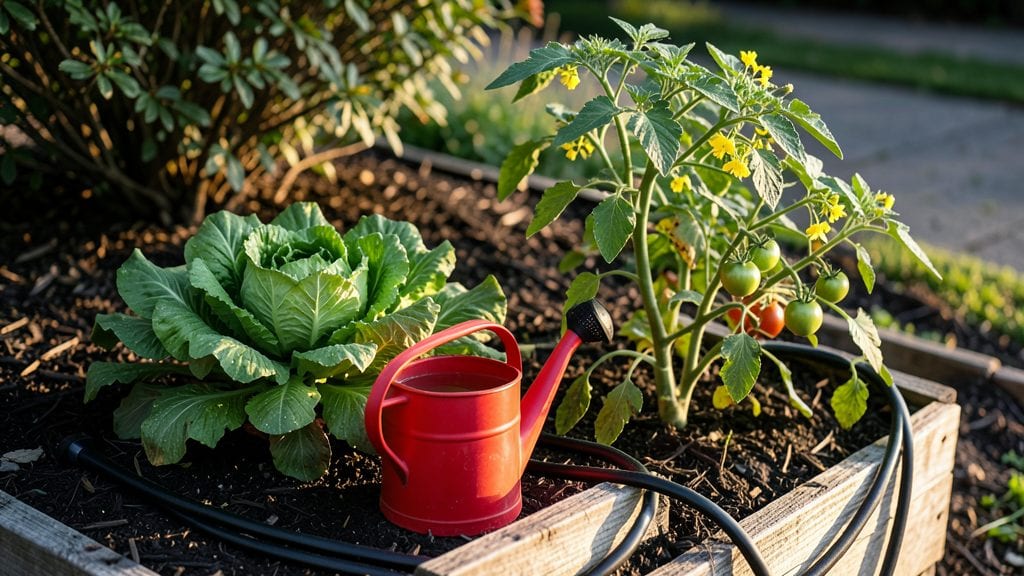
Watering your vegetable garden isn't just about keeping soil damp—it's about giving plants exactly what they need when they need it most. 🌱 I learned the hard way that too much or too little water stresses plants, even if they look fine above ground.
The right timing transforms floppy seedlings into sturdy, productive plants that fight off pests and diseases better.
Start with a simple test: stick your finger an inch into the soil. If it feels dry, it's time to water. Most vegetables prefer deep, infrequent watering—about 1 inch per week—rather than light daily sprinkles.
Drip irrigation or soaker hoses deliver water right to the roots where it matters, while hand-watering gives you control over tricky spots. Mulch helps lock in moisture so you water less often, which saves time and resources.
You'll notice the difference immediately: leaves stay crisp and vibrant instead of wilting by noon, roots grow strong instead of shallow, and flavors develop fully. Tomatoes, peppers, and leafy greens all respond dramatically to consistent moisture.
The key is adjusting based on weather—more on hot days, less after rain—and watching for signs like yellowing leaves or blossom-end rot in tomatoes.
This method works for any garden size, from a few pots on a balcony to a full backyard plot. Once you master the rhythm, watering becomes second nature—and your harvest will thank you. Let's dive into the details that make all the difference.
📚 In This Guide
- What you need
- Instructions
- Tips and common mistakes
- Wrapping up and next steps
What you need
- ● Water source: Hose (½-inch diameter, 25–50 ft long) or
- ● Watering can (1–3 gallons, with a long spout for precision)
- ● Timer or irrigation system: Smart sprinkler timer (Wi-Fi enabled, e.g., Rain Bird)
- ● OR mechanical timer (adjustable for 5–60 min intervals)
- ● Soaker hoses: 100–200 ft of porous hose (½-inch diameter, e.g., DIG Corporation)
- ○ Drip irrigation kit (optional but ideal): Emitters (1–2 GPH, spaced 12–18 inches apart)
- ● Connectors, filters, and pressure regulators
- ● Watering schedule tracker: Notebook or phone app (e.g., Gardenate)
- ● Know your soil: Test moisture levels (use a soil moisture meter or finger test).
- ● Sunlight awareness: Group plants by water needs (e.g., leafy greens vs. tomatoes).
- ● Weather check: Adjust watering for rain (aim for 1 inch per week, including rainfall).
- ● Container prep (if applicable): Ensure pots have drainage holes and saucers.
Step-by-Step guide to watering your vegetable garden
Mastering watering transforms your veg garden from struggling to thriving—here's how to do it right.
💧 Step 1: Water Deeply at the Right Time
Water your vegetable garden in the early morning between 6-10 AM when evaporation is lowest. Aim for 1-1.5 inches of water per week, delivered slowly so it soaks 6-8 inches deep. Use a rain gauge or tuna can to measure—eyeballing leads to inconsistent moisture. I water deeply 2-3 times per week rather than daily shallow sessions, which encourages strong root growth.
Check soil moisture by pushing your finger 2 inches down. If it feels dry, water again. Sandy soil drains faster, so you may need to water more frequently, while clay holds moisture longer. Avoid watering in the evening—wet foliage overnight invites fungal diseases like powdery mildew.
☀️ Step 2: Adjust for Weather and Plant Needs
Hot, dry days demand more water—watch for wilting leaves or dry soil cracks as signals to water immediately. Leafy greens like lettuce and spinach need consistent moisture, while root crops like carrots and potatoes prefer slightly drier soil. Group plants with similar water needs together in your garden layout to simplify care.
After heavy rain, skip watering for 24 hours to avoid over-saturation. Mulch with 2-3 inches of organic material (like straw or shredded leaves) to retain moisture and reduce evaporation. This layer also keeps soil temperatures steady, which is especially helpful for heat-sensitive crops like peas or beans.
🌱 Step 3: Use the Right Tools for Efficiency
Drip irrigation or soaker hoses deliver water directly to the root zone without wetting leaves—this cuts down on disease risk and saves water. If using a sprinkler, aim for low-pressure, slow application to prevent runoff. I always water at the base of plants rather than overhead to minimize leaf wetness and fungal issues.
For container-grown veggies, check soil moisture daily—pots dry out much faster than in-ground beds. Water until water runs freely from drainage holes, then let excess drain away. Avoid letting containers sit in saucers of standing water, which can rot roots over time.
⏰ Step 4: Monitor and Adapt to Plant Signals
Healthy veg plants have turgid (firm) leaves and vibrant green color. Yellowing lower leaves often signal overwatering, while crispy edges or drooping indicate underwatering. Adjust your schedule based on what you observe—there’s no one-size-fits-all watering plan.
Newly transplanted seedlings need daily watering until established (about 2-3 weeks), but mature plants can handle longer intervals between waterings. Pay attention to the microclimate of your garden—south-facing beds dry out faster than north-facing ones, and windy areas lose moisture quicker.
✂️ Step 5: Finish with a Weekly Soil Check
Every Sunday, run your finger through the soil in different sections of your garden. Note which areas stay moist longer and which dry out quickly. Adjust your watering zones accordingly—some spots may need deeper watering while others benefit from more frequent light drinks.
This weekly ritual helps you fine-tune your approach. Over time, you’ll develop an instinct for when your garden needs water. Remember: consistency is key—vegetables hate moisture swings, so aim for steady, deep watering rather than sporadic heavy doses.
Tips & tricks for perfect vegetable garden watering
Mastering the art of watering takes your garden from good to exceptional—here's what I've learned after years of trial and error.
Timing Secret: The early morning window between 6-10 AM is non-negotiable for me. This timing ensures water soaks deep before evaporation kicks in. I set my timer for 6:30 AM sharp—any later and you're fighting the sun. For those who work, consider a programmable drip irrigation system that activates automatically during this window.
Soil Check Technique: That 2-inch finger test in Step 1 is your best friend. Push your finger in and feel—if it comes out clean, water again. I've ruined perfectly good plants by guessing, so always check! Sandy soil? You might need to test at 1 inch down instead. The key is consistency—always test at the same depth each time.
Mulch Magic: That 2-3 inch layer of mulch in Step 2 isn't just decorative—it's a game-changer. I use straw because it breaks down slowly and retains moisture beautifully. For heat-sensitive crops like peas, I double the mulch to 4 inches during summer months. This simple step can cut your watering needs by 30-40% while keeping roots cool.
Container Watering: Pots dry out faster than in-ground beds—sometimes within hours. I water container plants until water runs freely from drainage holes, then wait 5 minutes before letting excess drain completely. This ensures roots get properly hydrated without sitting in soggy conditions. For extra insurance, I check containers at 9 AM and 3 PM during hot weather.
Pro Tips for Watering Veg Garden
- Mastering the art of watering takes your garden from good to exceptional—here's what I've learned after years of trial and error.
- Timing Secret: The early morning window between 6-10 AM is non-negotiable for me.
- Soil Check Technique: That 2-inch finger test in Step 1 is your best friend.
Frequently asked questions
Got questions about keeping your veggie garden hydrated just right? Here are some of the most common ones—plus the answers you need to grow a thriving harvest!
When is the best time of day to water my vegetable garden?
Water your veggies early in the morning (between 6–10 AM) to reduce evaporation and fungal diseases. Avoid evening watering, as damp foliage overnight can invite pests and mildew. If you must water later, do it by 4 PM to allow leaves to dry before nightfall.
How often should I water my vegetable garden?
Most veggies need 1–1.5 inches of water per week, including rainfall. Check soil moisture 1–2 inches deep—if it’s dry, it’s time to water. Leafy greens (like lettuce) prefer frequent, shallow watering, while root crops (like carrots) need deep, infrequent soaking. Adjust based on heat and soil type!
Can I use rainwater or collected water instead of tap water?
Rainwater is ideal
—it’s chemical-free and often slightly acidic, which many veggies prefer. Collect it in barrels (with a fine mesh to keep out debris) and use it for watering. Just avoid using water from roofs treated with copper or asphalt, as these can leach harmful metals.
What should I do if my vegetable plants look wilted, even after watering?
Wilted plants could signal overwatering, underwatering, or root issues. First, check the soil: Sticky, foul-smelling dirt = overwatered. Dry, crusty soil = underwatered. If roots are mushy (rot), trim affected areas and repot. For heat stress, water deeply in the early morning and mulch to retain moisture.
How can I water my garden efficiently without wasting water?
Upgrade to drip irrigation or soaker hoses—they deliver water directly to roots, cutting waste by up to 50%. For smaller gardens, self-watering containers or bamboo watering spikes work great. Always water slowly and deeply to encourage strong root growth, and mulch with straw or wood chips to lock in moisture.
Wrapping up and next steps
Mastering the art of watering your veg garden isn’t just about keeping plants alive—it’s about unlocking their full potential! 🌱 By understanding when, how much, and how to water, you’ll enjoy healthier harvests and fewer headaches.
Start small, observe your plants, and adjust as you go—every gardener becomes an expert with practice.
Ready to take the next step? Test your newfound skills! Try a weekly watering journal to track soil moisture, plant responses, and weather patterns. Soon, you’ll be confidently growing a thriving veggie patch that rivals the pros. Happy gardening! 🌿