
Planting
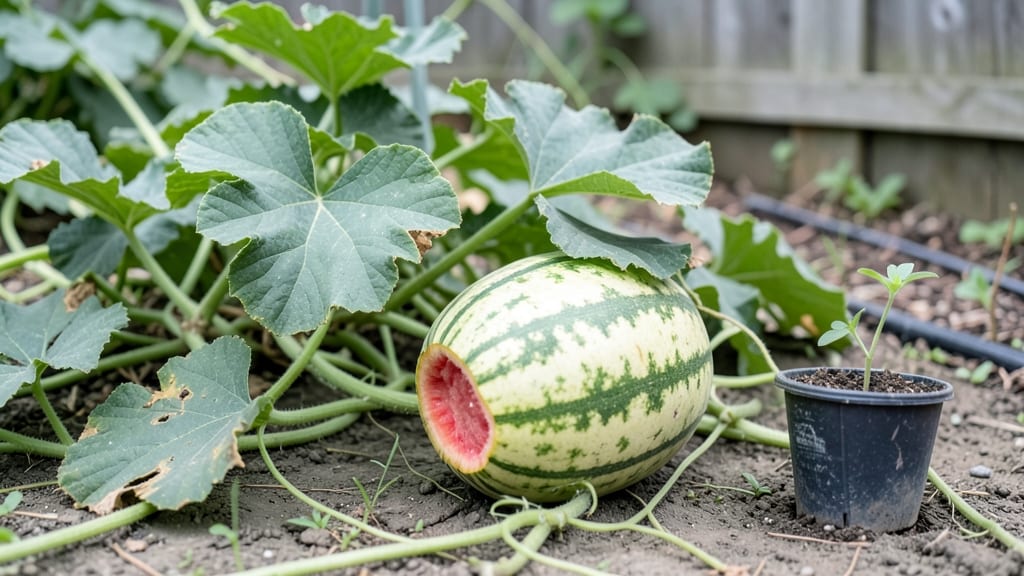
Planting watermelons in your garden requires full sun exposure, well-draining soil with a pH between 6.0 and 6.8, and spacing at least 3 to 6 feet apart to allow vines to spread freely. Start seeds indoors 2 to 3 weeks before the last frost or directly sow after soil warms to 70°F.
Watermelons thrive in the warmest, sunniest spots of your yard, where they can soak up at least 6-8 hours of direct sunlight daily—think of it as their daily vitamin D boost. 🌞 The soil should feel like a well-drained sponge, rich in organic matter but never soggy, since watermelons hate "wet feet."
I’ve found that raised beds or mounded soil work wonders for preventing rot, especially in humid climates where water pools easily.
Timing matters too—these vines need warmth to stretch and fruit, so wait until the soil hits 70°F before planting outdoors.
If you’re in a cooler zone, starting seeds indoors gives them a head start, but don’t rush it: watermelons are sensitive to cold snaps, which can stall growth or even kill young plants.
Pro tip: Place them near a fence or trellis if space is tight, but leave plenty of room for those sprawling vines to roam.
💡 In This Article
- Optimal Sunlight, Soil, and Climate for Watermelon Growth
- Step-by-Step Watermelon Planting and Spacing Guide
Optimal sunlight, soil, and climate for watermelon growth
Watermelons are sun worshippers—literally. Their sprawling vines pack 10-15 leaves per square foot, each designed to maximize photosynthesis. The key is understanding how sunlight drives their growth: 6-8 hours of direct sun isn't just a recommendation—it's a biological necessity.
Watermelons convert sunlight into energy through chlorophyll in their leaves, but they also need warmth to trigger flowering. Temperatures below 70°F slow photosynthesis, while consistent 80-90°F days help vines grow 1-2 feet per week during peak season. 🌿
The soil acts like a living ecosystem for watermelons. They crave loose, sandy loam with 20-30% organic matter (think compost or well-rotted manure) to improve drainage while retaining moisture. The ideal pH of 6.0-6.8 ensures roots absorb nutrients like phosphorus (for flowering) and potassium (for fruit development).
Heavy clay soils trap water, causing rot, while rocky soil restricts root expansion. Pro tip: Mix in 1-2 inches of coarse sand to mimic their native riverbank habitats where they originally thrived.
Climate plays a surprising role in variety selection. Tropical watermelons (like Crimson Sweet) flourish in 90°F+ heat but wilt in cooler zones, while temperate varieties (such as Sugar Baby) handle 70-85°F ranges better. The difference?
Tropical types have thicker rinds to retain moisture in arid climates, while temperate ones develop faster in shorter growing seasons. What most gardeners miss is that watermelons need 80-100 frost-free days to mature—planting too early in cooler regions risks stunted growth or no fruit at all. 🌡️
Here's what happens when conditions go wrong: Too little sun (<4 hours/day) leads to leggy vines with few flowers, while excessive moisture causes fusarium wilt, a fungal disease that clogs xylem vessels. The solution?
Raise beds 6-12 inches high to improve drainage and mulch with straw to keep roots cool but not waterlogged. Even in ideal climates, watermelons need consistent warmth at night—temperatures dropping below 60°F can halt fruit development entirely.
Let's talk about the science of spacing. Watermelon vines spread 6-10 feet in all directions, but their roots grow 3-4 feet deep to access water. Crowding forces roots to compete for nutrients, reducing yields by up to 40%.
The 3-6 feet spacing recommendation isn't arbitrary—it accounts for both vine spread and root zones. In small gardens, use trellises or cages to contain vines while maintaining airflow, but be warned: climbing varieties often produce smaller fruit due to reduced photosynthesis in shaded leaves. 🌱
One final pro tip: Monitor your soil's moisture content—watermelons need 1-1.5 inches of water per week, but overwatering causes blossom-end rot. The secret? Water deeply 2-3 times per week at the soil base rather than frequent light sprinkles.
This encourages roots to grow downward where moisture is consistent, while shallow watering creates weak, surface roots that dry out quickly. 💧