
Vegetables
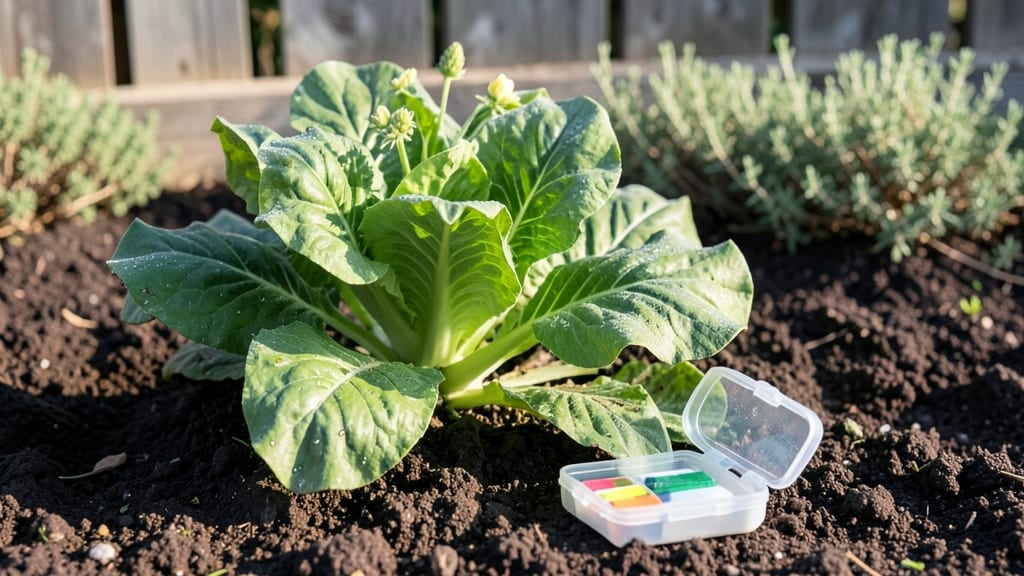
The best pH for a vegetable garden ranges between 6.0 and 7.0, creating neutral to slightly acidic soil that maximizes growth for most vegetables like tomatoes, peppers, and leafy greens. Adjusting soil pH with lime (to raise) or sulfur (to lower) unlocks full nutrient potential for healthy plants.
Most vegetables thrive in this 6.0-7.0 range because that's where essential nutrients like nitrogen, phosphorus, and potassium become most available to roots. 🌱 For example, tomatoes prefer a slightly acidic environment around 6.0-6.8, while carrots do best in neutral soil near 6.5-7.0.
Testing your soil with a simple kit first helps avoid overcorrecting—adding lime or sulfur gradually prevents pH swings that stress plants.
Beyond the numbers, soil pH affects microbial activity too. Beneficial bacteria and fungi that break down organic matter flourish in this range, creating a self-sustaining ecosystem.
I've seen gardens where pH was off by just 0.5 points—plants looked stunted until we adjusted it, proving how critical this balance is for both yield and flavor.
💡 In This Article
- How Soil pH Affects Nutrient Absorption in Vegetables
- Testing and Adjusting Soil pH for Different Vegetables
How soil pH affects nutrient absorption in vegetables
Soil pH directly controls which nutrients plants can access through their roots. At the chemical level, pH determines whether key nutrients exist in forms that roots can absorb.
For instance, phosphorus becomes most available to plants when soil pH sits between 6.0 and 7.0, where it forms soluble phosphate ions. Outside this range, phosphorus binds tightly to soil particles or becomes locked in insoluble compounds, making it inaccessible even if plenty exists in the soil.
This is why tomatoes—heavy phosphorus users—struggle in alkaline soil above 7.5.
Nitrogen availability follows a similar pattern. In acidic soils (pH 5.5 or lower), nitrogen transforms into ammonium (NH4+), which plants can absorb directly. However, in neutral to slightly alkaline soils, nitrogen converts to nitrate (NO3-), the preferred form for most vegetables.
The shift happens because soil microbes—responsible for converting organic nitrogen into plant-usable forms—thrive between 6.0 and 7.0. When pH drops below 5.5, these microbes slow down, reducing nitrogen availability by up to 50%.
Iron presents another critical example. Vegetables like spinach and Swiss chard need iron for chlorophyll production, but iron becomes nearly unusable in alkaline soils. At pH 8.0, iron precipitates as insoluble oxides, causing yellowing leaves despite the soil containing ample iron.
This is why gardeners often see iron deficiency in alkaline soils—even when soil tests show high iron levels. The plant simply can't access it. 🌱
Extreme pH levels also trigger nutrient toxicities. In highly acidic soils (pH 4.5 or lower), aluminum and manganese become soluble and toxic to plant roots. These metals disrupt cellular processes, stunting growth even when other nutrients are abundant.
Conversely, in alkaline soils above 8.0, boron and molybdenum can accumulate to harmful levels, causing leaf scorch or stunted roots. The 6.0-7.0 range acts as a Goldilocks zone where most nutrients remain soluble and non-toxic.
What most gardeners don't realize is that pH affects soil structure too. In acidic conditions, organic matter breaks down rapidly, depleting soil carbon. In alkaline soils, calcium and magnesium bind tightly to clay particles, reducing water retention.
Both extremes create compacted, poorly aerated soil where roots struggle to penetrate. The ideal 6.0-7.0 range maintains a balance where soil aggregates form loose, crumbly structures—perfect for root expansion and microbial activity.
Consider blueberries as an exception. These acid-loving plants thrive at pH 4.5-5.5 because they've evolved to extract nutrients in highly acidic conditions. Their roots even exude organic acids to further lower their immediate soil environment.
This adaptation highlights how pH preferences vary by species, but most vegetables follow the 6.0-7.0 rule because that's where nature designed their nutrient uptake systems to work optimally. ✨