
Tools
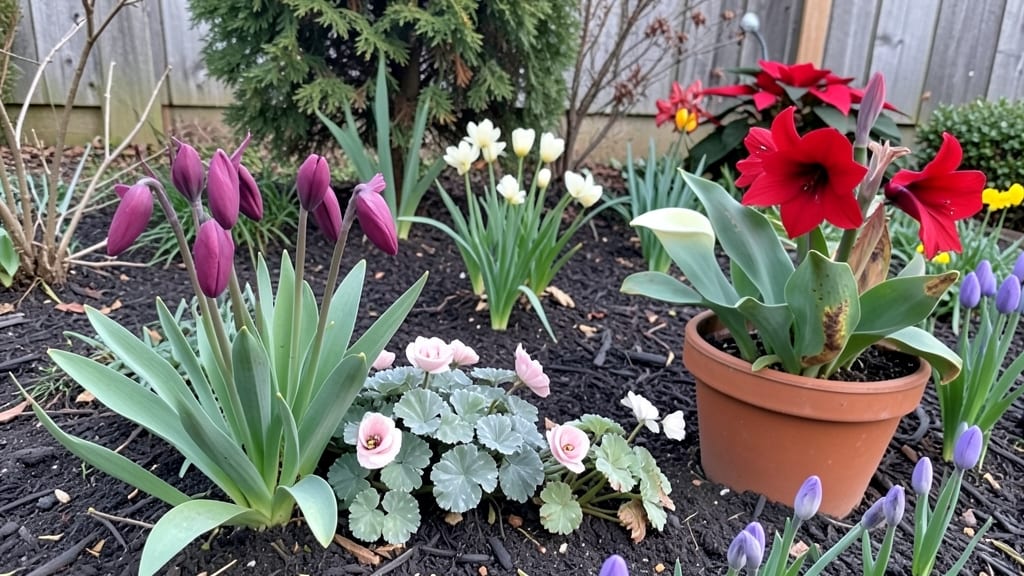
A Christmas bulb garden brings indoor winter magic with fragrant paperwhites and bold amaryllis blooms that feel like holiday decorations. I’ve turned my living room into a winter wonderland using just a few bulbs and a sunny windowsill—no fancy setup required.
The key is choosing bulbs that thrive in cool indoor conditions, like paperwhites that fill the air with citrusy scent or hyacinths that pop in jewel-toned purple and pink.
Timing is everything—plant paperwhites in early November for Christmas blooms, or force amaryllis bulbs in October for a showstopping centerpiece. You’ll need well-draining soil and bright light (a south-facing window works best), but no green thumb is needed.
Even my first attempt produced blooms that lasted weeks, and the scent alone makes the whole house feel festive.
By late December, you’ll have fragrant clusters of flowers that double as natural holiday decor. The best part? These bulbs can regrow next year if you replant them outdoors after blooming.
Imagine waking up to the same cheerful blooms year after year—it’s like having a tiny piece of Christmas magic in every season.
Works for apartments, sunrooms, or even office desks—just adjust bulb choices for your space. Let’s get those winter blooms growing!
Root Causes Of Fading Lights
Your Christmas bulb garden may lose its sparkle for a variety of reasons—some tied to the bulbs themselves, others to environmental or electrical factors. Understanding these causes helps you troubleshoot and keep your festive glow alive. Let’s break down the science behind why lights dim, flicker, or fail entirely.
One of the most common culprits behind flickering or dead bulbs is inconsistent voltage. Christmas lights, especially those strung outdoors or in high-traffic areas, are sensitive to power fluctuations. Here’s why it happens:
- Underpowered circuits: If your extension cord or power source can’t handle the total wattage of your bulb garden, voltage drops occur. For example, a 16-gauge cord (common for holiday lights) may struggle with long runs or multiple strands, causing bulbs to dim or burn out prematurely.
- Voltage spikes or surges: Storms, faulty wiring, or even nearby high-power appliances (like air conditioners) can send sudden voltage surges through your lights. While some bulbs may survive, repeated spikes weaken filaments or damage LED components over time.
- Improper wiring: If bulbs are wired in series (a common setup in older light strings), a single broken connection or faulty bulb can kill the entire circuit. Parallel wiring (where each bulb has its own path) is more resilient but requires careful installation.
Actionable fix: Use a surge protector with a high joule rating (e.g., 1000+ joules) and opt for 14-gauge or thicker cords for long runs. For LED bulb gardens, choose low-voltage systems (12V) or smart plug adapters that regulate power.
Outdoor bulb gardens face a harsh reality: temperature swings, moisture, and UV exposure can accelerate bulb degradation. Here’s the science:
- Cold temperatures: LED bulbs may dim in freezing conditions because the semiconductor materials become less efficient. Incandescent bulbs, meanwhile, can develop cold solder joints if exposed to rapid temperature drops, causing intermittent connections.
- Heat and UV rays: Prolonged sun exposure degrades plastic housings and can melt solder joints in incandescent bulbs. UV radiation also breaks down the phosphor coatings in LEDs, reducing brightness over time.
- Moisture and corrosion: Water seeping into connections (especially in outdoor sockets or damaged wiring) creates oxidation, which increases resistance and causes flickering or complete failure.
Actionable fix:
- ✅ Use waterproof or weather-resistant bulbs (look for IP65 or higher ratings).
- ✅ Store bulbs in a cool, dry place when not in use (e.g., a sealed container with silica gel packets).
- ✅ Apply corrosion-resistant connectors (like tin-plated or gold-plated terminals) to outdoor wiring.
- ✅ Consider solar-powered LED bulbs for gardens in direct sunlight—they’re designed to handle heat and UV.
Even the toughest bulb gardens aren’t immune to mechanical stress. Here’s how physical forces take their toll:
- Bulb breakage: Incandescent bulbs have thin glass filaments that shatter when bent, dropped, or stepped on. LEDs are more durable but can crack if subjected to impact or vibration (e.g., wind, pets, or children playing nearby).
- Wiring fraying: Flexing from wind, animals chewing, or rough handling can expose copper wires, leading to short circuits or open connections. Over time, this causes intermittent power loss or sparks.
- Dirt and debris: Dust, leaves, or snow can insulate connections, preventing proper electrical flow. In extreme cases, debris acts as a conductor, causing shorts.
Actionable fix:
- 🔧 Inspect wiring annually for fraying or exposed areas, and use heat-shrink tubing to protect vulnerable spots.
- 🌿 Elevate bulb gardens off the ground (use stakes, trellises, or hanging hooks) to reduce breakage and pest damage.
- 🧹 Clean connections with a dry brush or compressed air before storing lights for the season.
No light lasts forever—and degradation over time is an inevitable part of the process. Here’s how age affects performance:
- Incandescent bulbs: These have a lifespan of 750–2,000 hours (roughly 1–3 years with seasonal use). The filament thins over time due to evaporation, increasing resistance and reducing brightness until the bulb burns out.
- LED bulbs: While LEDs last 20,000–50,000 hours, their lumen output degrades by 30% after ~30,000 hours. This means they’ll appear dimmer long before they stop working entirely.
- Fluorescent bulbs: These suffer from electrode degradation—the metal tips inside the bulb wear out after ~8,000–10,000 hours, causing flickering before failure.
Actionable fix:
- 📅 Replace bulbs every 2–3 years for incandescent/fluorescent, or 5–7 years for LEDs.
- 💡 Invest in high-quality, commercial-grade bulbs (e.g., C7–C9 LEDs for outdoor use) to extend lifespan.
- 🔄 Rotate bulbs if you have spares—alternate strands so no single set gets overused.
By addressing these root causes—whether it’s electrical issues, environmental stress, physical damage, or natural aging—you can keep your Christmas bulb garden glowing brightly for seasons to come. 🌟
Quick fixes for glowing garden
Creating a Christmas bulb garden that sparkles year-round shouldn’t be a headache—even when things go wrong! Whether your lights flicker, bulbs burn out prematurely, or your setup looks less magical than expected, these practical solutions will get your garden glowing again in no time.
Below, we’ve mapped common issues to easy fixes, plus prevention tips to keep your display dazzling for seasons to come.
Cause: Loose connections, overloaded circuits, or faulty bulbs. Fix:
- Check the power source 🔌: Ensure the extension cord or power strip isn’t damaged. Plug directly into a dedicated outlet (never daisy-chain multiple power strips).
- Inspect connections 🔗: Gently wiggle wires where they meet sockets or connectors. If a bulb flickers when touched, it’s time to replace it.
- Test individual strands 💡: Unplug the entire setup and test each section separately. A multimeter (or even a simple voltage tester) can confirm if a strand is dead.
- Replace faulty bulbs 🔧: Swap out any dim or flickering bulbs with LED equivalents (they’re energy-efficient and last longer).
Prevention:
- Use outdoor-rated extension cords (look for "UL-listed" labels).
- Avoid overloading circuits—stick to the manufacturer’s wattage limits.
- Store bulbs and wires coiled loosely in a dry place when not in use.
Cause: Voltage spikes, cheap-quality bulbs, or exposure to elements. Fix:
- Upgrade to high-quality LEDs 🌟: Cheap bulbs overheat quickly. Invest in waterproof, shatterproof LEDs (like those rated for outdoor use).
- Use a surge protector ⚡: Plug your setup into a power strip with surge protection to shield against voltage spikes.
- Reduce heat exposure 🌡️: If bulbs are near heat sources (like a grill or patio heater), relocate them or add ventilation (e.g., a small fan on low).
- Turn off during storms ⛈️: Wind, rain, or snow can damage connections. Unplug during inclement weather.
Prevention:
- Group bulbs by type (e.g., keep all LEDs together) to avoid mixing voltages.
- Waterproof your setup 🌧️: Use outdoor-rated sockets and seal connections with electrical tape or silicone.
- Schedule regular checks 📅: Every few weeks, inspect for corrosion, frayed wires, or loose bulbs.
Cause: Poor organization, sharp objects, or heavy foot traffic. Fix:
- Use wire clips or stakes 📍: Secure strands to fences, trellises, or stakes with plastic-coated clips to prevent tangling.
- Coil wires neatly 🌀: When storing, wrap them clockwise (to avoid kinks) and use zip ties to bundle strands.
- Avoid sharp edges ⚔️: If wires run near rocks or metal, add a soft barrier (like a rug or mulch) to protect them.
- Opt for solar-powered options ☀️: If wiring is a hassle, consider solar garden lights with built-in stakes.
Prevention:
- Plan your layout first 🗺️: Sketch where lights will go before installing to minimize crossovers.
- Use heavier-duty wire 💪: For large gardens, 18-gauge outdoor wire is more durable.
- Store accessories separately 📦: Keep clips, tape, and extra bulbs in a waterproof container for easy access.
Cause: Inconsistent bulb spacing, shadows, or wrong bulb types. Fix:
- Space bulbs evenly 📏: Aim for 12–18 inches apart for a seamless glow. Use a measuring tape for large areas.
- Mix bulb types strategically 🎨: Combine warm whites (for cozy ambiance) with cool whites (for brightness) in layers.
- Add reflective surfaces 🪞: Place mirrored tiles, white pebbles, or even aluminum foil near dim spots to bounce light.
- Trim foliage ✂️: If plants are blocking light, prune overgrowth to let bulbs shine through.
Prevention:
- Use dimmable LED strings 🔦: These let you adjust brightness for different moods.
- Test the layout by day 🌞: Walk through your garden in daylight to spot shadowy areas before turning lights on.
- Elevate bulbs slightly 🪜: Place them on small stakes or hooks to avoid dark spots from ground-level shadows.
Cause: Overloaded circuits, faulty breakers, or weather-related surges. Fix:
- Distribute the load ⚡: Split strands across multiple outlets or use a power distribution box.
- Reset the breaker carefully 🔄: If it trips, wait 10 minutes before resetting to avoid overheating.
- Install a backup battery 🔋: For critical setups, a portable power station can keep lights on during outages.
- Call an electrician 🛠️: If breakers trip frequently, there may be a wiring issue—don’t risk it!
Prevention:
- Label your circuit 📛: Mark which outlets power your garden lights to avoid mixing with high-wattage appliances.
- Use a smart plug 📱: Plug your lights into a Wi-Fi-enabled outlet to control them remotely and monitor usage.
- Upgrade your panel ⚡: If your home’s electrical system is old, consult an electrician about adding a sub-panel for holiday lighting.
Cause: Rain, snow, or freezing temps weakening connections. Fix:
- Waterproof all connections 🌧️: Use waterproof junction boxes or silicone sealant on exposed wires.
- Store bulbs indoors in winter ❄️: If temps drop below 32°F (0°C), bring lights inside to prevent freeze damage.
- Dry wet strands 🧻: If caught in the rain, unplug and let them dry completely before reconnecting.
- Replace corroded parts 🔧: If wires look fuzzy or greenish, cut the damaged section and splice in new wire with heat shrink tubing.
Prevention:
- Choose weather-resistant bulbs 🌦️: Look for IP65 or IP67 rated lights (fully waterproof).
- Elevate strands 🪜: Keep wires at least 6 inches off the ground to reduce water exposure.
- Use a weatherproof timer ⏰: Automate lights to turn off before storms hit.
- Label your setup 🏷️: Use color-coded tags for strands (e.g., red for trees, blue for pathways).
- Keep a spare kit 🧰: Store extra bulbs, wire, and connectors in a dry, labeled bin.
- Rotate bulbs 🔄: Swap out half the bulbs every season to extend their lifespan.
- Document your layout 📸: Take photos before installation to make next-year’s setup a breeze!
With these foolproof fixes, your Christmas bulb garden will stay bright, safe, and magical—no matter what Mother Nature throws at it. 🌟✨ Now go forth and glow brighter than ever!
Frequently asked questions about holiday bulb gardens
Which bulbs bloom best for Christmas displays?
For winter cheer, paperwhites and amaryllis are top picks—they bloom reliably indoors in 6-8 weeks when planted in late October or November. Hyacinths add bold colors, while crocuses and snowdrops thrive in cooler outdoor beds. Choose based on your space: paperwhites need minimal light, while amaryllis prefer bright windows.
Can I plant Christmas bulbs outdoors in winter?
Most holiday bulbs (paperwhites, hyacinths, crocuses) can survive mild winters if planted in well-draining soil and mulched. Hardier varieties like snowdrops tolerate frost better. In cold climates, plant in containers and move them indoors before freezing temps. Avoid soggy soil—it causes rot.
How do I make my bulb garden smell like Christmas?
Fragrant paperwhites and hyacinths release citrusy and sweet scents when blooming. For extra aroma, add orange slices to the soil or place a few drops of essential oil (cinnamon, pine, or clove) near the bulbs. Keep them in a cool, well-ventilated spot—the scent intensifies in crisp air.
Will my Christmas bulbs bloom again next year?
Only if you replant them outdoors after blooming! After flowers fade, let foliage die back naturally, then dig up bulbs and store them in a cool, dry place until fall. Paperwhites often rebloom if replanted, while amaryllis may need a rest year. For guaranteed regrowth, plant in garden beds with 6+ inches of soil coverage.
What’s the best soil mix for indoor bulb gardens?
Use a light, fast-draining mix like cactus soil or a blend of potting soil + perlite/vermiculite (2:1 ratio). Avoid heavy garden soil—it causes rot. For containers, add a layer of gravel at the bottom to prevent waterlogging. Bulbs hate soggy roots!