
Fertilization
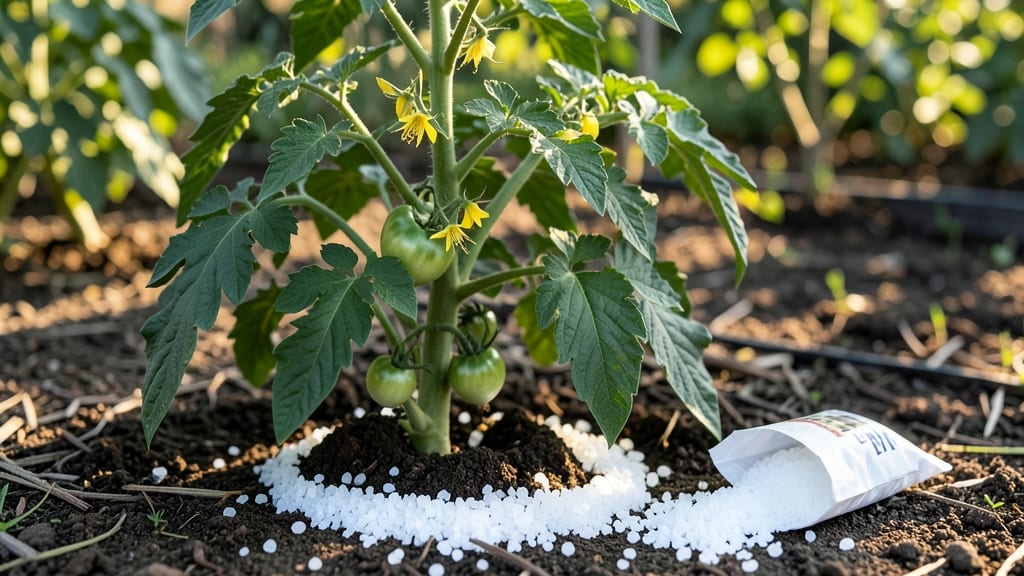
The Epsom salt garden myth suggests it dramatically boosts plant growth and adds magnesium, but research shows its benefits are limited unless soil tests confirm deficiencies. While it may help flowering plants in specific cases, it’s rarely the solution for struggling gardens.
The truth about Epsom salt (magnesium sulfate) is more nuanced than garden lore suggests.
Most soils already contain enough magnesium for healthy plants, so the "miracle cure" claims often overshoot reality. 🌱 That said, a diluted solution can help certain plants—like tomatoes or peppers—if their leaves show magnesium deficiency (yellowing between veins). Always test your soil first before reaching for the salt shaker.
What’s more important than Epsom salt itself is maintaining balanced soil health. Organic matter like compost or well-rotted manure provides magnesium naturally while improving soil structure.
Overusing Epsom salt can actually harm plants by disrupting nutrient ratios, so moderation is key. Think of it as a targeted supplement, not a one-size-fits-all fertilizer.
💡 In This Article
- Magnesium Sulfate in Soil: Science Behind Epsom Salt Claims
- When (and How) to Use Epsom Salt in Your Garden
Magnesium sulfate in soil: science behind Epsom salt claims
Epsom salt's chemical composition—magnesium sulfate (MgSO₄)—explains why it's often marketed as a garden panacea. Magnesium is a central atom in chlorophyll, the pigment that enables photosynthesis, making it essential for plant energy production.
However, most healthy soils already contain 0.5% to 2% magnesium by weight, which is typically sufficient for plant needs. The myth arises because magnesium deficiencies are rare in well-balanced soils, yet the symptoms (yellowing leaves between veins) are easily confused with other nutrient issues like potassium or nitrogen shortages. 🌱
The real science lies in how magnesium sulfate interacts with soil chemistry. When dissolved in water, magnesium ions (Mg²⁺) become available for plant roots, but the sulfate component (SO₄²⁻) can also influence soil pH and microbial activity.
Studies in the Journal of Plant Nutrition show that while magnesium sulfate can temporarily boost magnesium levels in soil, its effects are short-lived unless applied repeatedly.
The key factor is soil pH—magnesium becomes less available in highly acidic or alkaline soils (pH <5.5 or >8.0), where other nutrients like calcium or iron may outcompete it for uptake.
Peer-reviewed research on specific plants reveals nuanced results. For example, a 2018 study from the University of Florida found that tomatoes and peppers showed measurable growth improvements when magnesium sulfate was applied during flowering, thanks to enhanced chlorophyll production.
However, the same study noted that leafy greens like lettuce or spinach saw no significant benefit—their magnesium needs were already met by the soil. This highlights why Epsom salt isn’t a universal fix: its efficacy depends on the plant’s life stage and existing soil conditions. 🔬
What most gardeners overlook is how magnesium sulfate disrupts nutrient balance when overused. Excess magnesium can interfere with calcium and potassium uptake, leading to blossom-end rot in tomatoes or weak stems in peppers.
Soil tests are critical—if your soil already has adequate magnesium (>150 ppm), adding Epsom salt is like taking a vitamin supplement when you’re already healthy: unnecessary at best, potentially harmful at worst. The University of Massachusetts Extension recommends treating it as a last-resort fertilizer, not a routine amendment.
Here’s the bottom line: magnesium sulfate can help specific plants in specific conditions, but it’s not the miracle grower garden lore suggests. For most home gardens, organic amendments like compost or well-aged manure provide magnesium naturally while improving soil structure.
Think of Epsom salt as a targeted bandage for confirmed deficiencies—not a broad-spectrum cure. The science supports its use in controlled doses, but the myth oversimplifies its role in plant nutrition. ✨
To put it in perspective, consider this: a 1 tablespoon of Epsom salt dissolved in a gallon of water provides about 1.5 grams of magnesium.
That’s enough to treat a 10-square-foot garden bed for one season—but if your soil already has 1,500 ppm magnesium (typical for healthy soils), that extra dose is like adding a pinch of salt to an already-salty dish. The result? Minimal impact, if any. 💫