
Companion Plants
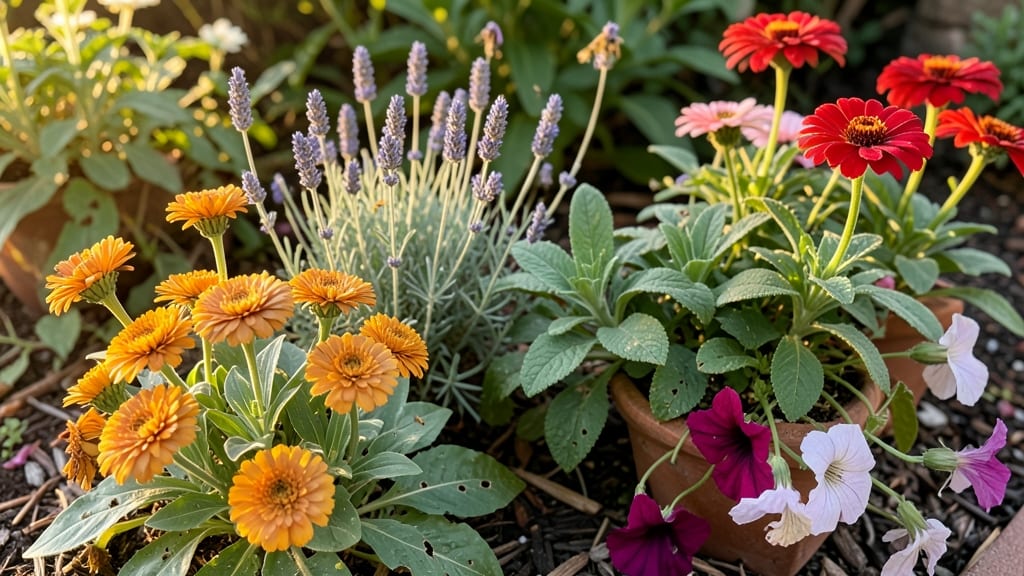
Garden live plants don't just survive—they thrive when you pair them right. 🌿 I learned this after my first garden season when my tomatoes struggled until I added basil nearby, and suddenly, pests vanished while flavor exploded.
The key isn't just planting anything together but matching plants that support each other's growth naturally.
Start with basics: sun-loving plants like tomatoes and peppers need at least 6 hours of sunlight daily, while leafy greens tolerate partial shade. Your soil should drain well but hold moisture—amend with compost if it's too sandy or clay-heavy.
Water deeply in the morning to prevent fungal issues, and mulch to keep roots cool and retain moisture.
You'll see the magic in just a few weeks—tomatoes producing heavier fruit, carrots growing straighter near onions, and herbs repelling pests that would otherwise devastate your crops. The right pairings turn a good garden into an abundant one, where plants work together instead of competing.
This works year-round with seasonal adjustments: cool-season crops like lettuce and spinach in spring/fall, heat-tolerant peppers and eggplants in summer. Even winter gardens can thrive with cold-hardy kale and broccoli paired with protective row covers. Let's get those pairings planted!
📚 In This Guide
- What you need
- Instructions
- Tips and common mistakes
- Wrapping up and next steps
What you need
- ● Live plants: Choose 3–5 compatible companion pairs (e.g., basil + tomatoes, marigolds + cucumbers, or chives + apples). Start with 3–6 plants per type for a balanced garden.
- ● Potting soil: 5–10 gallons (or enough to fill containers). Opt for well-draining, organic-rich soil (e.g., Miracle-Gro or homemade compost mix).
- ● Containers or garden beds: Containers: 5–10 gallon pots (1 per plant or shared for shallow-rooted pairs like herbs). Ensure drainage holes!
- ● Garden beds: 4’x4’ minimum space (adjust based on plant size). Use raised beds or in-ground plots for better control.
- ● Watering can or hose: With a gentle spray nozzle to avoid damaging delicate plants.
- ● Fertilizer: Organic options like fish emulsion (1-2-2 ratio) or compost tea (apply every 4–6 weeks).
- ● Mulch: 2–3 inches of straw, wood chips, or shredded leaves to retain moisture and suppress weeds.
- ● Hand trowel or transplanting spade (for digging and planting).
- ● Garden gloves (to protect hands from thorns or soil).
- ● Pruning shears (for trimming and shaping plants).
- ● pH test kit (to ensure soil pH is ideal for your plant pairs, e.g., 6.0–7.0 for most veggies).
- ● Support stakes or trellises (for climbing plants like cucumbers or beans).
- ● Sunlight: Confirm your garden spot gets 6+ hours of sunlight daily (adjust plant pairs for shade if needed).
- ● Climate zone: Choose plants suited to your USDA hardiness zone (e.g., heat-loving pairs for Zone 9 vs. cold-hardy for Zone 4).
- ● Time commitment: Dedicate 10–15 minutes daily for watering and weekly checks for pests/diseases.
- ● Patience: Companion planting thrives on long-term relationships—some pairs take months to show benefits!
How to create thriving live plant pairings in your garden
Here's how to pair plants that support each other's growth naturally.
🌱 Step 1: Choose Complementary Plant Families
Start by selecting plants from the same or compatible families—like herbs with aromatic companions or vegetables that share similar soil needs. For example, pair basil with tomatoes (both love rich soil and warmth) or marigolds with peppers (marigolds deter pests naturally). I always check sunlight requirements first—most herbs need 6+ hours of sun, while leafy greens tolerate 4-6 hours.
Look for plants that improve each other's flavor or health. Chives near carrots repel carrot flies, and onions near roses deter aphids. I keep a small notebook to track which pairings thrive in my space—some combinations work better in cooler climates, while others excel in heat.
💧 Step 2: Prepare Soil and Planting Zones
Use the 4 cubic feet of compost to enrich a 4-foot by 4-foot garden bed. Mix it into the top 6 inches of soil to create a nutrient-rich zone. This ensures roots access both water and nutrients without competition. I like to divide the bed into sections—one for sun-loving plants, another for partial shade.
Space plants according to their mature size. Tall plants like sunflowers or corn go in the back, while low-growing herbs like thyme or oregano fill the front. Leave 12-18 inches of space between medium-sized plants (like tomatoes or peppers) to prevent overcrowding. Overcrowded plants compete for nutrients and attract pests.
☀️ Step 3: Plant in Strategic Groups
Begin with your tallest plants in the back row, then add medium-height plants like basil or beans in the middle, and finish with low-growing herbs or lettuce in the front. This creates natural shade for smaller plants as the season progresses. I always plant pest-repelling companions first—like marigolds or nasturtiums—around the perimeter to act as a living barrier.
Water deeply after planting to settle the soil around roots. Use 1 gallon of water per plant to ensure moisture reaches the root zone. Avoid wetting leaves to prevent fungal diseases. Mulch with 2 inches of straw or shredded leaves to retain moisture and suppress weeds. This keeps the soil cool and reduces evaporation.
🌿 Step 4: Maintain with Companion Care
Check soil moisture daily during the first week, then reduce to every other day once plants establish roots. Companion plants often have similar water needs, so group them accordingly. For example, basil and tomatoes both prefer consistent moisture, while rosemary and lavender tolerate drier conditions.
Fertilize lightly with 1 cup of balanced 10-10-10 fertilizer every 4-6 weeks during the growing season. Too much fertilizer can burn roots or attract pests, so I always follow the package instructions. Prune regularly to encourage bushier growth—pinch back leggy stems to redirect energy to leaf production.
✂️ Step 5: Monitor and Adjust Pairings
Watch for signs of stress, like yellowing leaves or stunted growth. If one plant struggles, it may need more sunlight, water, or space. For example, if your basil starts wilting, it might need more shade or water. I keep a small spray bottle nearby to mist leaves if the air feels dry—companion plants often benefit from increased humidity.
Rotate plants seasonally if needed. Some pairings work well in spring but may compete in summer. For instance, lettuce thrives in cooler weather but bolts in heat, so I replace it with shade-tolerant herbs like cilantro or parsley. Adjust mulch thickness in winter to protect roots from freezing temperatures.
Tips & tricks for perfect companion plant pairings
Here's what I've learned after years of experimenting with companion planting—these tricks will help you maximize your garden's potential without the trial and error.
Sunlight Strategy: Pay close attention to the 6+ hours of sun requirement for herbs mentioned in Step 1. I've found that placing taller sun-loving plants like tomatoes or sunflowers on the north side of your bed (in the northern hemisphere) prevents them from shading smaller plants that need morning sun. This simple adjustment can double your yield of shade-tolerant herbs like cilantro or parsley that prefer partial shade.
Compost Placement: When mixing that 4 cubic feet of compost into the top 6 inches of soil in Step 2, focus on creating a nutrient-rich zone around the root area of each plant. I like to create small trenches around each planting hole and fill them with compost before backfilling with regular soil. This ensures roots have immediate access to nutrients without overwhelming the plants.
Watering Wisdom: The 1 gallon per plant guideline in Step 3 is perfect for establishing roots, but I've learned that watering deeply every other day after the first week works better than daily shallow watering. This encourages roots to grow deeper in search of moisture, making your plants more resilient during dry spells. I set a timer on my watering can to ensure consistency.
Seasonal Rotation: Don't be afraid to adjust your pairings as seasons change, as mentioned in Step 5. I keep a small chart that tracks which plants thrive together in each season. For example, I swap out lettuce for kale in summer and add cold-hardy spinach in fall. This keeps my garden productive year-round without overcrowding.
Pro Tips for Garden Live Plants
- Here's what I've learned after years of experimenting with companion planting—these tricks will help you maximize your garden's potential without the trial and error.
- Sunlight Strategy: Pay close attention to the 6+ hours of sun requirement for herbs mentioned in Step 1.
- Compost Placement: When mixing that 4 cubic feet of compost into the top 6 inches of soil in Step 2, focus on creating a nutrient-rich zone around the root area of each plant.
Frequently asked questions
Got questions about pairing live garden plants for a thriving companion setup?
Here are some of the most common ones—plus quick, actionable answers to keep your garden flourishing year-round.
Which plants are the easiest to pair for beginners?
Start with classic, low-maintenance combos like basil and tomatoes (they repel pests and boost flavor) or marigolds and peppers (marigolds deter nematodes). These pairs are forgiving, fast-growing, and perfect for learning the ropes. Pro tip: Stick to herbs and veggies with similar sunlight needs (e.g., full sun) to simplify care.
How long does it take to see benefits from companion planting?
Some benefits—like pest deterrence or improved soil health—appear within weeks, while others (e.g., better yields) may take 1-2 growing seasons to show. For example, planting nasturtiums near cucumbers can reduce aphids almost immediately, but soil enrichment from clover cover crops takes longer. Monitor and adjust as you go!
Are there any plant pairings I should avoid?
Yes! Some plants compete for nutrients or release chemicals that stunt growth. Avoid pairing:
- Beans with onions or garlic (slows bean growth)
- Corn with potatoes (both need similar space and nutrients)
- Fennel with almost anything (it’s a notorious growth inhibitor!)
Can I companion plant in containers or small spaces?
Containers are ideal for compact combos like:
- Dill + lettuce + radishes (dill deters cabbage moths)
- Thyme + cabbage (thyme repels cabbage worms)
What do I do if pests still attack despite companion planting?
Companion planting reduces pests, but it’s not foolproof. If issues persist:
- Add traps or row covers for early intervention.
- Introduce beneficial insects (like ladybugs for aphids).
- Rotate crops next season to break pest cycles.
Wrapping up and next steps
Transforming your garden into a thriving ecosystem of live plants is all about smart pairings and a little green love! 🌱 By choosing the right companions, you’ll boost yields, deter pests, and create a self-sustaining haven that works for you—not against you.
Whether you’re a seasoned gardener or just starting, these pairings make it easier than ever to grow lush, healthy plants year-round.
Ready to take the next step? Start small—pick one or two pairings to test in your garden this season, and watch your plants flourish together. Before you know it, you’ll be reaping the rewards of a harmonious, high-yielding garden that’s as beautiful as it is bountiful!