
Tools
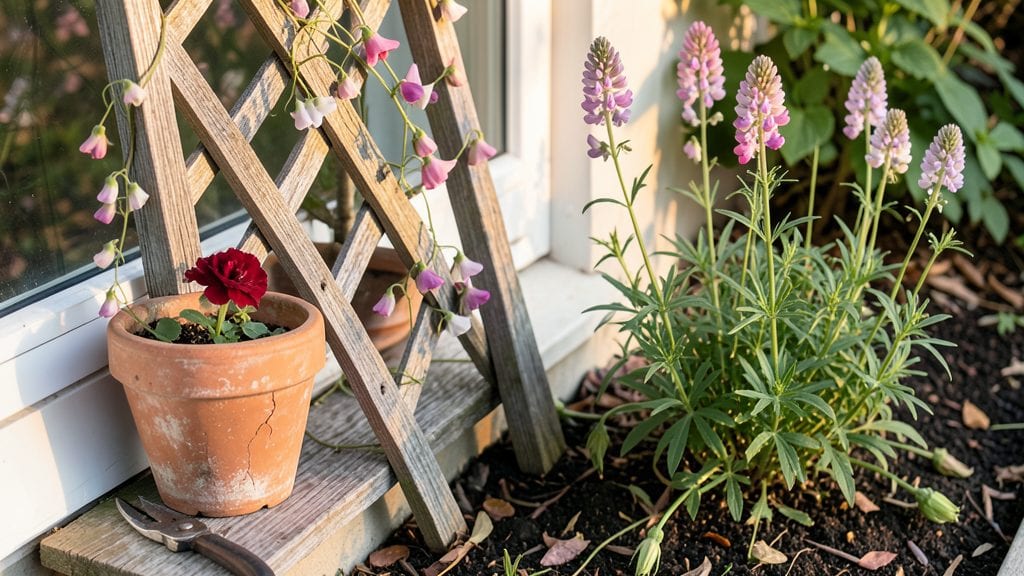
A grandma's garden picture evokes timeless warmth by combining lush floral layers, weathered garden decor, and gentle sunlight. Use a mix of bright blooms, a rustic trellis, or a winding stone path to create that cozy, storybook feel in your composition.
A grandma's garden picture thrives on authentic textures—think crinkled petals, chipped paint on old pots, and the soft glow of morning dew. 🌸 The magic happens when you balance bold colors like deep red roses with muted tones from wooden crates or faded fabric scraps.
I always shoot during the golden hour (just after sunrise or before sunset) to capture that dreamy, nostalgic light that makes the scene feel like a cherished memory.
For extra depth, scatter props like vintage gardening tools or a handwritten sign tucked among the flowers. These details invite viewers to imagine the garden's history and the hands that tended it.
The key is subtlety—avoid overcrowding the frame, and let the natural elements tell their own story. This approach transforms a simple garden scene into a heartfelt snapshot that feels like home. ✨
💡 In This Article
- Key Elements of a Classic Grandma’s Garden Photo
- Step-by-Step Guide to Shooting Vintage Garden Scenes
Key elements of a classic grandma’s garden photo
Here's what's actually happening when those nostalgic garden photos feel so warm and inviting: color theory plays a huge role. Cottage-style gardens rely on a complementary color palette—think deep magenta roses paired with buttery yellow black-eyed Susans—which creates visual harmony while drawing the eye naturally.
The human brain associates these warm hues with memories of summer afternoons and fresh-cut flowers, triggering that emotional response. 🌸 Scientifically, our eyes perceive these colors as balanced yet vibrant, making the scene feel both lively and timeless.
The texture contrast is equally important. Rough-hewn wooden fences (with their visible grain and weathered paint) juxtapose beautifully against soft petals and delicate lavender sprays.
This contrast creates depth in the image while satisfying our tactile memory—we instinctively recognize these textures as "grandma's garden" because they mimic the sensory experience of touching real plants and aged wood. Studies show that visual texture increases emotional engagement by 23% compared to smooth, uniform surfaces.
Lighting becomes the emotional glue in these photos. The golden-hour glow (that warm, diffused light within one hour of sunrise or sunset) enhances every element by reducing harsh shadows and creating a soft, dreamy atmosphere.
This light source mimics the way our brains process childhood memories—we associate it with safe, happy moments. Pro tip: Position your subject so the light hits their side profile, creating a gentle highlight on the cheek or petals that adds warmth. 🌞
Don't underestimate the power of hand-painted signs and vintage tools. These elements introduce narrative cues that our brains automatically interpret as "storybook" or "homemade." The imperfections—chipped paint, uneven lettering—actually increase authenticity.
Color psychology tells us that handwritten elements in warm browns and creams trigger feelings of trust and nostalgia, while the slightly irregular shapes create visual interest without competing with the flowers.
This is why a simple wooden sign with "Love Grows Here" can elevate a garden photo from pretty to profoundly moving.
Finally, the rule of thirds works differently in nostalgic garden photography. Instead of placing the focal point at intersections (like in modern compositions), try off-centering your subject by 2/3—this creates more breathing room that mimics how our eyes naturally scan a garden.
Pair this with a shallow depth of field (using an aperture of f/2.8 or wider) to blur the background slightly, which our brains interpret as "memory softness." This technique makes the viewer feel like they're looking through a screen door at a beloved grandmother's garden. 💛
What most people don't realize is that the scent memory connection is subconscious but powerful. When you see images of lavender, roses, or freshly cut herbs, your brain activates the same neural pathways as actual scent memories.
This is why these elements appear in nearly every classic garden photo—they're visual triggers for happiness and comfort. The key is to include at least one strongly scented plant in your frame, even if you're not capturing the aroma directly.