
Landscaping
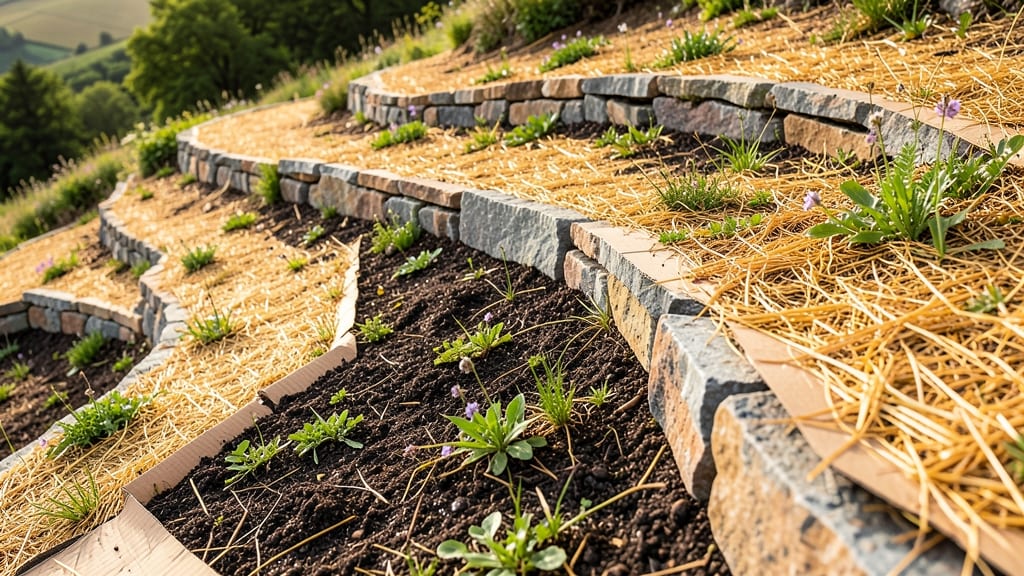
Transforming a sloped yard into a stunning hill garden doesn’t have to mean hours of backbreaking work or soil erosion risks. These 10 creative terraced garden ideas showcase how to harness gravity, maximize space, and create breathtaking landscapes—even on the steepest inclines—while keeping plants thriving and erosion at bay.
Natural Stone Retaining Wall Terraces
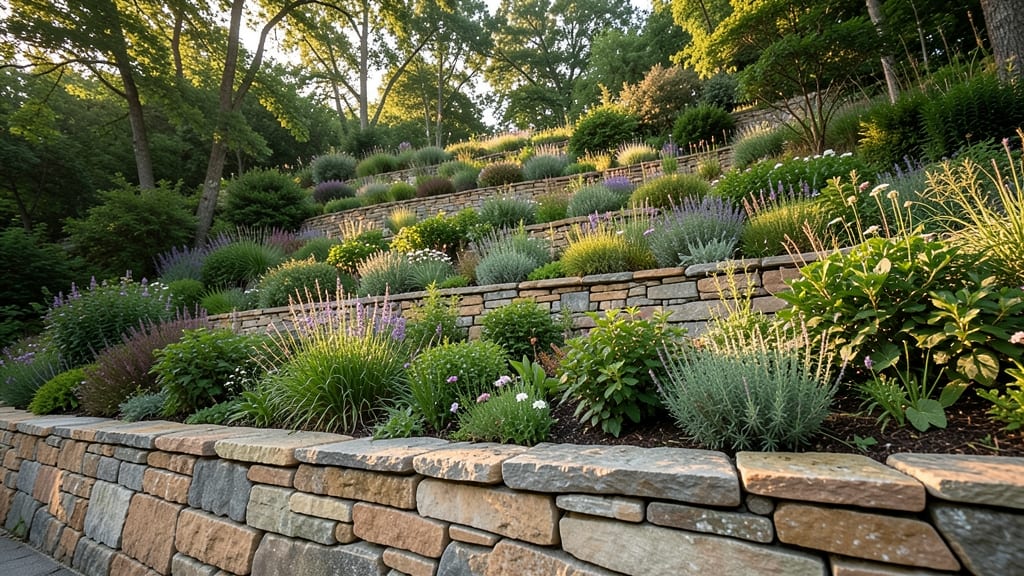
Transforming a steep hillside into a lush garden doesn’t require sacrificing natural beauty—natural stone retaining walls create sturdy terraces that look like they’ve always been there. These terraces use locally sourced stones to blend seamlessly with woodland or rustic landscapes while preventing erosion and adding character.
Start by marking terrace levels every 2-3 feet along the slope, ensuring each wall is slightly wider at the base for stability. Use irregularly shaped stones (like fieldstone or river rock) for a rustic look, stacking them dry or with minimal gravel mortar. Plant deep-rooted shrubs like spirea or cotoneaster behind the walls to anchor soil and spill over the edges for softness.
This approach is perfect for gardeners who love a low-maintenance, organic aesthetic—no concrete or synthetic materials needed. The walls age gracefully, becoming part of the landscape rather than an eyesore. 🌿
Wooden Decking and Planter Box Steps
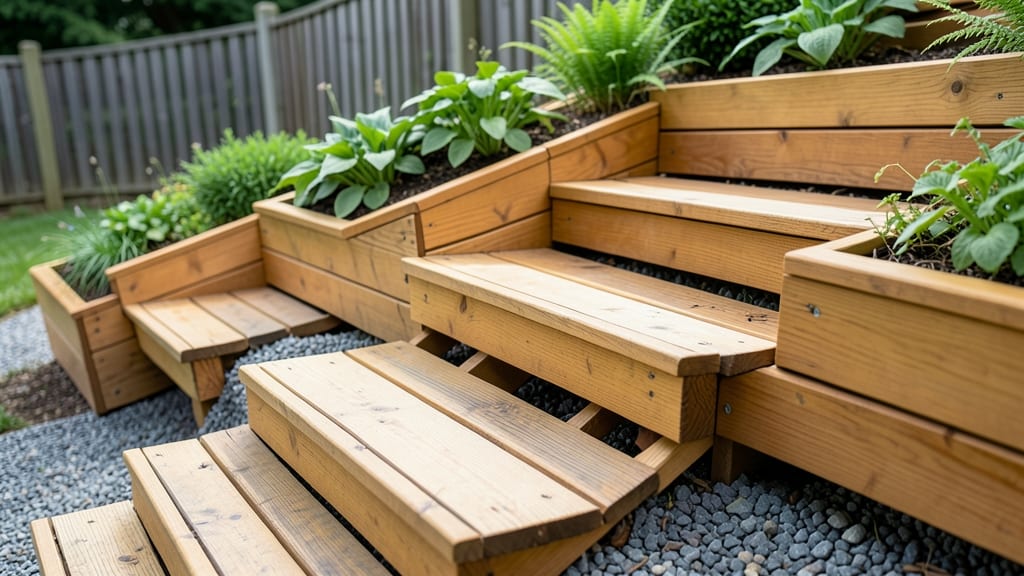
If your urban backyard has a gentle slope but lacks the charm of heavy stone terraces, wooden decking steps with built-in planters are your secret weapon. These modular systems transform slopes into walkable, planted terraces—ideal for small spaces where stone isn’t permitted or practical.
Start with pre-cut decking boards (like cedar or redwood) to create each step, then attach narrow planter boxes along the edges. Use drought-tolerant plants like lavender, sedum, or ornamental grasses to minimize maintenance while preventing erosion. The steps can be as wide as 12 inches, ensuring safety and accessibility—perfect for gardeners who want to stroll through their greenery.
This approach works best for urban gardeners with limited DIY skills or renters who need temporary, movable terraces. Plus, the built-in planters eliminate the need for separate containers, saving space and creating a seamless, modern look. 🌻
Grass and Sedum Living Walls
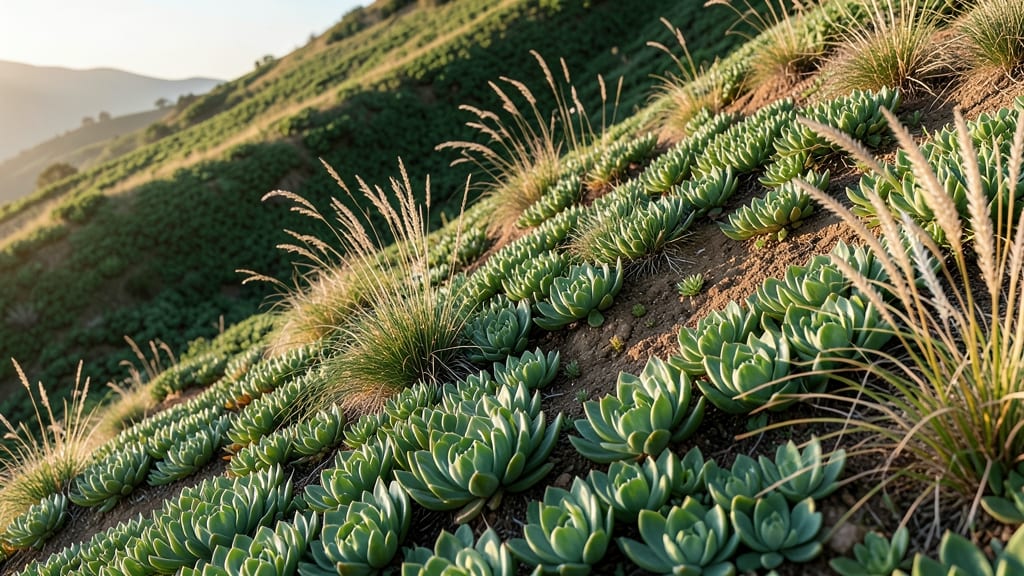
Skip the heavy materials—your hillside can become a living, breathing green wall with sedum and ornamental grasses. These drought-resistant plants grow in dense mats, naturally locking soil in place while requiring almost no water once established. The result? A zero-maintenance slope that thrives on neglect and looks stunning year-round.
Start by installing a wire mesh or coir erosion mat as a base, then layer with a mix of sedum varieties (like Sedum spurium or Sedum album) and grasses such as fountain grass or maiden grass. Space plants 6–12 inches apart to ensure full coverage within a season. The key is their succulent texture—they hold moisture during dry spells and bounce back after frost.
This approach is perfect for modern minimalists or eco-conscious gardeners who want to reduce water use and eliminate mowing. Plus, the soft, flowing forms of grasses and the deep colors of sedum create a textured, artistic look that’s far more dynamic than traditional terraces. 💚
Bamboo Fence and Wire Mesh Terraces
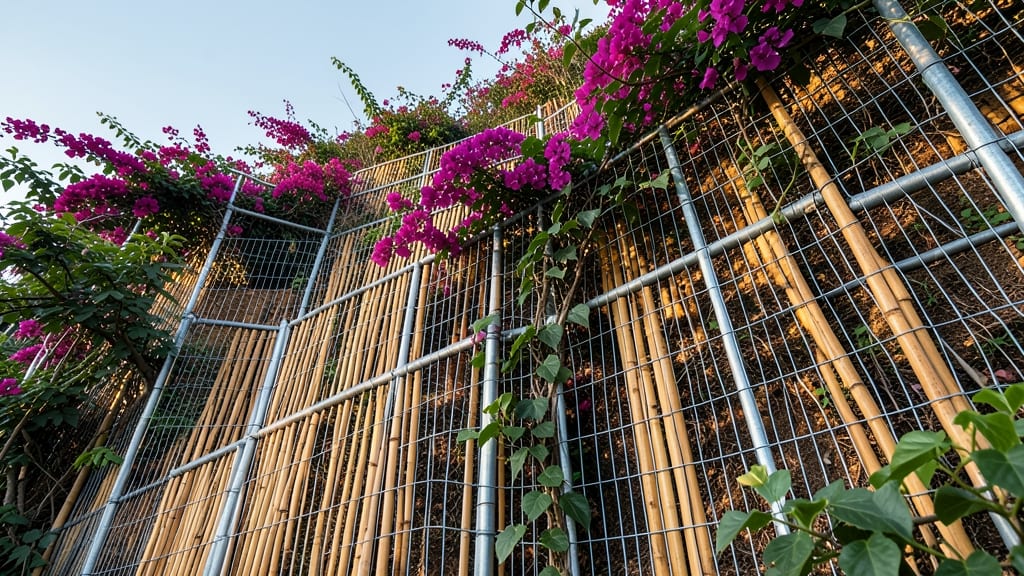
Want a fast, budget-friendly terrace solution that transforms your slope into a lush tropical paradise? Bamboo fencing and wire mesh combine affordability with versatility, creating lightweight terraces perfect for climbing plants like bougainvillea or passionflower.
Start by installing bamboo fencing along the slope—its natural flexibility bends to contours while providing sturdy support. Then, attach wire mesh horizontally to create flat planting surfaces. The mesh prevents soil erosion while giving vines something to cling to. For extra stability, secure the structure with galvanized staples or screws into wooden stakes.
This system is ideal for urban gardeners or beginners who want quick results without heavy materials. Plus, the vertical growth of climbing plants adds drama while keeping your slope both functional and stunning. 🌻
Cob or Adobe Brick Terraces
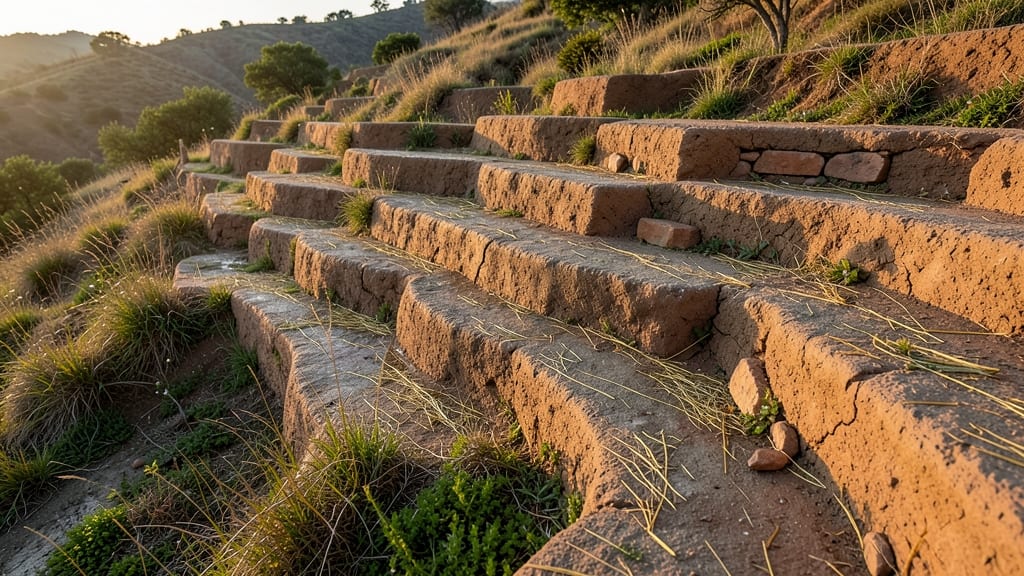
Skip the polished look and embrace the raw beauty of handcrafted cob or adobe terraces—these earthy structures bring a timeless, organic charm to your hillside while solving erosion problems naturally. Unlike rigid materials, cob (a mix of clay, sand, and straw) or adobe bricks allow water to seep through, reducing runoff and nourishing plant roots below.
Building these terraces is simpler than you’d think: cob can be shaped freehand on-site, while adobe bricks dry in the sun for easy assembly. Plant drought-tolerant herbs like thyme or lavender between bricks to thrive in the permeable soil. The rustic texture pairs perfectly with wildflower borders or climbing roses, creating a garden that feels like it grew from the land itself.
Perfect for permaculture enthusiasts or those craving a low-impact, high-reward design, these terraces require minimal maintenance and zero synthetic materials. Your hillside will thank you with lush, erosion-free beauty. 🌿
Container Garden Staircase Terraces
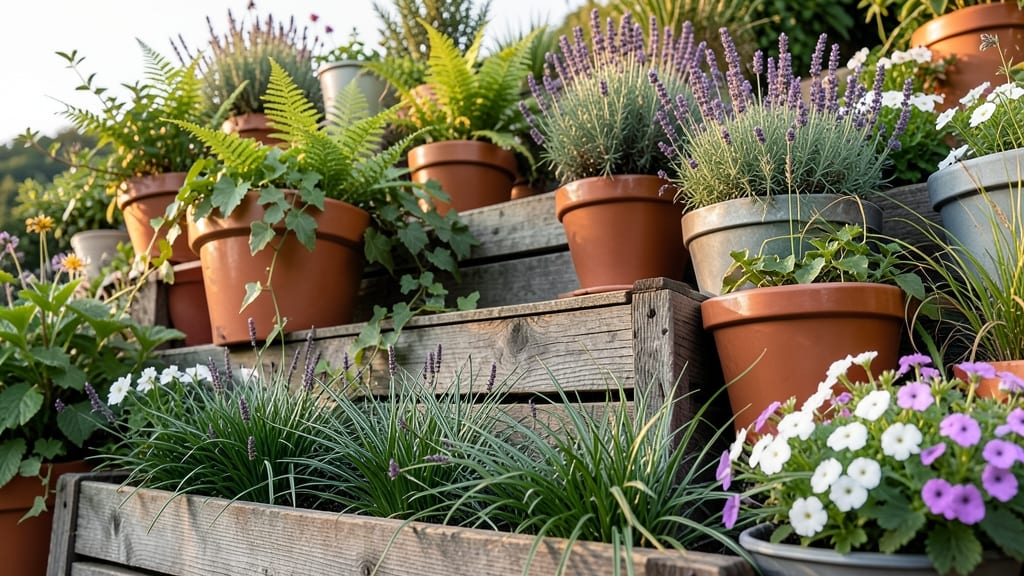
If you're renting your home or simply want a garden that can move with you, container garden staircase terraces are your answer. These portable terraces let you create a stunning hillside effect without permanent construction, using nothing more than stacked pots, crates, or troughs.
Start with lightweight containers like terracotta pots, wooden planter boxes, or even repurposed pallets. Stack them at varying heights to mimic natural terraces, securing each level with non-toxic adhesive or landscape fabric to prevent shifting. Fill with drought-tolerant plants like succulents, ferns, or ornamental grasses—they thrive in containers and add visual interest while reducing water needs.
This approach is perfect for urban balconies, patio slopes, or small yards, offering instant curb appeal without the commitment of permanent structures. Plus, you can rearrange or relocate your terraces whenever your style—or living space—changes! 🌿
Gabion Baskets Filled with Gravel and Plants
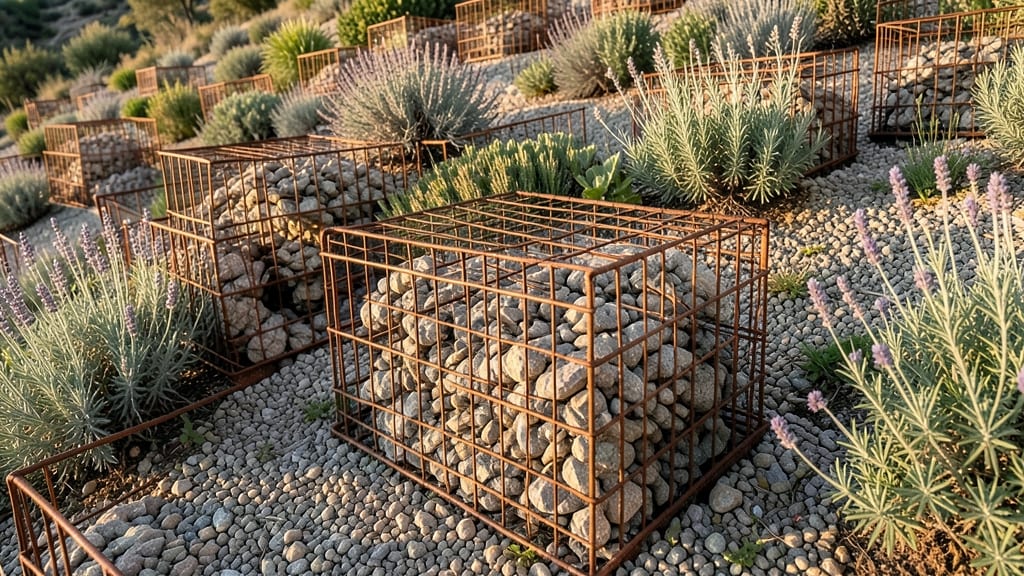
Looking for a modern, erosion-proof solution that blends industrial edge with Mediterranean charm? Gabion baskets—wired metal cages filled with gravel and drought-tolerant plants—are your answer. These versatile structures channel water flow while creating striking textural contrast in your hillside design.
Start by filling the baskets with medium-sized gravel (about 3/4 full) to stabilize the structure and improve drainage. Then, tuck in eroding-resistant plants like lavender, rosemary, or sedum, which thrive in rocky conditions and add softness to the rugged metal. Stack or arrange them in zigzag patterns for visual interest, securing each layer with heavy-duty wire. The gravel prevents soil loss, while the plants soften the look and attract pollinators.
This approach is ideal for gardeners who love low-maintenance, high-impact designs. Gabion baskets require minimal upkeep—just occasional weeding and watering—and their durability makes them perfect for slopes prone to erosion. 🌿
Swales and Berms for Water Retention
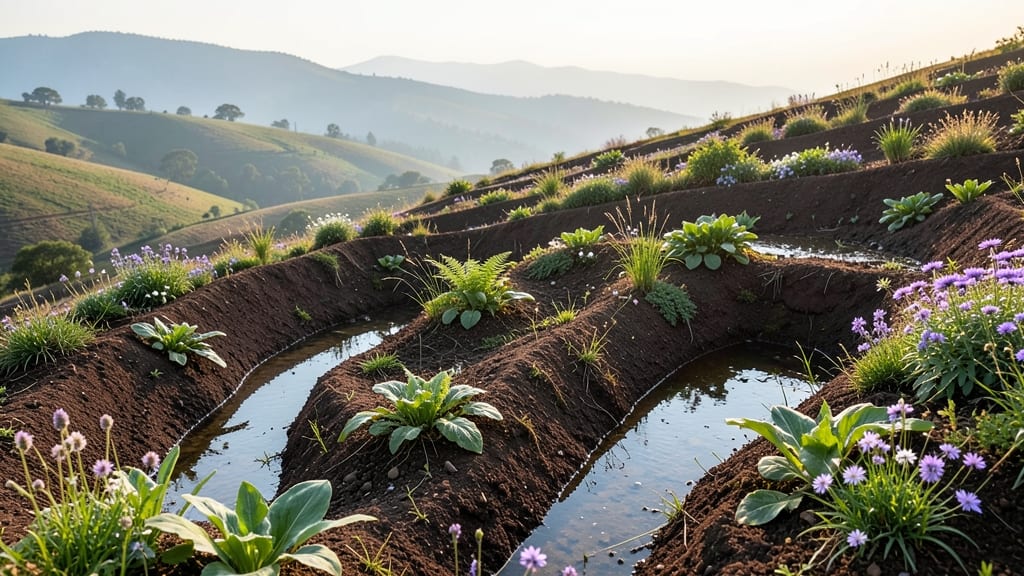
If you're working with a large, open slope and want to minimize erosion while maximizing water retention, swales and berms are your permaculture superheroes. Unlike rigid terraces, these gentle earthworks mimic natural contours, slowing water flow and creating lush micro-climates for moisture-loving plants like hostas or irises.
Swales are shallow trenches dug across the slope to catch and redirect water, while berms are raised mounds of soil on the downslope side. The key is to space them every 10-20 feet depending on your slope's steepness, ensuring water pools briefly before seeping into the soil. Fill swales with organic mulch or water-holding plants to boost moisture retention and reduce runoff.
This method is ideal for regenerative gardeners or those with expansive slopes, as it requires minimal materials and blends seamlessly with the landscape. Plus, the extra moisture creates perfect conditions for native perennials and shrubs that thrive in damp conditions. 💚
Hanging Planters and Macramé Terraces
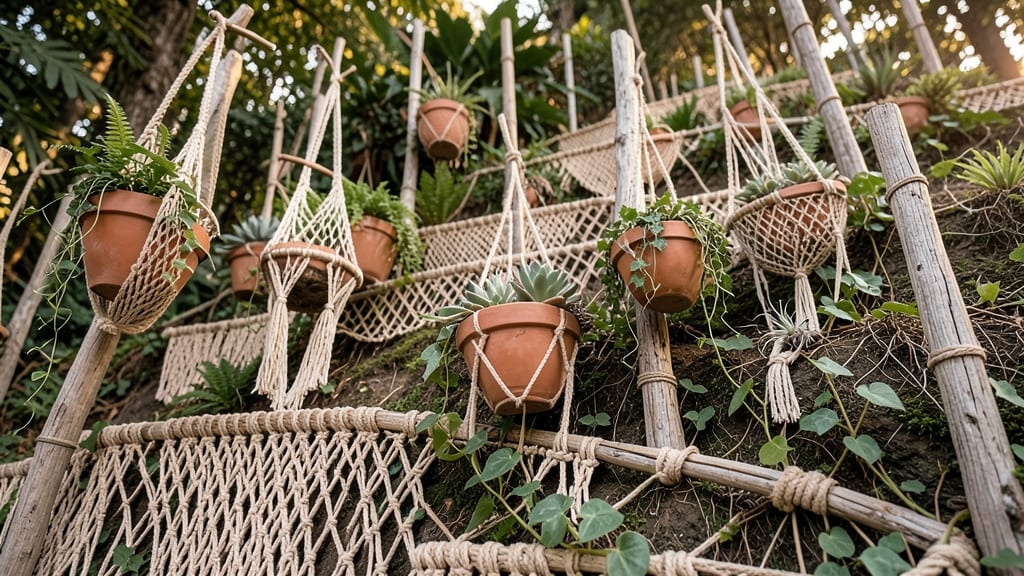
Turn a steep slope into a whimsical garden nook with hanging planters and macramé terraces—perfect for small spaces or adding a boho-chic vibe. These lightweight solutions maximize vertical space while keeping your hands free to style your garden with ease.
Start with pre-made macramé hangers or DIY knotted ropes to create tiers at varying heights along a trellis or fence. Fill them with trailing plants like string of pearls, pothos, or fuchsia for cascading color. For extra stability, attach planters to a sturdy wooden frame or metal grid screwed into the slope. Watering is a breeze—just place a drip irrigation line along the back or use self-watering planters to keep roots happy.
This approach is ideal for urban balconies, rental gardens, or anyone who loves a low-maintenance yet stylish look. Plus, the soft textures and trailing greenery create a relaxing retreat that feels like a secret garden. 🌿
Sheet Mulching on Contoured Terraces

If you're looking for a zero-dig, budget-friendly way to transform a hillside into lush terraces, sheet mulching is your secret weapon. This technique layers cardboard, compost, and mulch directly on the slope, smothering weeds while building fertile soil—no heavy machinery or expensive materials required.
Start by contouring the slope into gentle terraces (about 2-3 feet wide). Lay down black-and-white corrugated cardboard (no tape!) to block weeds, then top with 4-6 inches of compost and 2-3 inches of straw or wood chips. Water lightly to settle layers, then plant directly through the mulch with shallow-rooted perennials like comfrey or fast-spreading ground covers such as creeping thyme. The mulch retains 90% more moisture than bare soil, reducing watering needs by half.
This method is ideal for organic gardeners or beginners with steep slopes, as it’s chemical-free, low-maintenance, and breaks down into rich humus over time. Plus, you’ll see results in just one growing season—no waiting years for soil to improve. 🌿