
Size
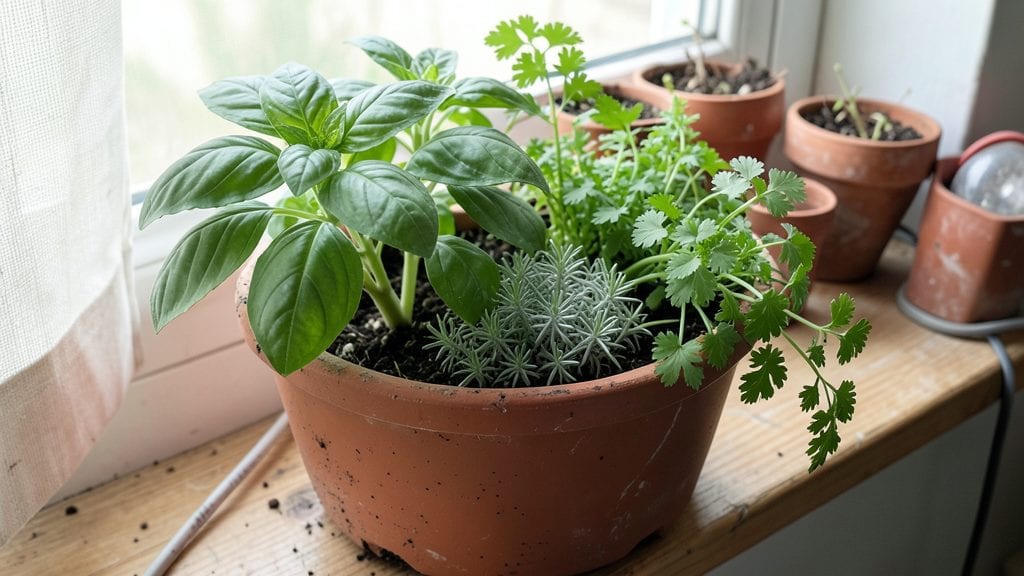
My indoor herb garden grow lights finally solved the winter herb crisis I’d been struggling with for years—no more sad, leggy basil or wilted cilantro. The right full-spectrum LED setup doesn’t just keep herbs alive; it makes them thrive like they’re basking in summer sun, even in a dim apartment.
I’ve tested everything from cheap clip-on lights to high-end setups, and the difference is night and day.
You don’t need a fancy grow room to pull this off—just a full-spectrum LED bulb (look for 6500K color temperature), a simple timer, and a shelf within 6–12 inches of your plants.
Most herbs need 12–16 hours of light daily, but basil and parsley are forgiving if you overshoot by a few hours. The key is consistency: herbs grow toward the light, so rotating your pots weekly keeps them even and bushy.
By month three, you’ll be harvesting bright green, fragrant herbs that taste fresher than anything from the store. The setup pays for itself in saved grocery trips, and the satisfaction of snipping fresh basil for pasta or cilantro for tacos year-round?
Priceless. Let’s get your herbs growing strong—no matter what the weather outside does.
This works for any space, from a sunny windowsill to a basement nook, and adapts to herbs like mint, thyme, or chives just as easily as basil. The only real mistake is waiting to set it up—your kitchen will never smell the same again.
📚 In This Guide
- What you need
- Instructions
- Tips and common mistakes
- Wrapping up and next steps
What you need
- ● Full-spectrum LED grow lights: 1–2 24W–40W LED grow bulbs (or a 120W–200W LED grow light panel for larger setups)
- ● Look for 10,000K–12,000K color temperature + red/blue spectrum (e.g., Philips Hue, SANSI, or Mars Hydro)
- ● Grow light fixture: 1 adjustable ceiling-mounted or clamp lamp (e.g., LED grow light bar with 18–36" coverage)
- ○ Optional: Smart plug for timer control (e.g., Kasa Smart Plug)
- ● Containers: 2–6 6–12" deep pots with drainage holes (terracotta, fabric, or plastic)
- ○ Optional: Self-watering planters for convenience
- ● Growing medium: 1–2 bags of lightweight potting mix (e.g., Fox Farm Ocean Forest or Miracle-Gro Indoor Potting Soil)
- ○ Optional: Perlite or vermiculite for aeration (mix in 10–20% by volume)
- ● Herb seeds or seedlings: Basil, mint, parsley, cilantro, or chives (choose fast-growing varieties for beginners!)
- ● Basic tools: 1 small trowel or spoon for planting
- ● 1 spray bottle for watering
- ● 1 pair of pruning shears (for harvesting)
- ● Space: A sunny windowsill or dedicated shelf 12–24" from the grow light (adjust height as herbs grow).
- ● Power source: Access to an outlet near your growing area (LED lights draw minimal energy!).
- ● Time commitment: 10–15 minutes daily for watering and light adjustments.
- ● Budget: ~$50–$150 total (varies by light quality and container size).
Step-by-Step instructions for setting up full-spectrum LED grow lights
Transform your indoor space into a thriving herb garden with this straightforward LED setup.
Choose the Right Grow Light and Position
Select a full-spectrum LED grow light designed for herbs—look for one with a blue-red spectrum to mimic natural sunlight. Place the light 2-4 inches above the plants, adjusting as they grow. I like to mount mine on an adjustable arm so I can raise it gradually. The goal is to keep the light close enough to provide strong intensity without burning delicate leaves.
Position the light so it covers all plants evenly. If using multiple lights, arrange them in a grid pattern to avoid shadows. You’ll notice herbs growing toward the light if it’s uneven—this is your cue to reposition. Keep the light on for 14-16 hours daily to simulate long summer days, which herbs thrive in.
Set Up Your Herb Containers Under the Light
Arrange your 4 herb pots in a compact cluster under the grow light, ensuring each plant gets equal exposure. I use small 6-inch pots for herbs like basil and parsley, spacing them 3-4 inches apart to allow airflow. Place the pots on a drainage tray to catch excess water and prevent root rot.
Check that the light covers the entire canopy of leaves. If any part of a plant is shaded, the growth will slow, and leaves may yellow. Adjust the height or angle of the light until every leaf receives direct illumination. For best results, rotate the pots quarter-turn weekly to prevent uneven growth toward the light.
Monitor Light Intensity and Adjust as Needed
Watch for signs of light burn—tiny brown spots or crispy edges on leaves—if the light is too close. If this happens, raise the light 1-2 inches higher. On the other hand, if herbs stretch tall and leggy with pale leaves, they’re not getting enough light. Lower the light 1 inch at a time until you see dark green, compact growth with leaves spaced closely together.
Herbs like basil and cilantro need moderate to high light intensity, while parsley and chives tolerate slightly lower levels. If your herbs start flowering prematurely (a sign of stress), they’re likely getting too much light. In that case, reduce the light duration to 12 hours daily until the flowers fade.
Maintain Consistent Lighting and Care
Keep the grow light on a timer to ensure 14-16 hours of daily light. Herbs grown under inconsistent lighting will bolt (flower) quickly, ruining their flavor and growth. Pair this with daily watering—herbs under grow lights dry out faster than those in natural light. Stick your finger 1 inch into the soil; if it’s dry, water until moisture reaches the bottom of the pot.
Fertilize every 2-3 weeks with a balanced liquid fertilizer (like 10-10-10) diluted to half strength. You’ll see vibrant green leaves and bushy growth as a sign your setup is working. If leaves yellow between veins, it’s often a sign of overwatering or nutrient deficiency—adjust your watering or fertilizer schedule accordingly.
Tips & tricks for perfect indoor herb garden grow lights
These practical insights will help you maximize your LED grow light setup for healthy, productive herbs all year round.
The Light Distance Rule: The 2-4 inch range in Step 1 is your sweet spot, but don't guess—use a ruler to measure from the top of your plants to the bottom of the light fixture. I've found that herbs like basil and cilantro actually prefer the closer end of this range (2-3 inches) for maximum growth, while parsley and chives can handle the full 4 inches. Adjust weekly as your plants grow taller, raising the light gradually rather than all at once.
Light Burn Prevention: When you notice those tiny brown spots in Step 3, it's already too late to save those leaves, but you can prevent future damage. Start by raising the light just 1 inch higher than your current position and monitor for 24 hours. If the spots disappear within a day, you've found your safe zone. For extra protection, consider using a light with built-in heat dissipation—many modern LED grow lights include this feature to prevent overheating.
Timer Troubleshooting: The 14-16 hour daily light requirement in Step 4 is non-negotiable for most herbs, but if you're struggling to remember to turn the light on and off manually, invest in a reliable plug-in timer. I recommend setting it for 14 hours initially, then adjusting to 16 hours once your herbs show consistent healthy growth. This gradual increase helps prevent shock to your plants while still providing that crucial long daylight period they need.
Rotation Reminder: That quarter-turn weekly rotation in Step 2 might seem like overkill, but trust me—it makes all the difference. Without rotation, your herbs will grow unevenly toward the light source, creating lopsided plants. Set a calendar reminder or use a small piece of tape to mark your rotation position each week. This simple habit ensures your herbs grow strong and symmetrical, with leaves reaching outward evenly rather than all leaning in one direction.
Pro Tips for Indoor Herb Garden Grow Lights
- These practical insights will help you maximize your LED grow light setup for healthy, productive herbs all year round.
- The Light Distance Rule: The 2-4 inch range in Step 1 is your sweet spot, but don't guess—use a ruler to measure from the top of your plants to the bottom of the light fixture.
- Light Burn Prevention: When you notice those tiny brown spots in Step 3, it's already too late to save those leaves, but you can prevent future damage.
Frequently asked questions
What’s the best type of grow light for an indoor herb garden?
For herbs, full-spectrum LED grow lights are ideal—they mimic sunlight with red/blue wavelengths for growth and flowering. Look for models with adjustable spectra (e.g., 10,000K for leafy greens like basil or 6500K for flavorful herbs like thyme). Avoid cheap white LEDs; they lack the right balance for photosynthesis.
How long should I keep the grow lights on daily?
Herbs thrive with 12–16 hours of light per day. Use a timer for consistency! Too little light (under 10 hours) causes leggy growth, while overdoing it (24/7) can stress plants. Most herbs prefer 14 hours of light—adjust based on your setup and herb type (e.g., cilantro needs less than rosemary).
Can I use regular LED bulbs instead of grow lights?
Technically yes, but not optimally. Regular LEDs (like 60W equivalents) emit broad-spectrum light but lack the red (660nm) and blue (450nm) wavelengths herbs need for robust growth. For small setups, a 6500K daylight bulb works as a budget fix, but full-spectrum LEDs yield faster, healthier herbs with better flavor.
Why are my herbs growing tall and weak under grow lights?
Leggy herbs usually mean light deficiency or imbalance. Check these fixes:
- Raise lights 6–12 inches above plants (closer = more intense light).
- Ensure 12+ hours of light daily (use a timer!).
- Switch to a full-spectrum LED if using white bulbs.
- Rotate plants weekly to prevent uneven growth.
How much does an indoor herb grow light setup cost?
Costs vary widely:
Setup Type
Price Range
Best For
Budget (single LED bulb + clip)
$20–$50
Small windowsill setups (4–6 herbs)
Mid-range (full-spectrum LED panel)
$80–$200
12–24 herbs (e.g., basil, parsley, chives)
Premium (adjustable spectrum + timer)
$200–$500+
Large setups or flavor-sensitive herbs (e.g., rosemary, dill)
Pro tip: Start small! Test a single LED panel before investing in a full system.
Wrapping up and next steps
Growing your own indoor herb garden with the right full-spectrum LED grow lights is simpler—and more rewarding—than you think! 🌱 With the right setup, you’ll enjoy fresh, flavorful herbs year-round, no matter your space or climate.
Start small, experiment with lighting schedules, and soon you’ll be harvesting basil, mint, and cilantro like a pro.
Ready to dive in? Pick your herbs, gather your supplies, and turn that empty corner into a thriving green oasis! Happy growing! 🌿