
Fertilization
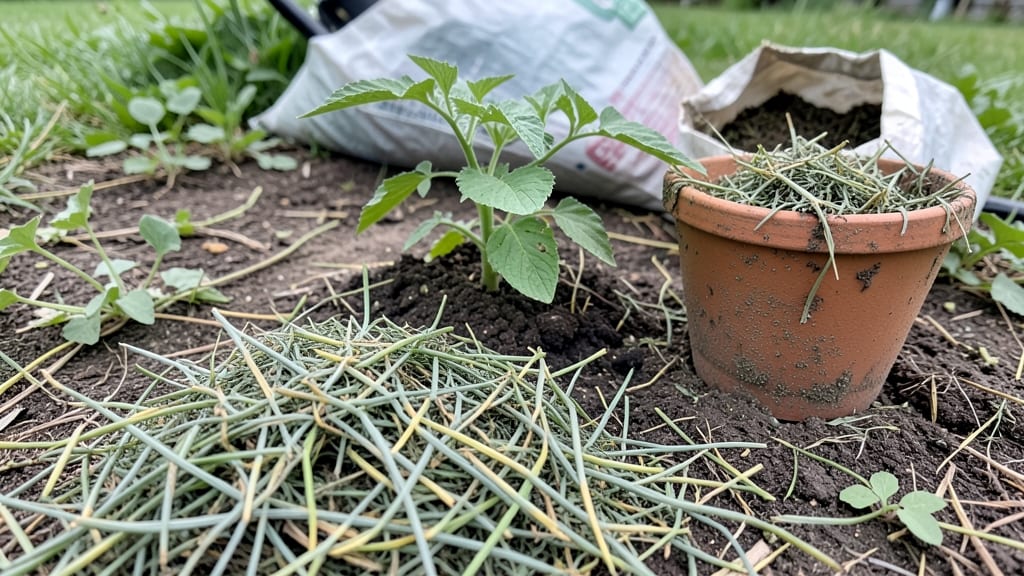
Putting grass clippings in your garden recycles nutrients back into the soil, acting as a natural mulch that retains moisture, suppresses weeds, and enriches the soil with nitrogen as it decomposes. Always use clippings from chemical-free lawns and spread them thinly to avoid smothering plants.
Grass clippings work like a free, eco-friendly fertilizer because they break down quickly, releasing nutrients as they decompose. 🌱 Unlike synthetic fertilizers, they improve soil texture over time while keeping weeds at bay—just avoid piling them too thickly, or they can smother plants or create thatch.
I’ve seen gardens thrive with this method, especially when paired with other organic matter like leaves or compost.
For best results, mow when grass is dry to prevent clumps, and spread clippings evenly—about ¼-inch thick—after mowing. This mimics nature’s way of recycling nutrients while saving money on store-bought mulch.
Just skip them if your lawn has been treated with pesticides or fungicides, as those chemicals can harm plants.
💡 In This Article
- How Grass Clippings Boost Soil Health
- Best Practices for Using Grass Clippings in Landscaping
How grass clippings boost soil health
Grass clippings act as a natural nitrogen bomb when left on your lawn or garden beds. When grass blades are cut, they release enzymes that accelerate decomposition, breaking down into organic matter within 1-2 weeks under ideal conditions.
This process releases 4-5% nitrogen by weight back into the soil—a nutrient plants crave for lush growth. The key here is the clippings' high moisture content (about 80-90%) and their fine texture, which allows them to decompose faster than chunkier mulches like wood chips.
Unlike straw or wood chips, grass clippings create a living mulch that actively interacts with soil microbes. These microbes break down the clippings while producing enzymes that improve soil structure by binding particles together.
Studies show grass mulch increases soil organic matter by up to 20% annually compared to bare soil. The fine particles also create tiny air pockets that enhance root respiration, while their dark color helps absorb solar heat—keeping soil temperatures 5-10°F warmer than exposed soil during cooler months.
One of grass clippings' superpowers is their moisture-retaining ability. A ¼-inch layer can reduce soil evaporation by 30-40%, which means less watering for you. This is because the clippings form a protective mat that slows water loss while allowing rain to penetrate.
Compare this to straw, which requires 1-2 inches for similar moisture retention—using up to 8x more material. The trade-off? Grass clippings need frequent replenishing (every 2-4 weeks in warm climates) versus straw's longer-lasting coverage.
However, there's a catch: too much can create thatch—a dense layer of undecomposed material that blocks water and air. The risk increases when clippings exceed ½-inch thickness or are applied repeatedly without cultivation. Fungal diseases like brown patch thrive in thick thatch layers, while beneficial microbes struggle to thrive.
This is why experts recommend spreading clippings thinly (¼-inch max) and aerating annually if using them long-term.
For comparison, wood chips decompose slowly (taking 1-3 years to break down) and primarily improve soil structure without adding significant nitrogen. Straw, while neutral in pH, lacks the nitrogen boost of grass clippings.
The real advantage? Grass clippings are 100% free and require no additional resources—just your lawnmower and a rake. The science is clear: when used correctly, they're one of nature's most efficient soil amendments.
Pro tip: Mix clippings with other organic matter (like leaves or compost) to balance carbon-to-nitrogen ratios. This prevents odor and speeds decomposition. 🌱