
Picking
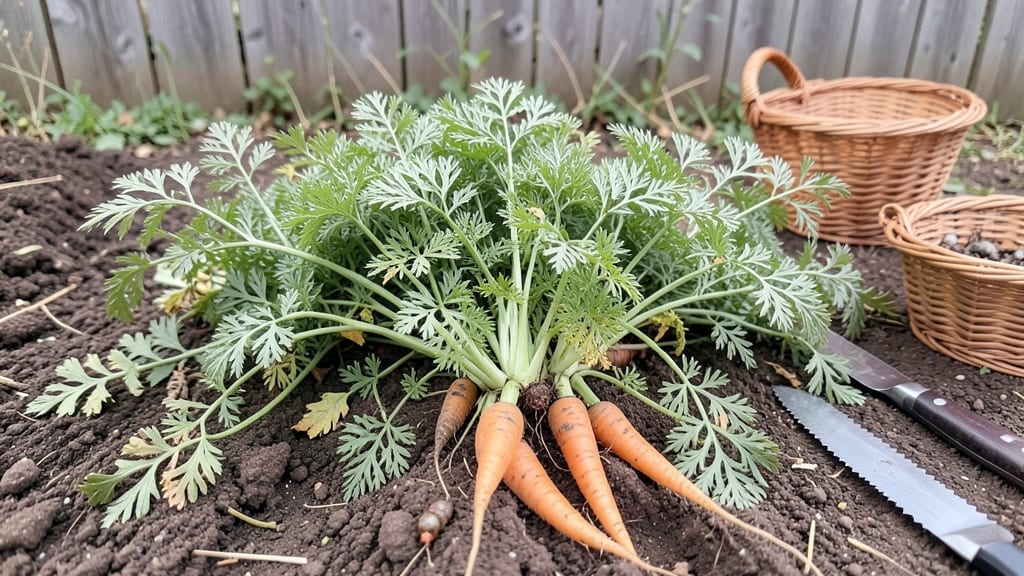
Harvesting carrots from the garden occurs when tops reach 6-8 inches tall and roots are ½ to 1½ inches thick, with a bright orange hue and firm texture. Check soil moisture and avoid pulling when dry to prevent splitting. Early varieties mature in 60-70 days, while storage types take 70-80 days.
Timing your harvest right ensures the sweetest, crispest carrots—those leafy tops reaching 6-8 inches signal the roots are ready, but don’t rush if the soil’s too dry. 🌱 I’ve learned that storage varieties (like Danvers) need that extra 10-15 days of growth compared to quick-maturing types, and their deeper orange color means higher sugar content.
Overlooking these cues often leads to tough, fibrous roots or split tops, so patience pays off in flavor.
Another pro tip: Harvest in the cooler parts of the day to reduce stress on the plants. Early morning or late afternoon works best, and always twist gently to lift—never yank—so you preserve the root’s shape.
If your carrots start flowering (bolting), they’ll turn woody and bitter, so keep an eye on those 30-40 day old seedlings in hot weather.
💡 In This Article
- Carrot Maturity Indicators: Size, Color, and Growth Stages
- Soil and Seasonal Tips for Perfect Carrot Harvests
Carrot maturity indicators: size, color, and growth stages
Carrots develop maturity signals through a fascinating interplay of genetics and environment. The foliage height acts as your first visual cue—when those feathery green leaves reach 6-8 inches, the root below has typically grown to its ideal ½ to 1½ inch diameter.
This isn't just coincidence; it's a biological response where the plant allocates energy to both above-ground growth and below-ground storage. The root's diameter at harvest determines its sweetness and texture, with 1-inch-thick carrots offering the perfect balance of crispness and sugar content.
The color transformation from pale green to vibrant deep orange reveals another key indicator. This shift occurs as the carrot accumulates beta-carotene, the pigment responsible for its signature hue and nutritional value.
Storage varieties like Danvers develop this rich color more slowly due to their longer growing cycle (70-80 days), while quick-maturing types (60-70 days) like Paris Market show color changes more rapidly.
Soil temperature plays a crucial role here—cooler 60-65°F conditions actually enhance beta-carotene production, which is why fall-planted carrots often develop more intense color than summer crops.
Texture provides the final confirmation of readiness. A mature carrot should have a firm, crisp texture when cut—like biting into a fresh apple. The key is the secondary xylem development in the root's vascular system, which thickens as the plant matures.
This structural reinforcement is what gives carrots their satisfying crunch. What most gardeners don't realize is that over-mature carrots develop woody cores as their cells lignify, which is why timing is everything. The 30-40 day window between visible maturity and woodiness is your harvest sweet spot.
Seasonal varieties exhibit distinct growth patterns worth noting. Early-season types like Little Finger prioritize rapid leaf expansion to take advantage of spring's shorter growing season, while storage varieties focus on root development.
The difference shows in their leaf-to-root ratios: early types have broader leaves relative to their smaller roots, whereas storage types develop more compact foliage to support their larger storage organs.
This biological adaptation explains why storage carrots can handle longer soil exposure without bolting—they've evolved to prioritize root growth over seed production.
One often-overlooked factor is the root tip color. When the growing tip turns from white to a pale yellow, it signals the carrot has reached its ideal size for that variety. This color change occurs as the plant prepares for either harvest or seed production.
The transition happens more gradually in cooler weather, giving you that extra 5-7 day window to harvest before the roots start developing bitter compounds. Paying attention to these subtle visual cues can mean the difference between a sweet, crisp carrot and one that's tough and fibrous.
Consider this comparison between two popular varieties to understand the practical implications: A Nantes carrot (early type) might reach harvestable size in 60 days with roots about ¾ inch thick and leaves 5-6 inches tall, while a Chantenay (storage type) takes 75 days to develop 1½ inch thick roots with 7-8 inch foliage.
The Chantenay's broader shoulder and deeper color make it ideal for storage, while the Nantes excels in fresh eating due to its tender texture. 🌱