
Picking
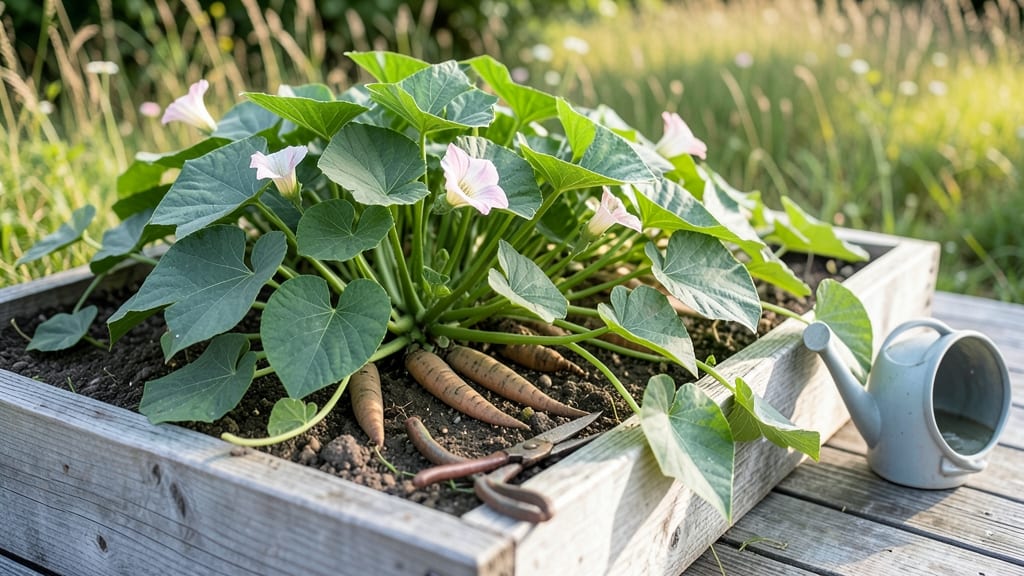
To pick sweet potatoes from the garden at the perfect time means waiting until 90-140 days after planting, when the vines start yellowing and the soil stays warm.
Sweet potatoes are a gardener’s reward—juicy, nutritious, and delicious—but timing their harvest wrong can mean tough, fibrous tubers instead of sweet, flavorful ones. Mastering the skin slip test and understanding vine signals is the secret to perfect harvests every season.
If you dig too early, the tubers won’t have developed their signature sweetness, while waiting too long risks frost damage or shriveling. The key is watching for those telltale signs: leaves turning yellow, vines dying back, and a skin that resists a gentle fingernail test.
In this guide, I’ll walk you through the exact cues to look for, how to handle them in Zone 6a, and post-harvest care tips to keep your harvest fresh and ready for the kitchen.
How to use the skin slip test for perfect sweet potato harvest timing
The skin slip test is my go-to method for determining when sweet potatoes are perfectly ripe. Unlike other crops, these tubers don't have obvious external signals until they're ready. This simple test helps you avoid woody, fibrous tubers or underdeveloped harvests by checking tuber maturity through the plant's skin.
The best part? It requires just your fingernail and a few minutes of your time.
Timing is everything with sweet potatoes. Harvest too early, and you'll get small, starchy tubers. Wait too long, and the skin becomes tough while the flesh turns dry and stringy. The skin slip test gives you an accurate, non-invasive way to check maturity without digging up every plant.
I've used this method for years, and it's saved me from countless disappointments in the kitchen.
Before performing the test, make sure your sweet potatoes have been growing for at least 90 days (the minimum maturity period). Ideal conditions include warm soil temperatures (above 60°F) and mature vines that are starting to yellow. These factors create the perfect environment for accurate testing.
When to Perform the Skin Slip Test
- Step 1: Wait until vines begin yellowing (typically 110-140 days after planting). This indicates the plant is redirecting energy to tuber development.
- Step 2: Choose a sunny, dry day for testing. Moist soil can give false readings, making the skin appear softer than it really is.
- Step 3: Gently brush away soil around 2-3 mature vines to expose the stem attachment point where the tuber meets the vine.
- Step 4: Use your fingernail to press gently at the stem attachment. Apply just enough pressure to slightly indent the skin.
- Step 5: If the skin slips slightly and doesn't tear, the tuber is ready. If it resists completely, wait 1-2 weeks and test again.
- Step 6: For multiple test points, repeat on 3-5 different vines. Consistency across plants confirms readiness.
💡 Pro Tip: Test in the morning when skins are firmest from overnight drying.
What the skin slip test actually measures is the tuber's moisture content and cell wall development. When sweet potatoes are immature, their skins are thin and easily pierced - almost like pressing your nail into a ripe avocado.
As they mature, the skin thickens and becomes more resistant, but not so tough that it won't yield slightly to pressure.
The test works because mature sweet potatoes develop a protective layer that prevents moisture loss while maintaining their sweet flavor. This same layer makes the skin slightly slippery when pressed - hence the name.
I've found that tubers passing this test typically measure 2-4 inches in diameter, which is ideal for both storage and immediate cooking.
Environmental factors can affect test accuracy. For example, drought conditions might make skins appear tougher than they are, while excessive moisture can create false softness. Always perform the test after a dry period (24-48 hours without rain) for reliable results.
In my experience, early morning tests after a dry night give the most consistent readings.
One common mistake is testing too early in the season. Sweet potatoes need time to develop their storage roots. If you test before 90 days of growth, you'll likely get false negatives.
The skin slip test should only be performed on plants showing visible vine yellowing and reduced leaf production - clear signs the plant is shifting energy to tuber development.
When you get a positive skin slip test, it's time to harvest within 1-2 weeks. Waiting longer risks skin toughening and reduced sweetness. I recommend harvesting on a dry, sunny day when soil is workable.
Use a fork or hands to carefully dig around the base of the plant, being careful not to puncture the tubers themselves.
After harvesting, let the sweet potatoes cure in warm conditions (80-85°F with high humidity) for 5-10 days to develop their full sweetness. This curing process enhances flavor and extends storage life.
The skin slip test doesn't tell you about internal sweetness, but proper curing after harvest ensures you get the most flavorful results from your perfectly timed harvest.
Remember that the skin slip test is just one tool in your sweet potato harvesting arsenal. Always combine it with vine color observations and growth stage assessment for the most accurate timing.
With practice, you'll develop an instinct for when your sweet potatoes are at their peak - ready to be transformed into everything from sweet potato pie to crispy fries.
Sweet potato vine signals: 5 signs your tubers are ready to dig
Don't rely on a calendar to harvest your sweet potatoes—your plants will tell you when it's time. The vine signals are nature's way of signaling tuber maturity, and ignoring them can mean tough, woody tubers instead of the sweet, creamy ones you crave.
I've learned the hard way that waiting too long or digging too early both ruin the harvest.
Look for these physical changes in your sweet potato vines and leaves. These harvest indicators work together to give you the perfect window for digging. The key is catching these signs before frost damage or disease pressure sets in, which can mimic readiness but ruin your crop.
-
1. Vine Yellowing
Healthy green vines turn yellow-brown and begin dying back from the edges. This happens when the plant redirects energy to tuber development. -
2. Leaf Drop Pattern
Leaves curl and drop, starting with the older foliage. Unlike disease, this drop happens gradually over 7-10 days, not overnight. -
3. Skin Slip Test
Gently press a fingernail into a tuber's skin. If it doesn't puncture easily, the tuber is ready. Soft skin means more growing time is needed. -
4. Stem Browning
The stems near the soil turn woody and brown. This indicates the plant is shutting down its above-ground growth to focus on roots. -
5. Tuber Size
Dig up a test tuber—ready ones are 2-4 inches in diameter. Smaller tubers need more time, while larger ones risk becoming woody.
False signals can trick even experienced gardeners. Fungal diseases like leaf spot cause rapid yellowing, while aphid infestations make leaves curl prematurely. Always check for pests or spots before assuming your tubers are ready. I once mistook powdery mildew for harvest readiness—my tubers were tiny and underdeveloped!
Once you spot these harvest signals, act quickly. Sweet potatoes store best when cured properly—place them in a warm, humid space (80-85°F) for 10 days to develop their signature sweetness.
Skip curing, and you'll end up with bland, starchy tubers. Pro tip: Use a cardboard box with a towel for humidity control.
Timing matters more than you think. Harvest too early, and you'll get small, watery tubers. Wait too long, and they'll turn woody and bitter. Pay attention to your plants—they'll give you clear warnings if you know what to look for.
My best harvests come when I dig at 90-110 days after planting, right when the vines start their yellow-to-brown transformation.