
Fertilization
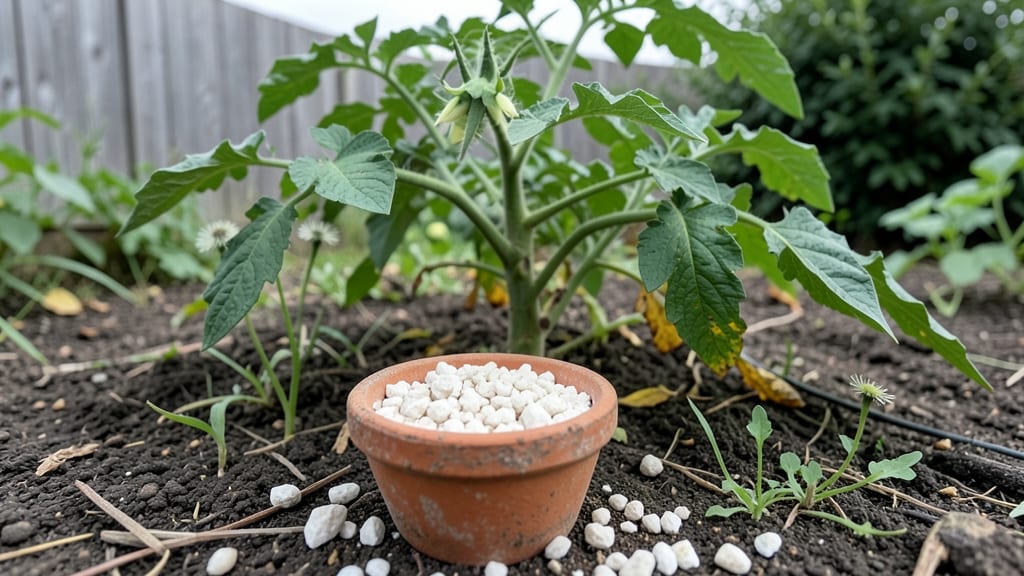
Calcium for vegetable gardens prevents blossom end rot in tomatoes and peppers while strengthening cell walls, improving fruit firmness, and enhancing overall plant resilience. Apply through soil amendments or foliar sprays with gypsum, crushed eggshells, or lime-based products.
Many gardeners overlook how critical calcium is for plant health beyond just preventing rot—it’s the backbone of strong cell structures, especially in fast-growing veggies like tomatoes and peppers. 🌱 Without enough calcium, fruits develop those telltale dark, sunken spots because the cells can’t maintain their integrity, often triggered by inconsistent moisture or overly rich soil.
The good news? Organic sources like gypsum dissolve quickly to address immediate needs, while eggshells break down slowly for long-term soil enrichment.
What’s fascinating is how calcium works behind the scenes: it stabilizes the pectin in fruit cell walls, keeping them firm and reducing cracks. I’ve seen firsthand how a single application of crushed eggshell tea (steeped in water for a week) can transform a struggling pepper plant’s yield within weeks.
Just remember—calcium isn’t just about fixing problems; it’s about building resilience from the ground up.
💡 In This Article
- How Calcium Deficiency Causes Blossom End Rot
- Best Organic Calcium Sources for Soil Health
How calcium deficiency causes blossom end rot
Here's what's actually happening at the cellular level: calcium acts as a structural "glue" that stabilizes the pectin in fruit cell walls, particularly in developing tomatoes and peppers. When calcium levels drop—often due to inconsistent watering or high soil potassium—these cells lose their rigidity and begin to degrade.
The classic dark, leathery spots appear because the middle lamella (the glue between cells) breaks down first, causing localized collapse. 🔥
Uneven watering creates the perfect storm: dry soil restricts root calcium uptake, while sudden heavy watering flushes available calcium away before it can reach the fruit. This is why blossom end rot typically starts at the fruit's blossom end—the farthest point from the plant's vascular system.
In tomatoes, you'll often see a single dark spot that expands, while peppers develop sunken, watery lesions that turn brown and leathery over time.
The pH of your soil plays a critical role too. Calcium becomes less available when soil pH drops below 6.0 because acidic conditions bind calcium ions, making them inaccessible to plant roots.
This is why gardeners in humid climates (where soil naturally acidifies) see more blossom end rot—even with adequate calcium amendments. The ideal pH range for calcium availability is 6.2-6.8, where roots can absorb 80-90% of available calcium.
High potassium levels create another common problem: potassium and calcium compete for the same uptake pathways in roots. When potassium dominates (common in fertilizers with high K ratings), calcium gets "starved out" of the system.
This competition explains why over-fertilizing with banana peels or wood ash—both potassium-rich—can trigger blossom end rot even when soil tests show sufficient calcium.
What most gardeners don't realize is that calcium deficiency symptoms often appear after the fruit has already set, because calcium moves slowly through the plant's xylem system.
This means prevention is key: maintaining consistent moisture, testing soil pH regularly, and applying calcium before flowering begins can prevent up to 90% of blossom end rot cases in susceptible crops.
The biochemical process involves calcium binding to pectin molecules in the cell wall, forming cross-links that provide structural strength. Without enough calcium, these pectin chains become loose and water-soluble, leading to cell wall weakening.
In extreme cases, the entire fruit can develop internal breakdown—visible only when you cut into it—long before external symptoms appear. 💫