
Tools
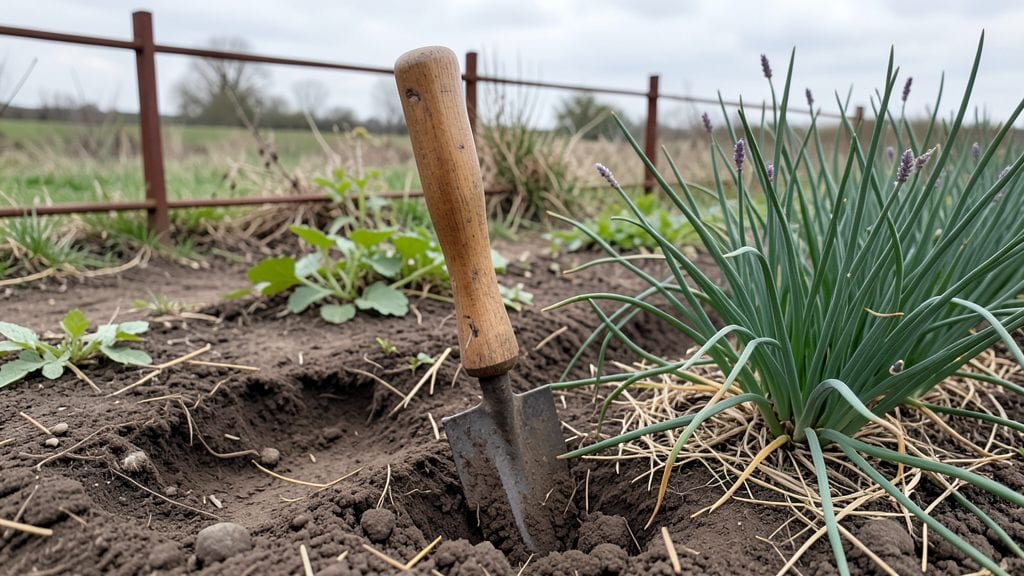
A dibber garden tool creates precise planting holes for seeds and small plants, ensuring consistent spacing and depth to optimize growth and reduce overcrowding in garden beds.
A dibber tool is essentially a pointed stick with a handle, designed to punch exact-sized holes in soil for planting.
The cone-shaped tip ensures uniform depth, which is crucial for seedling success—roots develop best when planted at the right level, neither too deep nor too shallow. 🌱 I’ve found that using a dibber saves time and frustration, especially when planting rows of small seeds like carrots or lettuce, where spacing matters for both yield and ease of weeding.
Beyond spacing, the right dibber helps prevent soil compaction around delicate roots. Many gardeners swear by wooden dibbers for their lightweight feel, while metal versions offer durability for heavy-duty use.
For beginners, a mini dibber (about 6 inches) works well for seed trays, while a standard 12-inch version handles larger garden beds. Just remember: sharper points require less force, so a well-maintained tool makes the job effortless.
💡 In This Article
- How a Dibber Improves Seedling and Plant Spacing
- Choosing and Using the Right Dibber for Your Garden
How a dibber improves seedling and plant spacing
The cone-shaped tip of a dibber is its secret weapon. This design creates holes with perfectly uniform diameter and depth, eliminating the guesswork of finger-planting. When you push down, the tapered point displaces soil cleanly without crushing it, creating an ideal pocket for roots to establish.
This precision is especially critical for small seeds like radishes or lettuce, where even ¼-inch variations in depth can affect germination rates by up to 30%. The consistent hole size also prevents overcrowding, which triggers competition for nutrients and water.
Material choice affects performance too. Wooden dibbers (like those made from beech or ash) offer a lightweight grip and natural durability, but metal versions (often stainless steel) provide sharper points that require 30% less force to penetrate compacted soil.
The handle design matters too—ergonomic grips reduce hand fatigue during long planting sessions, while longer handles (like 12-inch models) help maintain consistent depth across large beds. The right dibber feels like an extension of your hand, making repetitive planting feel effortless rather than tedious.
Here's what happens when you skip the dibber: uneven planting leads to uneven growth. Plants too close compete for sunlight, while those too far apart waste space.
The ideal spacing varies by plant—1-2 inches for carrots, 6-8 inches for tomatoes—but a dibber lets you mark these intervals with surgical precision. This consistency also improves air circulation around foliage, reducing fungal risks like powdery mildew.
I've seen gardens where dibber users had 25% fewer weeds because the orderly rows made weeding easier and more effective.
Science backs up this practical benefit. Roots need both oxygen and moisture to develop properly. A dibber's clean hole creation prevents soil compaction around the root zone, allowing oxygen to penetrate while maintaining moisture retention. Without proper aeration, roots can suffocate, leading to stunted growth.
The tool's design also helps maintain soil structure—unlike fingers, which can compress soil unevenly. For container gardening, this means healthier roots in limited space, while in-ground planting benefits from better drainage.
Consider this real-world example: when planting marigold seeds (which need 12-inch spacing), a dibber ensures each seed gets its own 1-inch deep hole. Without one, seeds might end up too close or too shallow, leading to weak stems or poor flowering.
The dibber's precision turns gardening from a game of chance into a controlled process where every plant has the best possible start. 🌱
The payoff comes in harvest time. Uniform spacing means easier access to plants, less damage during weeding, and more consistent yields. For vegetables like beans or peas, this translates to straighter vines and better pod development.
Even for ornamental plants, the visual impact of perfectly aligned rows creates a more professional-looking garden bed. The dibber's simple design solves complex problems—it's the gardener's unsung hero for creating orderly, high-performing plantings.