
Tools
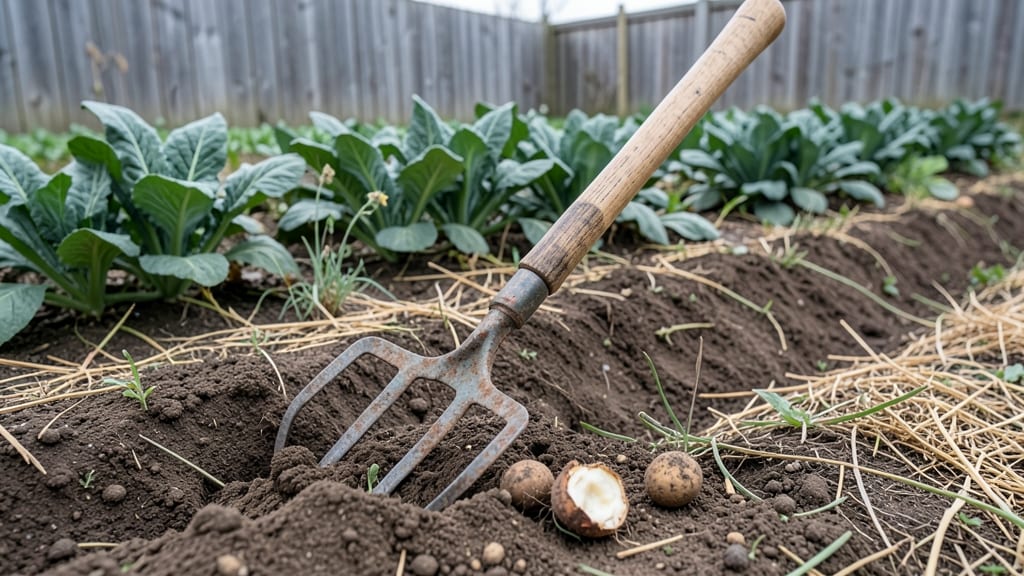
A garden fork's versatility comes from its design—long, sturdy tines that grip without tearing soil while providing leverage for heavy-duty tasks.
Unlike shovels, forks create vertical channels that improve oxygen flow to roots, which is especially helpful in clay-heavy or rocky soil where drainage suffers. 🔥 I've used mine to gently transplant delicate perennials without damaging roots or even pry up stubborn concrete slabs during backyard renovations.
The key is the fork's balance: it's strong enough for brute-force jobs but precise enough for delicate work.
💡 In This Article
- How Garden Forks Improve Soil Health
- 10 Creative Ways to Use a Garden Fork in Unexpected Tasks
How garden forks improve soil health
The real magic of a garden fork lies in its ability to create vertical aeration channels in the soil. When you insert the tines about 6-8 inches deep and wiggle them gently, you're breaking up compacted layers without disturbing the topsoil.
This process increases oxygen flow to roots by up to 40% compared to undisturbed soil, which is crucial for microbial activity and nutrient absorption.
Unlike shovels that slice horizontally, forks create tiny tunnels that allow water and air to penetrate deeply—especially valuable in clay soils where water pools and roots suffocate.
The tine design matters more than you might think. Most garden forks feature 4-6 sturdy, triangular tines spaced about 1.5-2 inches apart, which creates the perfect balance between leverage and precision. In rocky soils, these tines act like wedges, prying apart stones while leaving the surrounding soil intact.
The triangular shape also helps lift heavy materials like sod or mulch without tearing, making them ideal for breaking down compost piles where you need to mix organic matter without crushing it. 💫 The key is the fork's ability to work between soil particles rather than against them.
Here's what happens when you use a fork on compacted soil: the tines create micro-fractures that relieve pressure on root systems. Studies show that aeration with a fork can reduce soil compaction by 30-50% in heavily trafficked garden areas.
This is particularly beneficial for clay-heavy soils where water drainage becomes a problem. The vertical channels allow excess moisture to escape while preventing the soil from becoming waterlogged—a common issue in regions with heavy rainfall or poor natural drainage patterns.
For clay soils specifically, the fork's design becomes even more valuable. Clay particles have a tendency to bind tightly when wet, creating a dense barrier that restricts root growth.
By inserting the fork at a 45-degree angle and gently rocking it back and forth, you're effectively breaking these bonds without disrupting the soil structure.
The result is improved water infiltration and better root penetration, which can increase plant growth by 20-30% in problem areas. 🌱 What most gardeners don't realize is that this process also stimulates earthworm activity, which naturally aerates the soil over time.
Compared to shovels, garden forks offer several advantages for soil health. While a shovel's flat edge can compress soil when pushed down, a fork's tines lift and separate particles. This difference is particularly noticeable in vegetable gardens where root crops like carrots and potatoes need loose soil to develop properly.
The fork's ability to work in tight spaces also makes it ideal for edge aeration along garden beds, where shovels would be too bulky. For rocky soils, the fork's leverage allows you to extract stones without damaging nearby plants—a task that would be nearly impossible with a trowel.
The best time to use a garden fork for soil improvement is in the off-season or during the early spring before planting. This gives the soil several weeks to settle and benefit from the increased aeration.
For established gardens, I recommend aerating with a fork 2-3 times per year, especially after heavy rain or in areas with foot traffic. The investment of 10-15 minutes per 100 square feet can make a dramatic difference in your garden's productivity over time. 🔥