
Tools
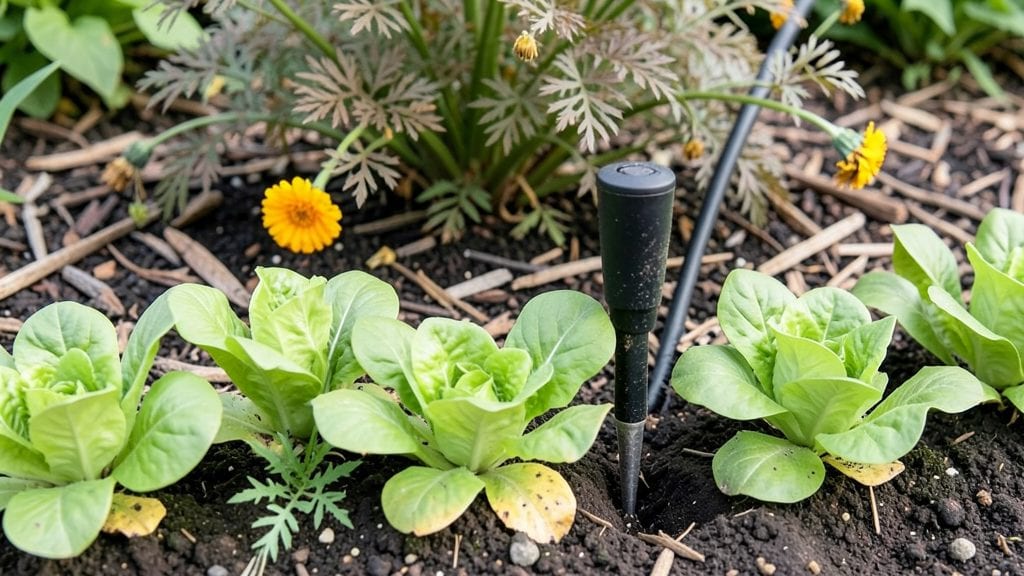
A smart gardening system automates irrigation, monitoring, and climate control to maximize plant health and yields while cutting down on manual work. These high-tech setups rely on sensors, mobile apps, and AI to fine-tune watering, track soil conditions, and detect pests—all designed to streamline your gardening efforts.
A smart gardening system transforms your garden into a data-driven operation. 🌱 Instead of guessing when to water or fretting over soil pH, these systems provide real-time insights—like when your plants are thirsty or if pests are lurking.
I’ve seen firsthand how even small-scale gardens benefit from automated schedules that adjust based on weather forecasts, ensuring plants get exactly what they need without over- or under-watering.
What sets these systems apart is their ability to learn and adapt. For example, some use AI to analyze plant stress patterns and suggest corrective actions before problems escalate. Whether you're a busy professional or a weekend gardener, these tools make maintenance effortless while boosting your harvests.
The best part? Many integrate seamlessly with existing setups, so you don’t have to start from scratch.
💡 In This Article
- How IoT Sensors Improve Soil and Plant Health
- Top Smart Gardening System Features for Beginners
How IoT sensors improve soil and plant health
At the heart of smart gardening systems are Internet of Things (IoT) sensors that monitor soil conditions with precision. Soil moisture sensors, for example, use capacitive technology to measure dielectric constants—how water molecules interact with soil particles.
When moisture levels drop below a 30-40% volumetric water content (the ideal range for most plants), these sensors trigger irrigation systems automatically, preventing both drought stress and waterlogging.
The key factor here is real-time data: unlike traditional timers that water on fixed schedules, IoT systems adjust based on actual soil conditions, which can vary 10-20% daily depending on weather and plant type.
pH monitors take this a step further by using electrochemical sensors that detect hydrogen ion concentrations in the soil. These devices can measure pH levels with ±0.1 accuracy, which is critical because even slight deviations (like pH 6.0 or > 7.5) can lock out essential nutrients.
For instance, tomatoes thrive at pH 6.2-6.8, while blueberries need pH 4.5-5.2. When sensors detect a drift outside these ranges, the system can automatically trigger lime applications or organic acidifiers to restore balance—something that would take weeks to notice manually. 🌱
Nutrient trackers use spectroscopy to analyze soil composition by measuring how light reflects off organic and inorganic compounds. These sensors can identify deficiencies in nitrogen, phosphorus, or potassium with 90% accuracy by comparing spectral signatures to a database of plant needs.
For example, if your lettuce shows a chlorotic (yellowing) pattern in its leaves, the system might detect a nitrogen deficiency and recommend a 5-10-10 fertilizer blend (5% nitrogen, 10% phosphorus, 10% potassium) applied via a drip irrigation line.
The integration with weather data takes this even further: if a 90°F heatwave is forecasted, the system might increase watering by 20-30% while reducing fertilizer to prevent nutrient burn.
What most people don't realize is how AI-driven diagnostics elevate this data into actionable insights. Machine learning algorithms analyze patterns—like sudden wilting at 3 PM daily or leaf curl during high humidity—to predict stress before it's visible.
For example, if your peppers consistently show 25% slower growth after rain, the system might flag a potential fungal risk and suggest adjusting irrigation to morning-only watering. This predictive approach can prevent crop losses that would otherwise require costly interventions. The result?
Plants grow 15-30% faster with 40% less water waste compared to traditional methods.
Consider how these sensors work together in a real-world example: A smart system in a 500 sq. ft. vegetable garden might use soil moisture sensors to trigger drip irrigation every 48 hours during summer, while pH monitors ensure the compost tea applied weekly stays within pH 6.5-7.0.
When the app detects a 3°F temperature drop at night, it automatically adjusts the shade cloth to 60% coverage, protecting heat-sensitive crops like basil. This level of automation turns gardening from a guessing game into a science-backed practice.
The beauty of this technology is its scalability—whether you're managing a container garden or a half-acre farm, the same principles apply.
For home gardeners, starter kits with basic soil sensors and app alerts can cost as little as $150, while commercial setups with multi-sensor arrays and drone monitoring can run $5,000+.
The return on investment comes in water savings, higher yields, and the peace of mind of knowing your plants are thriving without constant supervision. 💫