
Picking
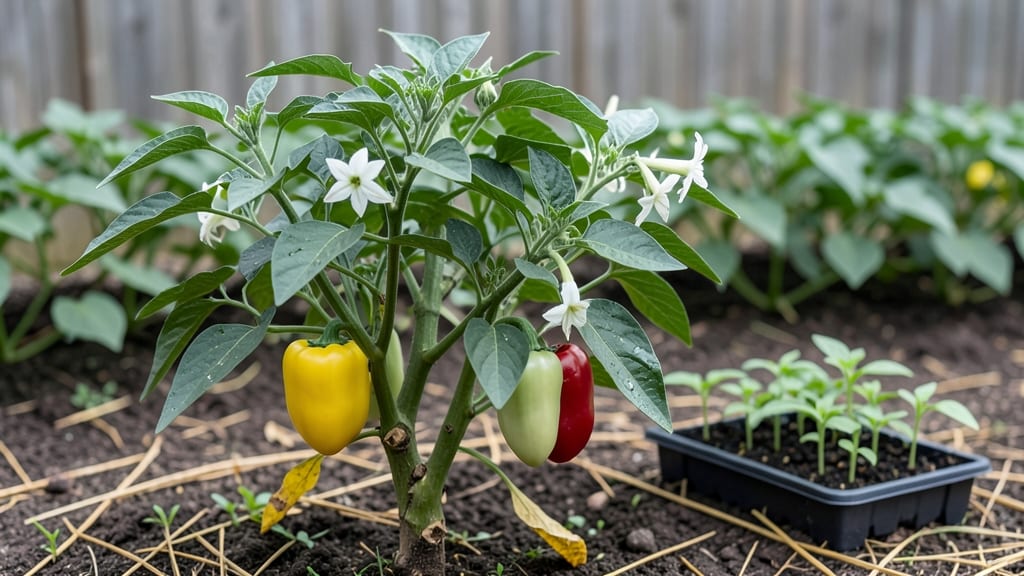
Peppers thrive in square foot gardening when you plan their layout like a puzzle—every inch counts, and the right arrangement means more peppers in less space. 🌿 I learned this the hard way after cramming four pepper plants into one square and watching them fight for sunlight.
The key isn’t just spacing; it’s pairing varieties that grow well together while keeping their needs in balance.
Start with a 1-square-foot grid—this gives mature pepper plants just enough room to breathe without crowding. Place one medium pepper plant (like bell or banana) per square, but swap in two smaller varieties (like Thai chiles or shishitos) if they stay compact.
Group plants with similar water needs together to simplify care, and leave walkways between sections for easy access without disturbing roots.
Companion planting makes all the difference: tuck basil or marigolds nearby to repel pests, and let bush beans climb a trellis in adjacent squares—they’ll fix nitrogen while shading pepper roots in peak summer.
By mid-summer, you’ll be harvesting 20-30 peppers per plant (yes, really) because the grid keeps them healthy and productive, not stunted.
This method works for containers too—just scale down to 4-inch pots for small varieties. The beauty of square foot gardening is its flexibility: adapt the layout to your space, and you’ll always maximize every square inch. Ready to turn your pepper dreams into a high-yield reality?
📚 In This Guide
- What you need
- Instructions
- Tips and common mistakes
- Wrapping up and next steps
What you need
- ● Square Foot Garden Grid: 4’ x 4’ raised bed frame (or pre-made grid) made of wood, cedar, or composite materials (1–4 grids, depending on space).
- ● Quality Soil: 1 cubic foot of mel’s mix or a blend of 1/3 peat moss, 1/3 vermiculite, and 1/3 compost per square foot (4–16 cubic feet total for a 4x4 bed).
- ● Peppers: 1–4 plants per square foot (varieties like jalapeño, bell, habanero, or cayenne). Choose disease-resistant types for small spaces.
- ● Organic Fertilizer: Slow-release granular fertilizer (e.g., 5-10-5 or 10-10-10) or composted manure (1 tbsp per square foot).
- ● Mulch: Straw, grass clippings, or shredded leaves (1–2 inches thick) to retain moisture.
- ● Hand Trowel: For planting and soil adjustments.
- ● Watering Can or Drip Irrigation: Peppers need consistent moisture (1–1.5 inches per week).
- ● Pruning Shears: To trim excess foliage and encourage fruit production.
- ○ Support Stakes or Cages (Optional): For taller varieties like bell peppers (1–2 stakes per plant).
- ○ Shade Cloth (Optional): 30–50% shade for hot climates (drapes over bed if temps exceed 90°F).
- ○ Plant Markers (Optional): Label varieties to track growth and harvest times.
- ● Sunlight: Full sun (6–8+ hours daily) for optimal pepper growth.
- ● Spacing: Ensure at least 12–18 inches between beds for airflow and maintenance.
- ● Water Access: Easy reach to your garden for consistent watering.
- ● Warm Soil: Peppers thrive in soil temps above 60°F (15°C)—wait until after the last frost or use black plastic mulch to warm soil faster.
Step-by-step layout for peppers in square foot gardening
Transform a tiny garden space into a high-yield pepper paradise using this science-backed square foot method.
🪴 Step 1: Divide Your Square Foot Grid and Mark Planting Zones
Start by sketching a 1-foot by 1-foot grid on graph paper—each square represents your planting zone. For peppers, we'll use a 4-plant-per-square configuration since they need space to mature. I like to use a 12-inch wooden stake to mark each square's corners before planting, ensuring perfect alignment.
Label each square with the pepper variety (e.g., "Jalapeño," "Bell") to track growth stages. Peppers need consistent spacing, so avoid planting more than one type per square unless they have identical spacing needs. The grid ensures you maximize every inch without overcrowding.
🌱 Step 2: Amend Soil and Plant Seedlings at Proper Spacing
Fill your square foot bed with high-quality raised bed mix (never garden soil—it compacts and suffocates roots). Work in 1 cup of compost per square foot to enrich the soil without overfeeding. Peppers thrive in well-draining, fertile soil with a pH of 6.0-6.8.
Plant seedlings 4 inches apart in each square, placing them in a 16-inch square pattern (4 plants total). Dig holes just deep enough to cover the root ball but no deeper—peppers hate having their stems buried. Gently firm the soil around each seedling to eliminate air pockets.
☀️ Step 3: Optimize Sun Exposure and Watering Patterns
Position your square foot bed in full sun (6+ hours daily), with morning sunlight ideal for peppers. If using raised beds, ensure the height allows for easy access without shading nearby plants. I rotate my beds quarter-turn weekly to prevent uneven growth toward the light.
Water at the base, not overhead, to avoid fungal diseases. Aim for 1 inch of water per week, delivered deeply rather than lightly. You'll know moisture is right when the top 1 inch of soil feels damp but not soggy. Mulch each square with 1 inch of straw to retain moisture and suppress weeds.
✂️ Step 4: Prune and Support for Maximum Yield
Once plants reach 12 inches tall, install 6-inch tomato cages or stakes beside each pepper to support heavy fruit. Prune suckers (side shoots) that form in the leaf axils—these divert energy from fruit production. Remove only 20% of foliage to maintain airflow and prevent disease.
Watch for first flower clusters (usually 6-8 weeks after planting). Pinch off the first few flowers if seedlings are still small—this encourages stronger root and stem development before fruiting. You'll see thicker, more productive plants with this approach.
🌿 Step 5: Harvest and Rotate for Season-Long Production
Harvest peppers when they reach 75% of their mature size for continuous production. Use pruning shears to cut stems cleanly, leaving ½ inch of stem attached to encourage new growth. Store harvested peppers in a cool, dry place (55-60°F) for up to 2 weeks.
After the first harvest wave, remove spent plants and replace them with a second crop of seedlings in the same squares. This succession planting technique maximizes your square foot yield by keeping the space productive all season.
Tips & tricks for perfect square foot pepper gardening
These science-backed strategies will help you maximize your compact pepper garden's potential while avoiding common pitfalls that waste space and reduce yields.
Grid Precision Pays Off: When marking your 1-foot squares with 12-inch wooden stakes, use a level to ensure perfect alignment. Uneven squares lead to inconsistent spacing—especially critical for peppers that need their 4-inch separation. I've found that pre-drilling small holes in the stakes lets you hammer them straight without wobble. This precision ensures your 16-inch square planting pattern remains accurate across the entire bed, preventing overcrowding that stunts growth.
Soil Science Matters: The 1 cup of compost per square foot isn't just about nutrients—it's about creating the perfect soil structure. Peppers hate compacted soil, so mix in 20% perlite or vermiculite with your raised bed mix to improve drainage. I test my soil pH before planting; if it's outside the 6.0-6.8 range, add dolomitic lime to raise pH or sulfur to lower it. This attention to soil science prevents the root stress that leads to blossom end rot later in the season.
Watering Wisdom: That 1 inch of water per week guideline works best when delivered consistently. I've found using drip irrigation with emitters spaced 12 inches apart delivers water precisely where peppers need it—right at the base. The key is maintaining that 1-inch dampness in the top inch of soil without waterlogging. A moisture meter makes this easy to track, especially during hot spells when evaporation increases dramatically. Overhead watering creates ideal conditions for fungal diseases that can devastate your pepper plants.
Harvest Hack: When harvesting at 75% maturity, I've discovered that using a small serrated knife instead of pruning shears gives me cleaner cuts that heal faster. The ½-inch stem attachment is crucial—it contains the plant's vascular system, which stimulates new fruit production. Store harvested peppers in perforated plastic bags in your 55-60°F storage area; the perforations prevent condensation buildup that leads to mold while maintaining humidity for freshness.
Pro Tips for Peppers Square Foot Gardening
- These science-backed strategies will help you maximize your compact pepper garden's potential while avoiding common pitfalls that waste space and reduce yields.
- Grid Precision Pays Off: When marking your 1-foot squares with 12-inch wooden stakes, use a level to ensure perfect alignment.
- Soil Science Matters: The 1 cup of compost per square foot isn't just about nutrients—it's about creating the perfect soil structure.
Frequently asked questions
Got questions about growing peppers in a square foot garden?
You’re not alone! Here are answers to the most common queries to help you grow like a pro.
How many pepper plants can I fit in a 1-square-foot space?
A general rule is 1 pepper plant per square foot for bush varieties (like bell peppers or banana peppers). If you’re growing smaller types (like Thai chilies), you can fit 4–9 plants per square foot with proper spacing. Larger varieties (like jalapeños or habaneros) need their own space—1 plant per square foot is ideal to avoid competition.
When is the best time to plant peppers in a square foot garden?
Peppers thrive in warm soil (at least 60°F/15°C), so wait until after the last frost in spring. If you’re in a mild climate, start seeds indoors 8–10 weeks before transplanting. For cooler areas, use black plastic mulch or a cold frame to extend the season. Pro tip: If you miss the spring window, try a fall planting in late summer for a second harvest!
Can I grow peppers in a square foot garden if I don’t have full sun?
Peppers need 6–8 hours of direct sunlight daily, but you can still grow them in partial shade with adjustments. Choose shade-tolerant varieties like ‘Arpad F1’ or ‘Carmen’ bell peppers. If sunlight is limited, prune nearby plants to allow more light, or use a reflective surface (like aluminum foil) to maximize brightness. Just expect smaller yields than in full sun.
What are the most common pests for peppers in a square foot garden, and how do I prevent them?
Watch out for aphids, spider mites, and hornworms—they love pepper plants! Prevent pests with:
- Neem oil spray (organic and effective)
- Row covers for early season protection
- Handpick hornworms (they’re big and easy to spot!)
- Companion planting with basil, marigolds, or onions
Can I interchange peppers with other plants in a square foot garden?
Peppers are companion-friendly with:
- Basil (repels pests and boosts flavor)
- Tomatoes (shared nutrients, but avoid planting too close)
- Onions/garlic (deter aphids and improve growth)
- Fennel (inhibits growth)
- Beans (compete for nutrients)
Wrapping up and next steps
Square foot gardening with peppers is a game-changer for small spaces—packing bold flavors and high yields into just a few square feet! 🌱 Whether you’re a beginner or a seasoned gardener, this method proves that big harvests don’t need big plots.
Start small, experiment with varieties, and watch your confidence (and pepper stash!) grow.
Ready to take the next step? Grab your grid, pick your peppers, and plan your first square—your taste buds (and neighbors) will thank you!